
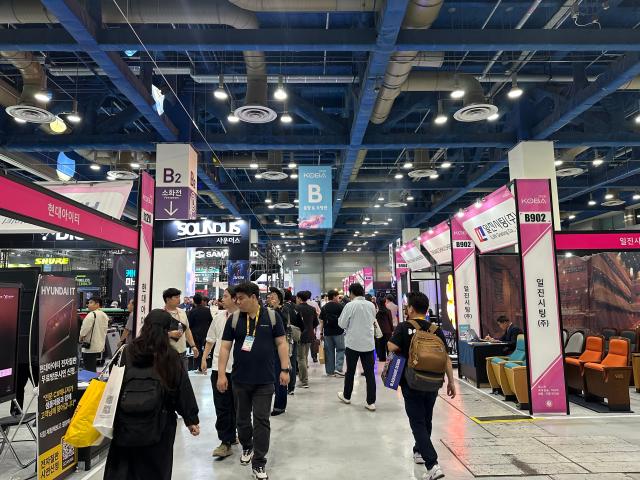
KOBA 2026 — South Korea’s largest broadcast and video-equipment trade show — is no longer the exclusive domain of broadcasters and film studios. The surge in short-form platforms such as YouTube, TikTok and Instagram Reels has turned everyday consumers and solo creators into a core market for professional-grade video gear.
Global camera makers including Canon, Sony and Nikon staffed large exhibits at KOBA 2026, held May 12–15 at COEX in Samseong-dong, Seoul.
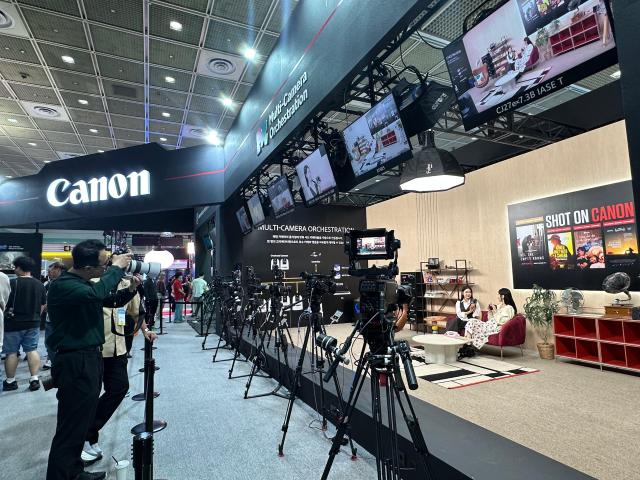
The most notable shift this year was the move toward video. Where competition once focused on still-photo performance, exhibitors now highlighted video-specific cameras and AI-driven video solutions.
The visitor profile has changed, too. Alongside broadcast professionals and cinematographers, the show attracted many consumers and independent creators who make vlogs and short-form content. Long lines formed at booths as attendees tried equipment, and demo areas for vertical shooting and live streaming drew particularly large crowds of younger visitors.
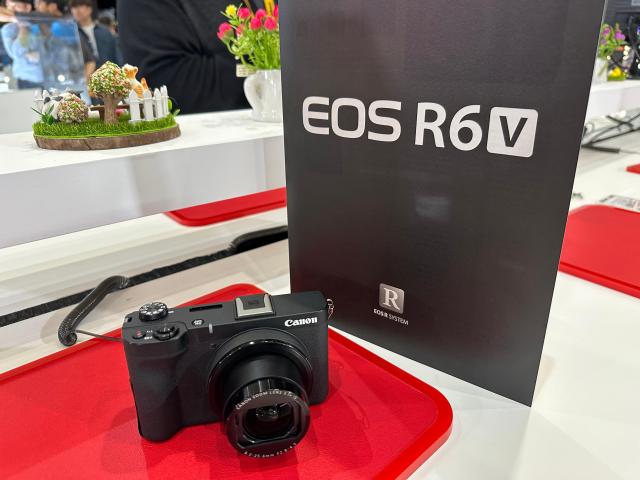
Canon Korea used the event to introduce a new video-focused mirrorless model. On May 14, the company hosted a press briefing at Studio159 in COEX to unveil the full-frame EOS R6 V and the power-zoom RF20-50mm F4 L IS USM PZ lens.
The releases reflect a rapid market shift from photo-first cameras to video-centric systems. As short-form platforms expand, consumer demand for higher-quality video has surged, prompting traditional camera makers to accelerate the mainstreaming of pro-level video tools.
Nikon and Sony also emphasized professional video equipment and cinema cameras to match the market’s pivot to video.
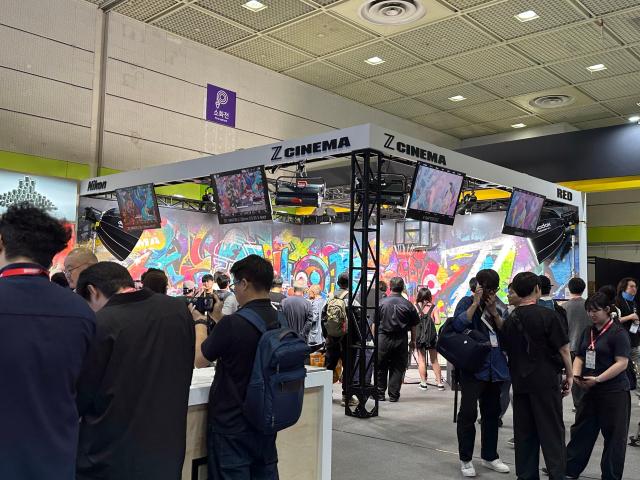
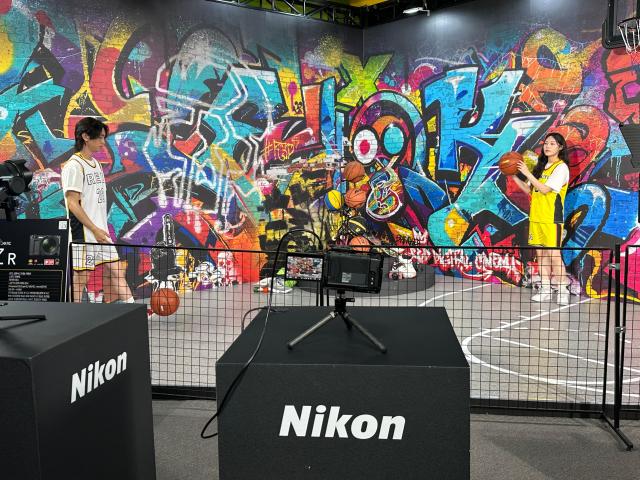
Nikon Imaging Korea ran an integrated “Nikon in KOBA 2026 with RED” exhibit. RED, the U.S. digital cinema camera maker acquired by Nikon, appeared alongside Nikon’s own lineup. Attendees could test the latest cinema cameras and mirrorless models, and the newly presented “Z CINEMA” series — shown with RED for the first time since the acquisition — attracted independent filmmakers.
A Nikon Imaging Korea representative said visitor traffic was up 1.5 times from last year and that demand for video cameras among younger buyers has risen noticeably. Many models are priced around 2 million KRW (approximately $1,500), making them relatively accessible to college students and younger consumers.
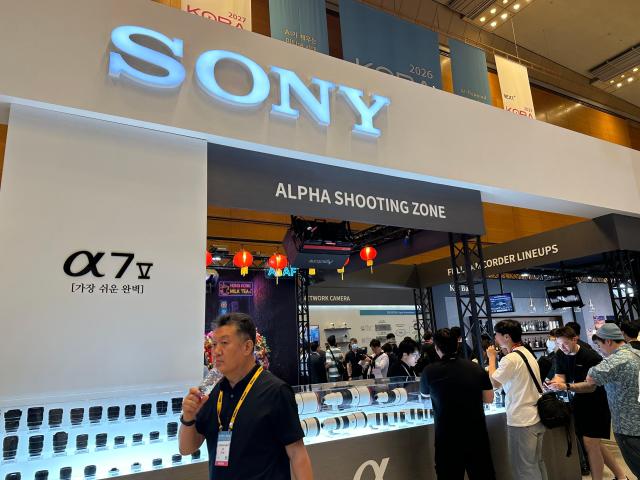
Sony Korea highlighted AI-powered video production and a networked live-production ecosystem. The company demonstrated AI auto-framing and automatic tracking designed for both broadcast and one-person production setups. The feature that automatically re-frames a shot to follow a speaker drew praise for its potential in sports, education and corporate content.
The show underscored that high-quality video production is no longer confined to a professional few. The camera market is shifting toward video: as smartphone cameras reach parity for still photography, demand for simple photo-centric cameras has declined, while the popularity of short-form formats has increased demand for higher-end video capabilities.
Industry observers say AI will further accelerate the market’s expansion. As AI-based autofocus, subject tracking, auto-framing and virtual-production tools become commercialized, individual creators can produce work that approaches professional standards with far less technical overhead.
“The video-equipment market, once centered on broadcasters and film studios, is rapidly expanding to everyday consumers and individual creators,” an industry source said. “With AI advances and the growth of video platforms, the trend toward mainstreaming high-performance video gear will only gain momentum.”














Most Commented