
Translation result
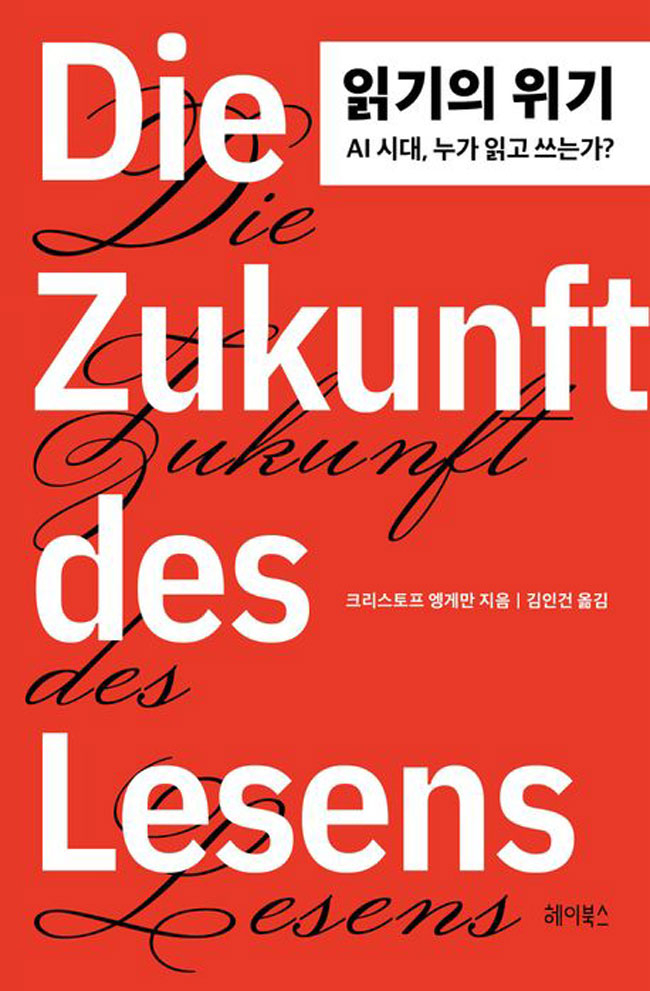
Christoph Engemann, translated by Kim In-geon┃Heybooks
AI can shrink an entire book to a few lines.
Digital creators churn out polished content with ease.
We are leaving behind an era of reading and private reflection.
People now absorb knowledge through audio and video rather than print.
As Latin once marked the ruling class,
literacy itself could become the dividing line
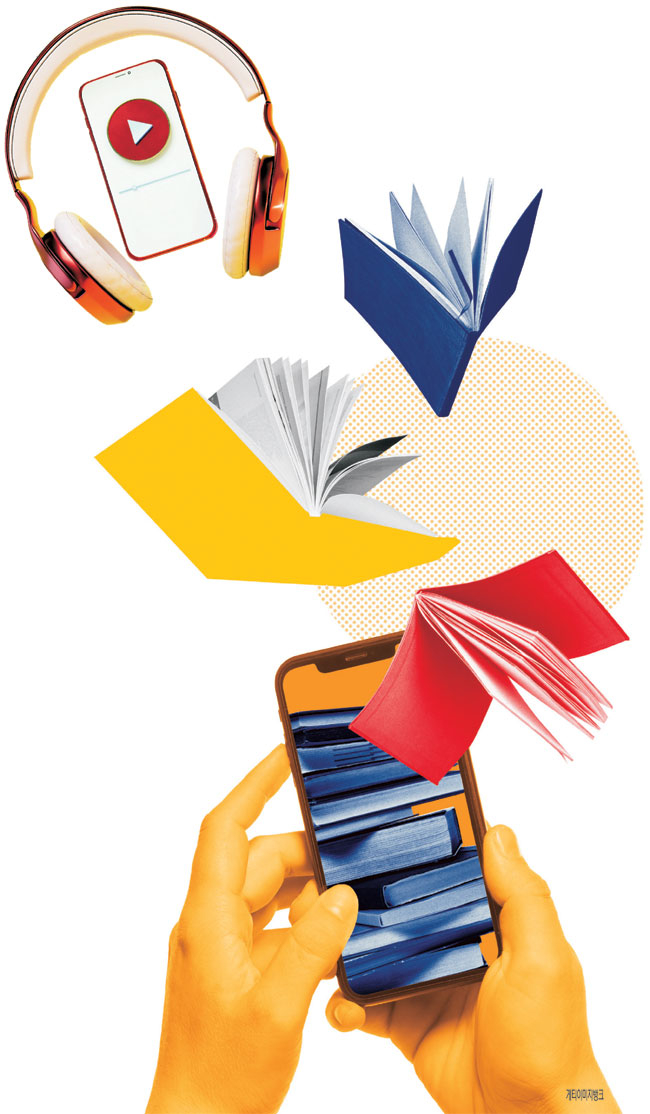
 Today, when someone wants to learn about a book, three options typically present themselves: read an AI-generated summary, watch a BookTube video, or buy and read the book. If you’ve ever paused to choose, it’s worth asking what “reading” means today. In an era flooded by AI and YouTube, the structure of reading itself has shifted—so why, if at all, should we return to paper books?
Rather than mourn the “decline of paper books” or the “death of the written word,” the author urges us to first look at what people are turning to instead of print. Traditional reading implied a one-on-one relationship between a paper book and a reader: texts in book form offered knowledge that readers absorbed, reflected on, and transformed into deeper thought. The author contends that today the standing text once enjoyed is being destabilized by digital platforms built around oral communication.
Platforms such as YouTube and podcasts deliver knowledge through accessible audio and video, and in doing so they now threaten text’s cultural dominance. Ironically, text hasn’t disappeared so much as become the raw material for other media. Generative AI like ChatGPT continuously ingests massive volumes of text and compresses that information in real time, effectively arming online presenters. These creators use AI-summarized knowledge alongside audiovisual tools to present ideas and to engage in dialogue with viewers who still possess reading skills. The author dubs this ecosystem a “virtual university.”
Audio and video formats have even taken on two of text’s historic strengths: searchability and repeatability. As spoken content acquires durable online addresses, it stops being purely ephemeral and becomes something people can return to—much like a book. Once the focus of reading no longer needs to be primary text, the largest search engines shift: YouTube and TikTok, not Google, often serve as the first stop.
The problem is that more and more people are not reading texts themselves; they are delegating that labor to those who read for them in videos and podcasts. The author, a German media scholar, points to the example of 26-year-old German YouTuber Rezo. In May 2019, just before the European Parliament elections, Rezo uploaded a one-hour video titled “The Downfall of the CDU (Christian Democratic Union).” Directed squarely at the ruling party, it drew over 10 million views in under a month. Rezo didn’t rely only on spoken explanation; he provided a meticulous list of written references. Viewers became indirect readers, absorbing texts through his presentation.
Rezo’s case is hardly unique. Open YouTube on a smartphone and you’ll find lecture-style videos that explain humanities and science topics with ease. It’s unsurprising that many people prefer a concise audio or video summary to picking up a 300- or 400-page book and working through it. As this pattern accelerates, we end up with people who could read but choose not to—a paradox given the 21st century’s broad gains in literacy and access to reading materials. Texts still exist, but they slip into the background while potential readers become virtual ones.
In a world where audio and video transmit knowledge, why should we still read text ourselves? The author argues that reading on one’s own may come to resemble the emergence of a “new Latin.” In medieval Europe, Latin served as a gatekeeper that preserved power for a literate clergy and ruling class. Today’s texts are not inherently exclusionary, but the act of reading demands analysis, critique and the labor of forming one’s own judgments—and fewer people are doing that work. The capacity to read and evaluate texts independently may become a distinguishing marker between those who possess it and those who do not. 216 pages, 17,000 KRW (≈ $12.75 USD).












Most Commented