
Translation result
AI expands from production assistant to industry infrastructure
Content assetization, studio automation and multilingual localization emerge as the exhibition’s central themes
Twigfarm · Percept · STRA · Hikvision: the next phase of media technology, as shown on the floor
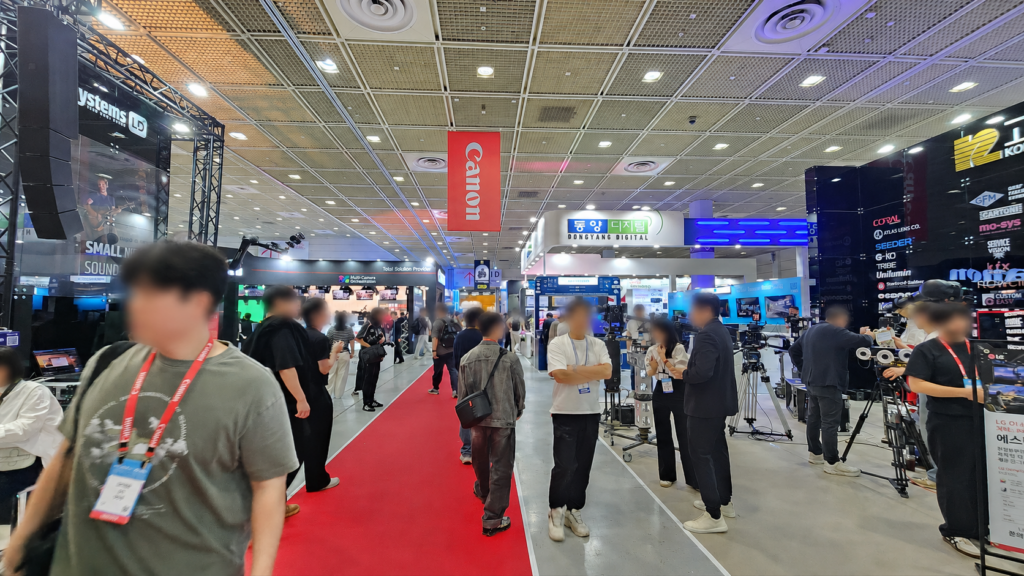
KOBA 2026, South Korea’s largest broadcast, media, audio and lighting expo, took place May 12–15 at COEX in Samseong-dong, Seoul. Now in its 34th year, KOBA has grown beyond a trade fair centered on broadcast gear — riding waves of digital transformation, the rise of solo creators, OTT, XR and VFX — to become an industry event that places AI-driven production environments front and center.
This year’s theme: “The media era awakened by AI — content connects, creation evolves, convergence opens.” About 220 domestic and international companies filled roughly 1,000 booths. Alongside cameras, broadcast equipment and audio and lighting rigs, exhibitors highlighted technologies reshaping production workflows: AI-powered content automation, cloud-based live streaming, IP broadcast infrastructure, real-time translation and dubbing, and robotic camera systems.
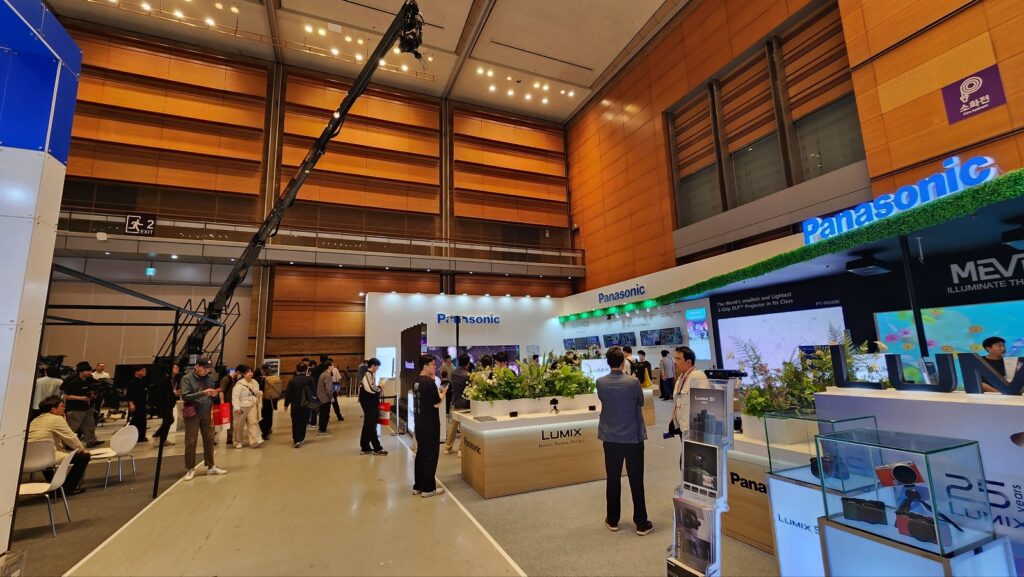
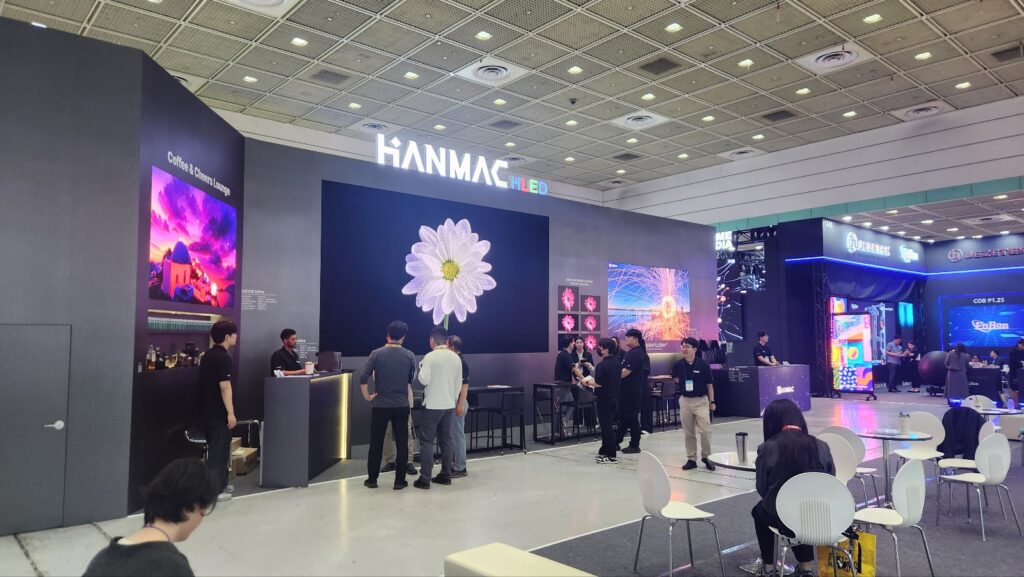
This year’s shift was notable: AI was presented not merely as a production aid but as a media infrastructure connecting storage, search, production, localization, distribution and even space management. Tech42 visited booths from Twigfarm, Percept, STRA and Hikvision to see how AI-era media technology is being implemented on the ground.
Twigfarm turns content into monetizable media assets, not inert files
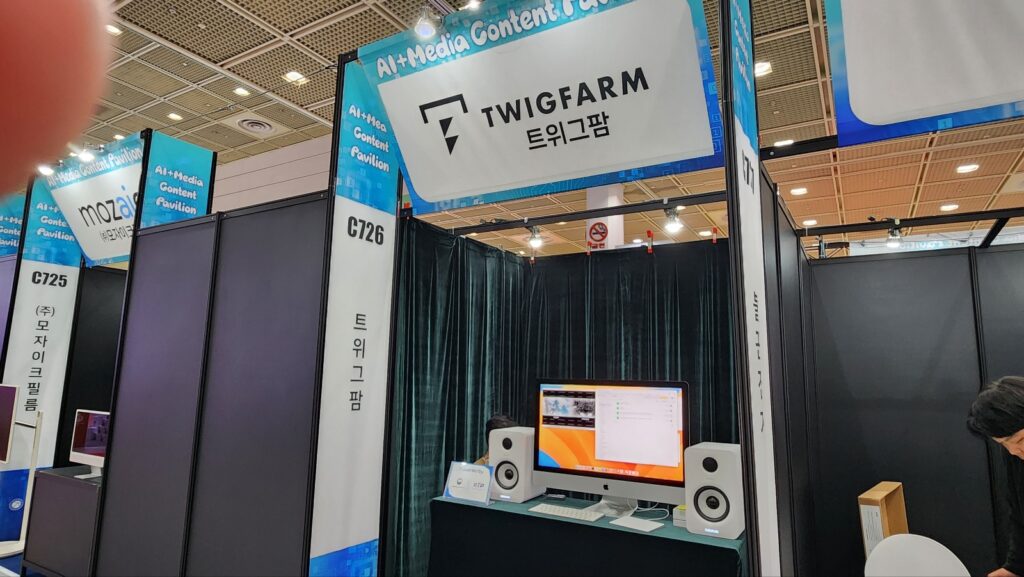
Twigfarm brought its media intelligence platform, LETR WORKS, to the show. The company has built a reputation for multilingual localization and export support; this year it emphasized the next step: converting video, webtoons, news and educational material from stored files into structured data assets AI can read, search and link directly to distribution and sales.
Their marquee features were semantic search and a media sales kit. Semantic search doesn’t hunt file names for matching keywords; it analyzes context, on-screen text and audio to let users find scenes or themes with natural-language queries. To reuse decades of archived content, broadcasters and producers must first make it machine-readable. At the booth, Baek Cheol-ho, a director at Twigfarm, called that transformation the starting point of media asset management.
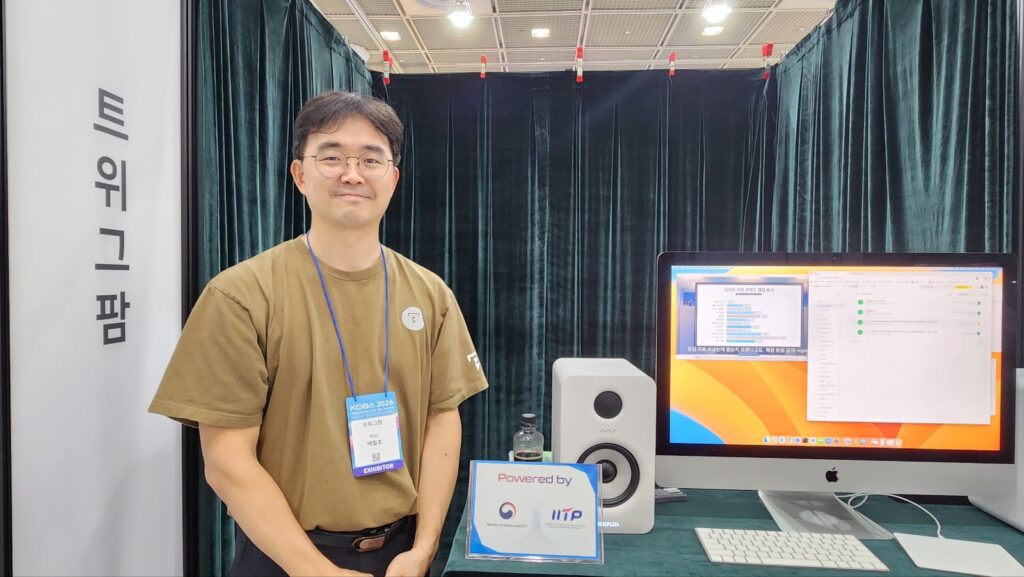
“We primarily built services to help content producers export their work,” Baek said. “But producers struggled with DRM on teasers sent to buyers, tracking who watched what and for how long, and bundling related files. The Media Sales Kit addresses those pain points.”
The Media Sales Kit allows secure video sharing with global buyers while capturing viewing histories and segment-level reactions as data. It does more than send links: it unifies security, access controls, viewing analytics and supplemental materials into a single workflow. That reduces repetitive management burdens during sales and gives sellers quantitative insight into buyer interest — a practical tool for international distribution teams.
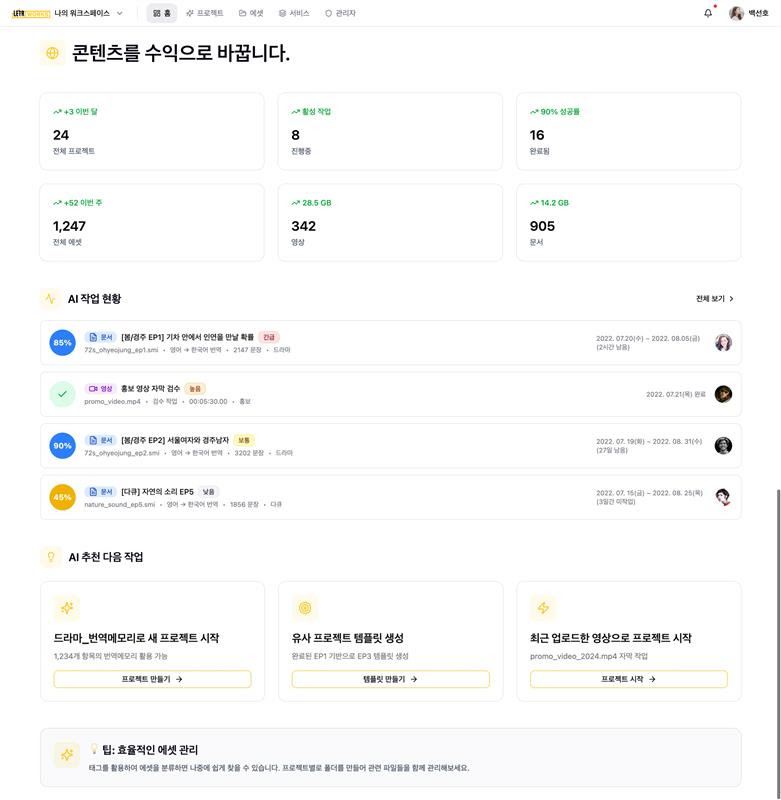
Twigfarm also stressed the gap between storage and assetization. Many companies archive huge video libraries, but archives are not inherently usable. Baek said producers must embed and tag scenes, dialogue, characters, themes, moods and potential uses so AI can understand them — only then can content be re-searched, repurposed and monetized.
“We use the term ‘media assetization,'” he said. “In a world awash with content, reuse is what matters. You have to embed and tag video so AI can understand and apply it. It’s not enough to store files — you must structure them so AI can leverage them.”
Twigfarm’s aim was clear: to fold creation, storage, search, localization and sales — once separate workflows — into a single pipeline. The industry’s competitive edge, the company argued, is shifting from sheer volume of content to how effectively that content becomes usable assets.
Percept cuts studio setup time with robots and AI in DEEPEYE
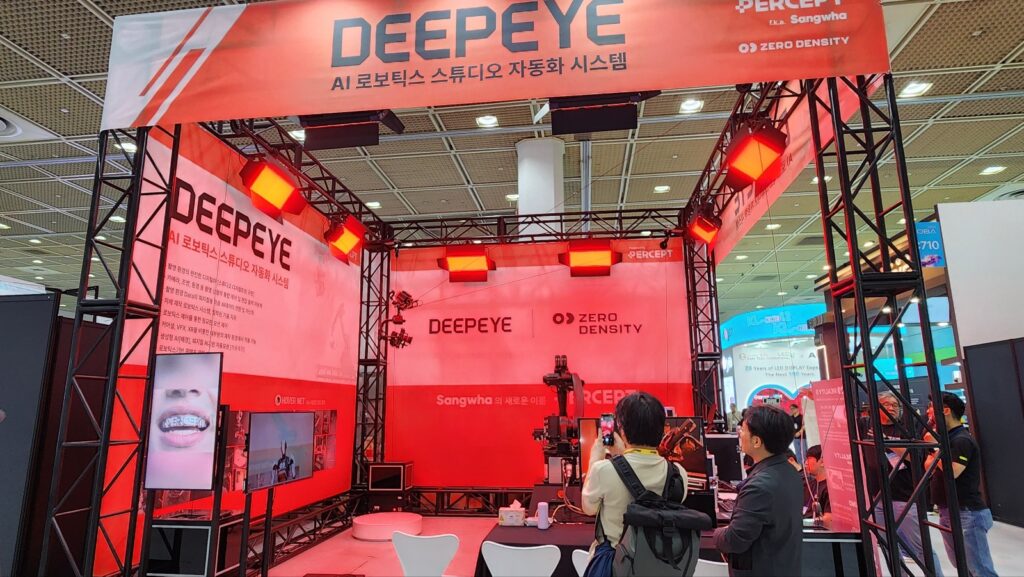
Percept unveiled DEEPEYE, an automation platform that combines robotics with AI, databases and digital-twin technology. The company recently rebranded from Sanghwa, packaging 19 years of robotics media expertise into modular solutions and platforms. The new name — a fusion of “Perception” and “Concept” — signals the company’s intent to shape how people experience spaces and content through media technology.
DEEPEYE links robotic camera systems with lighting, backgrounds, props and directing environments into a single network and recreates the physical studio as a digital twin. That allows remote control and repeatable setups. At KOBA 2026, Percept displayed a more modular approach beyond an integrated package: clients can assemble modules such as robot cameras and wire-cam systems to match site needs.
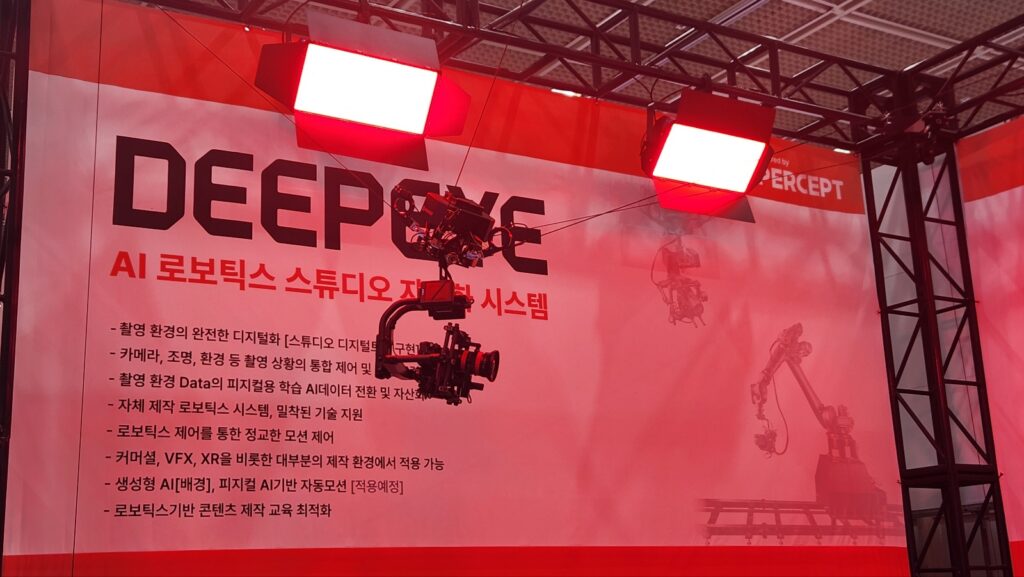
At the booth, Eun-gyu Lee, Percept’s vice president and CTO, cautioned against describing DEEPEYE as a people-free production system. The goal is not to remove human judgment but to quantify repetitive, skill-dependent tasks so crews can work more efficiently.
“It’s more accurate to call it a hybrid system,” Lee said. “Humans still own the key decisions. We digital-twin the studio and apply automation on top. We’re collecting production data and turning it into structured datasets that AI can use.”
Production has long relied on craftsmen’s tacit knowledge — where to place lights, which camera angles to use, how to set backgrounds and diffusers. Dependence on that knowledge becomes a liability when personnel change, since training erases institutional memory. Percept’s approach is to convert that tacit know-how into measurable data.
“Our first step was digital-twinning production environments,” Lee said. “Over the last two to three years we’ve converted expert tacit knowledge into numeric data and built substantial datasets. That data will feed virtual training and move into active automation. Ultimately, humans will manage and supervise, but when you input an intent the system should configure camera angles and studio setups automatically.”
Percept framed its efficiency gains around time. In broadcast, commerce and entertainment, set changes, lighting tweaks and camera reconfiguration directly affect costs. DEEPEYE calls up stored setups to switch lighting, diffusers and camera moves at once and automates parts of post-production — editing, color grading, cropping and logo insertion — after shoots.
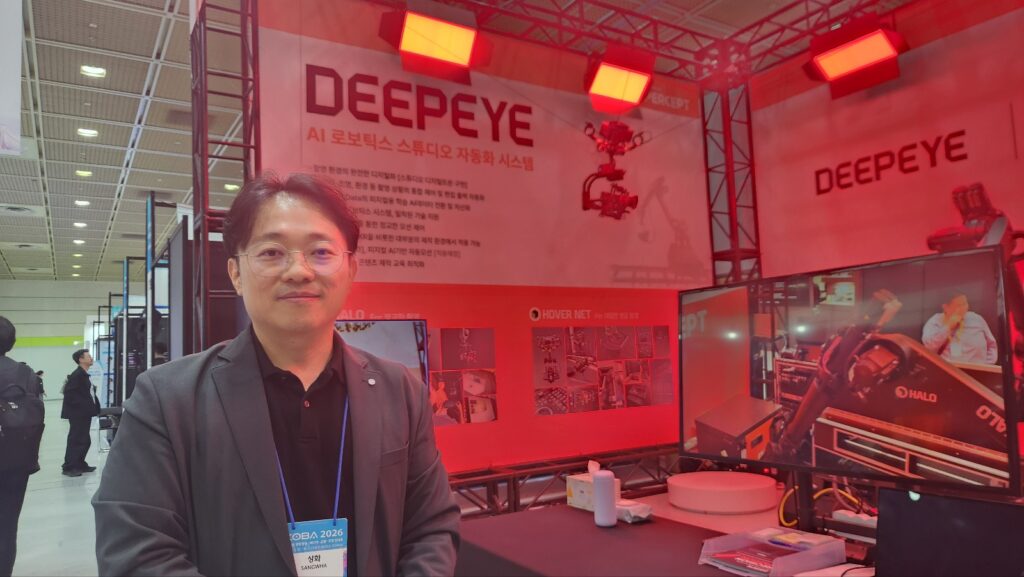
“More complex systems are already in use at large enterprises,” Lee said. “With a veteran director providing guidance, a single junior operator can run an entire studio. In the past, when staff changed, a lot of institutional knowledge vanished during training. Now teams just load last year’s setup and apply it immediately. In some cases, a full studio setup can change in about 30 seconds.”
Percept’s exhibition concentrated on automating the physical production infrastructure — shooting spaces, robotic rigs, lighting, cameras and editing workflows. If generative AI is changing the shape of content, DEEPEYE aims to change how studios operate to produce it.
STRA targets K-content localization bottlenecks with AI dubbing in 32 languages
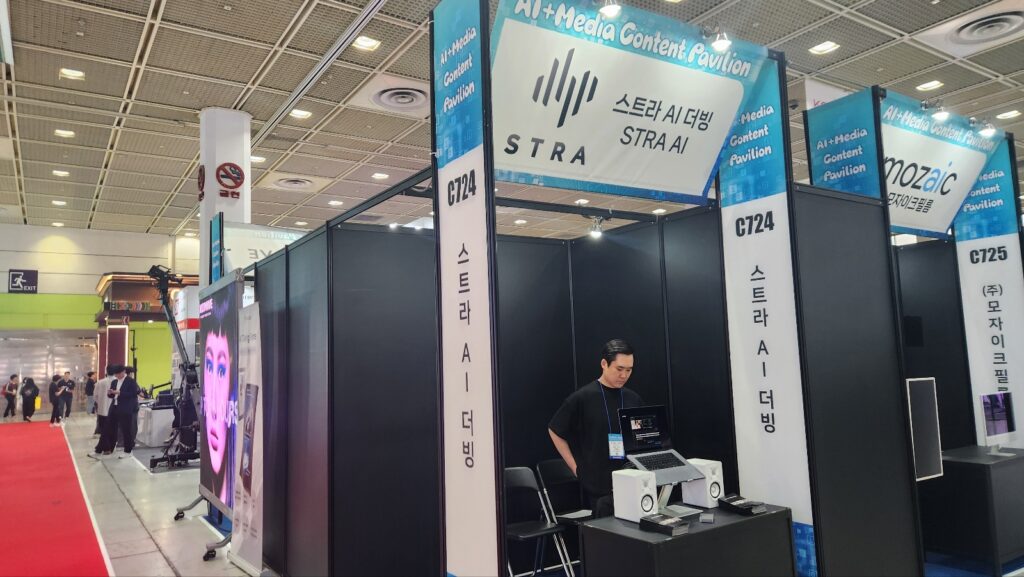
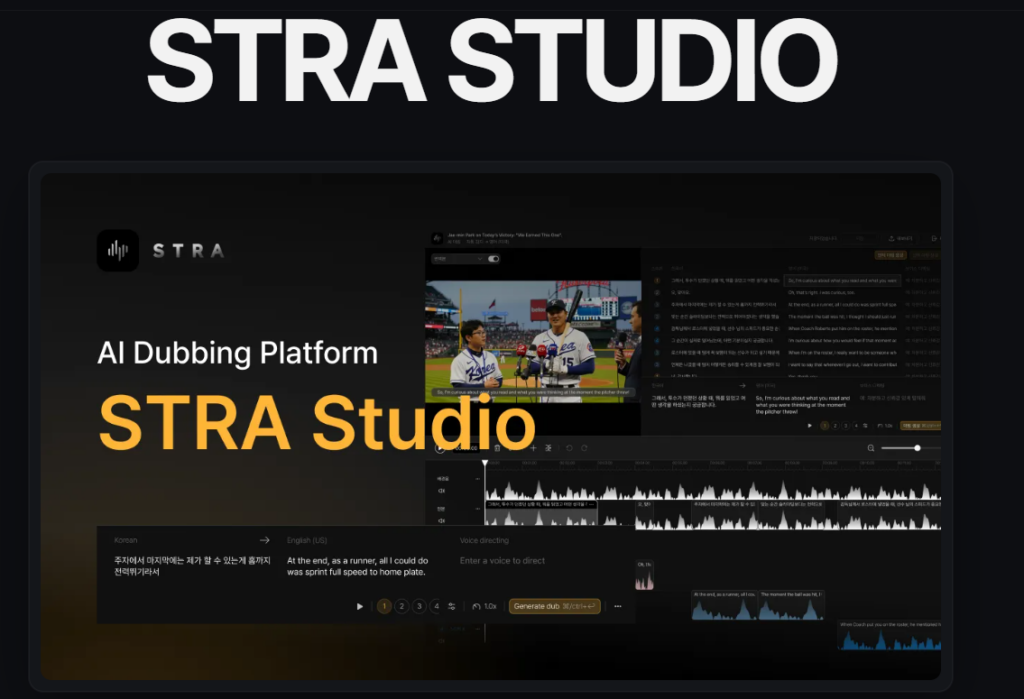
STRA introduced STRA Studio, its AI dubbing platform. Founded in 2021, STRA builds AI dubbing and subtitling services on audio AI foundations. STRA Studio 2.0 revamps the web-based dubbing workflow: users upload a video, and the system handles transcription, translation, voice generation and timing to produce a dubbed output.
Jang-woo Lee, a director at STRA, emphasized that STRA Studio automatically generates dubbed results in the browser after upload and supports 32 target languages.
“Think of it as a tool that makes dubbed videos from uploaded footage,” Lee said. “Much of the workflow is automated, but AI isn’t perfect, so users must be able to tweak voice, intonation, lip sync and translation. Just log in to STRA.ai, upload your video and choose a language. We currently support 32 languages.”
STRA Studio also separates outputs for flexible reuse: producers can download the fully dubbed video, separate subtitle files or just the dubbed audio. That allows broadcasters, creators and distributors to use the full video or repurpose subtitles and audio independently, depending on channel and purpose. The platform also lets users preview audio during generation, easing the review burden for production teams.
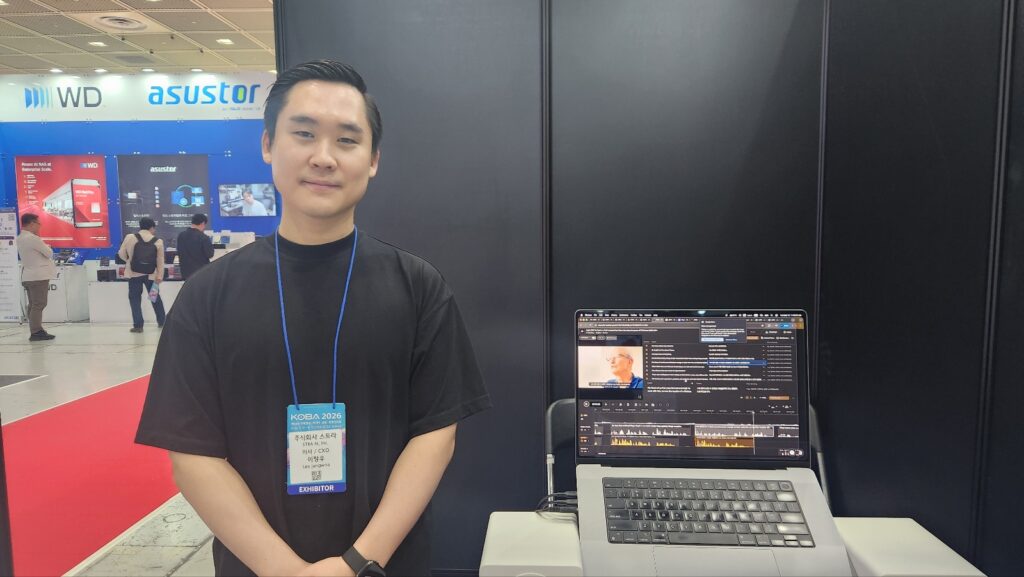
Lee described AI dubbing as the intersection of transcription, translation, timing and voice generation: the system transcribes on-screen speech, translates it into the target language, aligns lines to the scene’s pacing and then applies an AI-generated voice. Users can clone the original voice or choose a different AI voice.
“AI transcribes the speech and aligns it to the video’s timing,” he said. “AI handles translation and voice generation. You can clone the original voice or select another. The key is producing a dubbed video that fits the user’s needs.”
STRA pointed to concrete results from international distribution. Lee said the company delivered more than 100 hours of dubbed content for overseas broadcast projects, moving beyond laboratory experiments to proven use in real distribution workflows.
“We’ve continued developing audio technologies and pursued various projects and TIPS programs,” Lee said. “Last year, through K-FAST-related initiatives, we worked on dubbing for overseas broadcast content supplied to KBS, MBC, Samsung TV and LG TV. Our tech went into content that actually aired overseas — we produced and delivered more than 100 hours. That helped drive revenue growth of roughly 500%.”
STRA’s advantage isn’t just automation. Lee stressed that because AI remains a tool, humans must perform final quality control. STRA combines AI with internal QC teams and experience in specific markets and genres — for example, Spanish-language audiences and telenovelas. In localization, success depends not only on how much AI can automate but also on whether the final output meets broadcast and distribution standards.
“Even if AI handles most tasks, people still need to verify certain areas,” Lee said. “AI is a tool; what matters is whether the content meets quality standards. We process over 90% with AI, but the remaining 5–10% relies on human review and correction. We have internal QC teams and delivery experience in Spanish-speaking markets and telenovela projects.”
Hikvision offers integrated media solutions linking LED, audio and electronic whiteboards
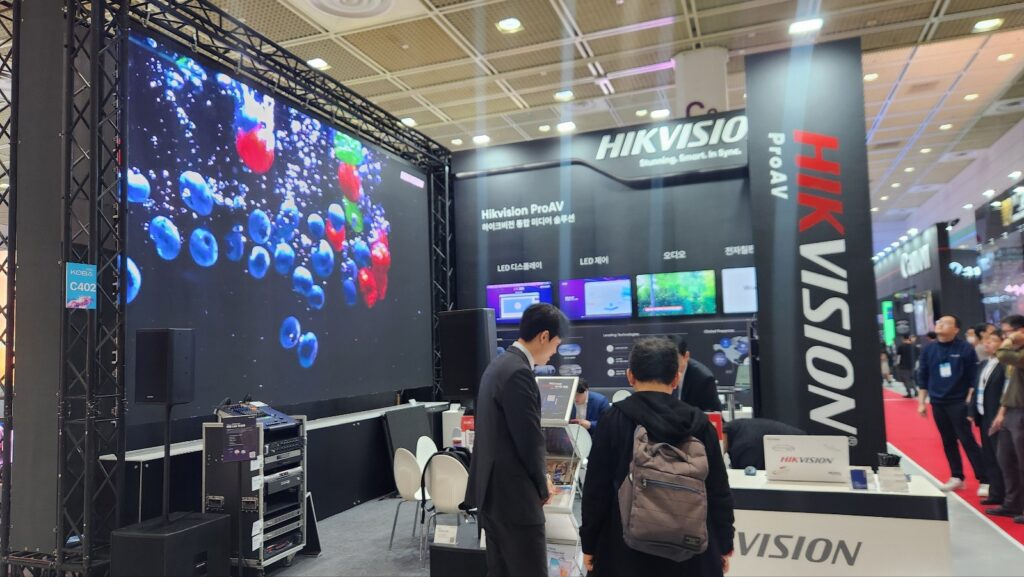
Hikvision showcased an integrated product suite covering LED displays, audio systems and electronic whiteboards. Originally a video-security company, Hikvision entered the LED market in 2013 and has since expanded into rentals, creative displays, indoor and outdoor cabinets, audio products and control systems. At KOBA 2026, the company emphasized a single-vendor approach that designs entire spaces rather than focusing on a single device.
The company’s strategy centers on in-house development of hardware, firmware and platform components. In broadcasting, education, public and commercial settings, facilities often source displays, controllers, audio and interactive whiteboards from different vendors — a setup that complicates installation, maintenance, compatibility and operations. Hikvision aims to reduce those risks by offering everything from LED screens to controllers and an integrated operations platform.
Its LED lineup targets outdoor advertising, landmark façades, houses of worship, schools and meeting rooms. The P-series LED controllers centralize LED control, content distribution and splicing settings and let operators configure video walls through a web browser. The Aries series supports indoor and outdoor cabinets, touts a slim, lightweight design and high refresh rates, and is aimed at event stages and large gatherings. Fine-pitch indoor LED cabinets emphasize slim profiles and installation efficiency.
On the audio side, Hikvision proposed a single-vendor solution that supports both networked and analog systems, bundling speakers, microphones, amplifiers and a management platform to handle broadcasting, announcements, background music and emergency response. Integration with video-security systems enables event-triggered automated announcements and remote control — a capability with obvious appeal for public facilities, schools and commercial venues. The portfolio includes a 128-microphone network ceiling array and network column-array speakers designed for meetings, lectures and paging.
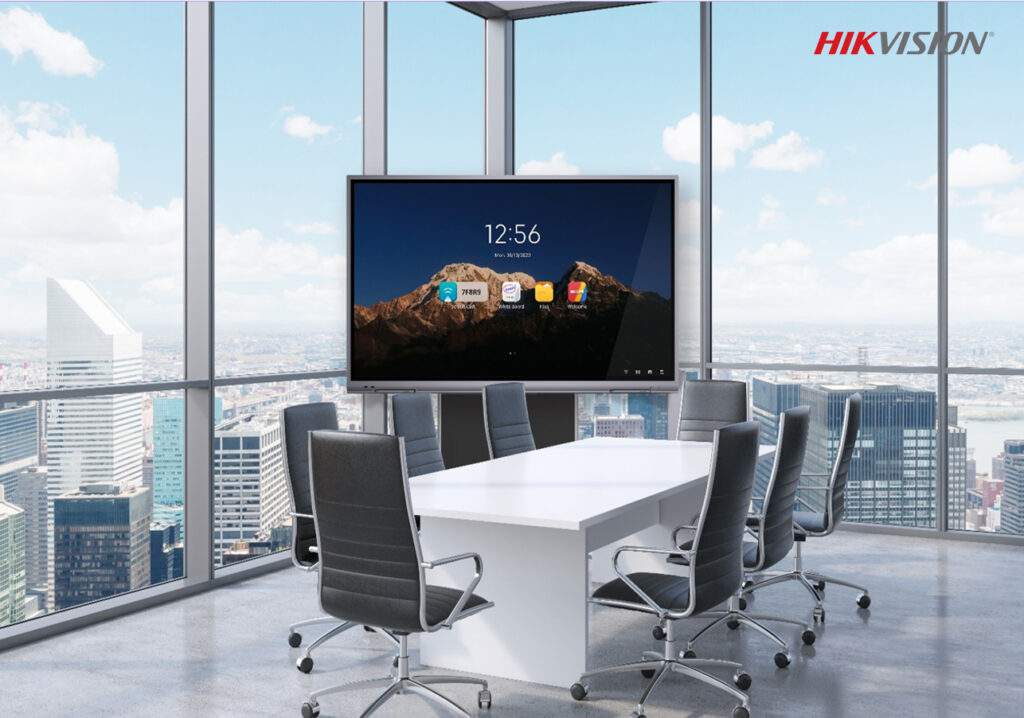
In electronic whiteboards, the WonderHub drew attention. Built on a proprietary mainboard and software stack, it pairs an 8-core CPU and generous memory with a 4K UHD display, low-reflection etched glass, an 8-megapixel camera and an eight-microphone array. AI auto-framing and speaker-tracking target video conferencing and remote teaching. Hikvision’s WonderOS and integrated management platform support wired and wireless screen sharing, OTA updates and remote administration.
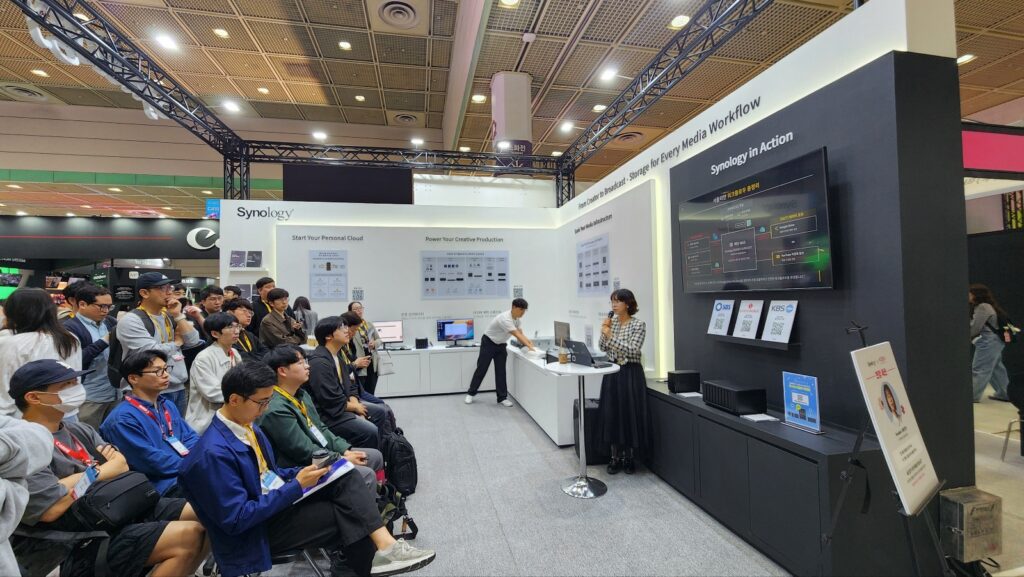
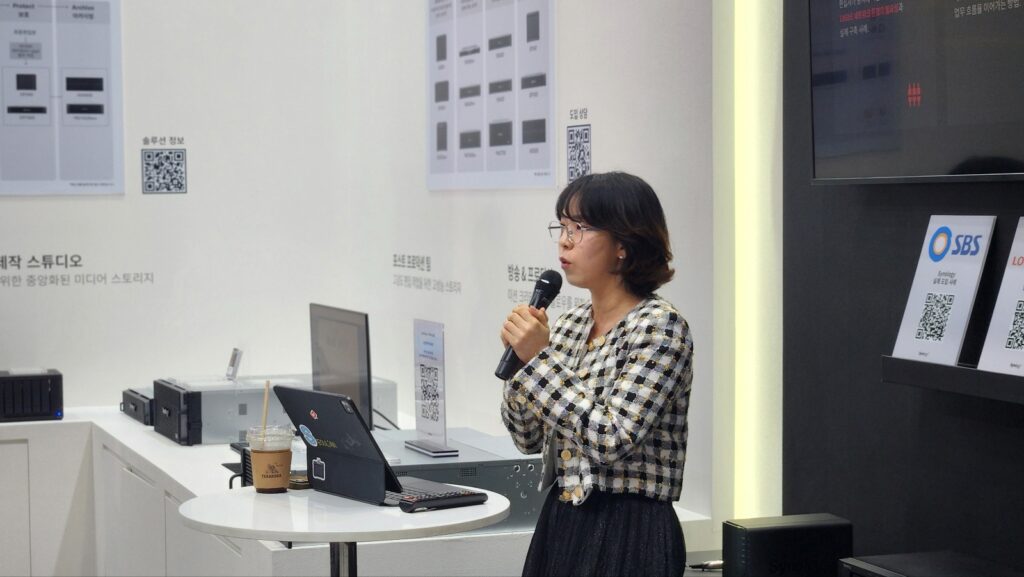
Hikvision’s presence at KOBA illustrated another axis of the AI-media shift. While Twigfarm and STRA focused on content data and localization, and Percept on automating production spaces, Hikvision zeroed in on operating the physical spaces where media plays out. The trend suggests that the industry’s AI transition isn’t just about production software — it extends to the redesign of spaces, equipment and operational systems across the board.











Most Commented