
How KBS Secured 2026 World Cup Rights for Just 140 Billion Won: What It Means for Viewers
Daniel Kim Views
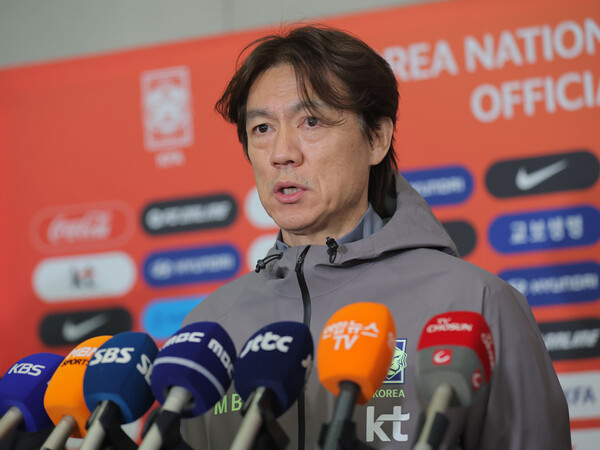
For the first time, commercial cable channel JTBC and public broadcaster KBS have agreed to jointly air the World Cup this June. Until now, South Korea’s three major terrestrial networks typically formed a Korea pool to buy and share Olympics and World Cup rights; this deal marks a significant shift in that practice.
The agreement followed intensive, high-level negotiations. JTBC’s president visited the headquarters of the three terrestrial broadcasters (KBS, MBC, SBS), and multiple talks involved the chair of the Broadcasting, Media and Communications Commission and the networks’ chiefs. Ultimately, KBS purchased the rights for 14 billion KRW (approximately $10.5 million), ensuring nationwide access to the tournament and resolving the immediate viewing-rights dispute. Still unresolved is how JTBC will handle resale of Olympic and World Cup rights it holds through 2032.
On the 20th, KBS and JTBC announced they had finalized negotiations for the 2026 FIFA World Cup broadcast rights. JTBC initially sought 25 billion KRW (approximately $18.8 million); KBS countered with 14 billion KRW and set that as its limit. MBC and SBS, which proposed lower offers or additional conditions, failed to reach agreements.
KBS framed the move as fulfilling its public-service obligations. The network said it expected a sizable deficit but accepted JTBC’s final offer “to meet our responsibilities as a public broadcaster.” KBS noted that it operates two terrestrial channels and is funded by license fees—factors that likely influenced its decision to shoulder the cost.
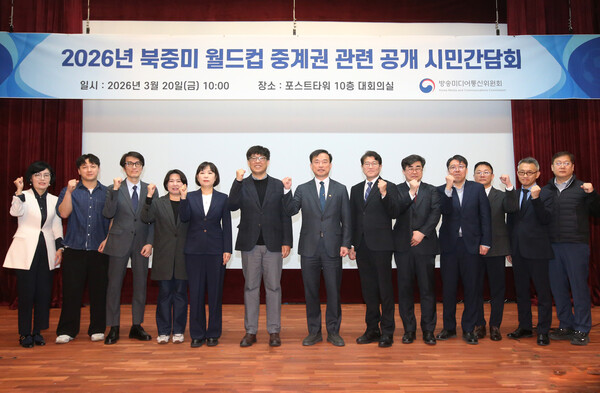
For viewers, the agreement removes the blackout issue. Some 700,000 households that lacked access to the Milan–Cortina Winter Olympics in February, because JTBC held exclusive rights and those households receive terrestrial signals directly, will now be able to watch the World Cup in June. That restores universal TV access. At a commission roundtable on the 20th, Han Seok-hyun of the YMCA citizen-broadcasting office criticized regulators for not doing more during the earlier dispute: “Three percent of direct-receive households—700,000 households—couldn’t watch the Olympics in February. The commission should have pushed harder on resale negotiations instead of leaving it to operators.”
JTBC still faces significant financial and negotiating hurdles. While it closed a deal with KBS, it has not reached terms with MBC and SBS. Even after expected resale fees to platforms like Naver and ad revenue are factored in, analysts estimate JTBC will likely incur losses on the order of several tens of billions of KRW (tens of millions of USD). JTBC’s assumption that it could easily resell rights to terrestrial broadcasters proved misplaced, and that miscalculation could complicate resale talks for World Cups and Olympics through 2032.
That said, JTBC managed to avoid the worst-case scenario. From March 4, JTBC President Jeon Jin-bae personally visited KBS, MBC and SBS to push for resale deals. When talks stalled, JTBC publicly confirmed on March 23 that it had purchased the rights for 190 billion KRW (about $142.5 million) and warned that resale negotiations needed to conclude by the end of March to ensure uninterrupted coverage.
On March 30, Commission chair Kim Jong-chul convened a breakfast meeting with MBC President Ahn Hyung-joon, KBS President Park Jang-beom, SBS President Moon Beom-shin and JTBC President Jeon Jin-bae. Immediately after that meeting, the terrestrial broadcasters demanded JTBC take responsibility for triggering the rights dispute. Discussions appeared deadlocked, but three weeks later JTBC reached an agreement with KBS.
The commission said the breakfast meeting produced a tangible outcome: its participants agreed to cooperate on forming and operating a “Korea consortium” that would include the three terrestrial broadcasters and JTBC to manage Olympic and World Cup rights JTBC holds through 2032.
The commission also pledged to play an active role in future negotiations. A commission official overseeing broadcast infrastructure told MediaToday on the 21st that regulators would “support the voluntary formation of a Korea consortium that includes terrestrial broadcasters, pay-TV operators, OTTs and digital platforms,” and back proposed legislative amendments—seven bills related to universal viewing rights—to ensure the public can reliably access major sporting events.
Alongside the consortium initiative, lawmakers are considering a Broadcasting Act amendment proposed on March 6 by Kim Hyun, a Democratic Party member of the National Assembly’s Science, ICT, Broadcasting and Communications Committee. If enacted, the bill would require KBS and MBC to secure broadcast rights for every Olympics and World Cup and compel them to purchase events for which JTBC holds rights—effectively forcing both JTBC and public broadcasters to negotiate in order to protect universal viewing rights.
The Korea Broadcasting Association, whose members include the three terrestrial networks, urged the government and the Assembly on the 10th to “establish a fair cost-sharing structure for Olympic and World Cup rights and consider government support measures to guarantee viewers’ access.” The group also called for expanding the Korea pool so more broadcasters can participate and for a priority negotiation framework centered on the three terrestrial stations.













Most Commented