
How Actor Kim Yoonam is Shattering Stereotypes: The Inspiring Journey of a Dwarf Actor in South Korea
Daniel Kim Views
Even as disability is still used as a slur or treated as something to hide, there are people who proudly live openly with their disabilities. They exert influence across drama, YouTube, theater and social media, chipping away at public prejudice. Pressian met people who center disability in their work in popular culture to hear about their journeys and what they want to say through their art. Editor
Lee Chan-hyuk of AKMU released his second full-length album EROS last year and drew praise for both its artistry and popular appeal. Rooted in ’80s pop and focused on themes of love and solidarity, the album and its track “Love Under Threat of Extinction” swept three awards at the 23rd Korean Popular Music Awards—Best Pop Album, Best Pop Song and Song of the Year.
The record’s success wasn’t just down to Lee Chan-hyuk. The title track “Vivid Lala Love” gained even more fans thanks to the charisma of the actors who dance alongside him. In particular, Kim Yoo-nam (33), who opens the “Vivid Lala Love” music video, drew attention comparable to Lee Chan-hyuk with his shaved head, markedly small stature and intense stare.
When Pressian met Kim at a café in Noryangjin, Dongjak District, Seoul, on the 26th of last month, he presented a side that contrasted sharply with his fierce music‑video persona. With messy hair and an easy grin, he cracked jokes. He laughed that the attention he got after the video left him with a brief case of celebrity syndrome, even jokingly calling himself Chan‑hyuk’s “little brother.”
When asked if the celebrity syndrome had worn off, Kim hesitated, then pulled out his phone and unlocked it. A clip of him dancing in the music video played. “When people stare, I sometimes pull up my phone and fidget with it to see if they’ll recognize me,” he said. Apparently celebrity syndrome isn’t easy to shake.
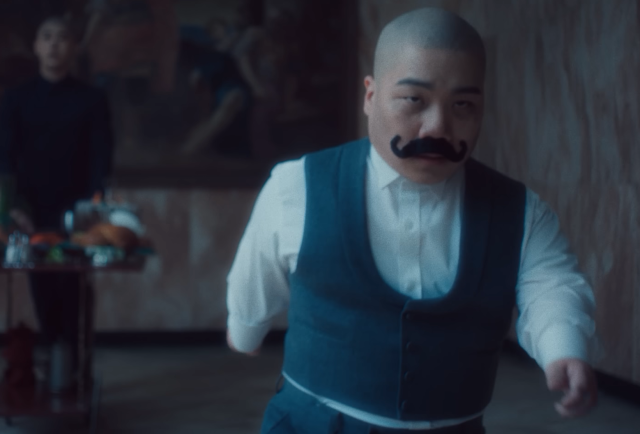
Kim was already a recognized actor before the music video. He began in 2015 with the play Different Class and has since worked in musicals, dance, drama and film. In 2018, when he played the dwarf character General Tom Thumb in the musical Barnum: The Greatest Showman, critics noted it was effectively the first time a disabled actor took a major role in a Korean commercial musical.
As the public often labels him a disabled actor, Kim’s condition goes beyond simply being shorter than average—he has dwarfism. He stands 132 centimeters and weighs 60 kilograms. His head and torso are not much different from average, but his height and hands are noticeably smaller, so he tends to stand out in a crowd.
Kim’s dwarfism stems from achondroplasia, a cartilage‑development disorder that interferes with normal bone growth. Because his bones don’t develop fully, they can bend and injure easily. He tires quickly when standing or walking long distances; he can shuffle short distances, but for longer trips he needs a motorized scooter.
Born with a congenital condition, Kim has been shorter than his peers since childhood. His legs bowed repeatedly, requiring surgeries and orthotic devices over the years. Although he recognized those differences, he didn’t think of himself as disabled. Reaching elevator buttons could be inconvenient, but he experienced little trouble in most day-to-day activities.
“I’ve known I was short since I was a kid. But I never had a moment when I thought, ‘Oh, I have a disability.’ I never felt special. In fact, I’ve often felt uncomfortable when people labeled me disabled. Just recently, I tried to get on an elevator and non-disabled people argued over me. One older man even blocked a woman who was about to board and told me, ‘You go ahead.’ I appreciate their kindness, but when people treat disability as something too difficult it becomes a burden,”
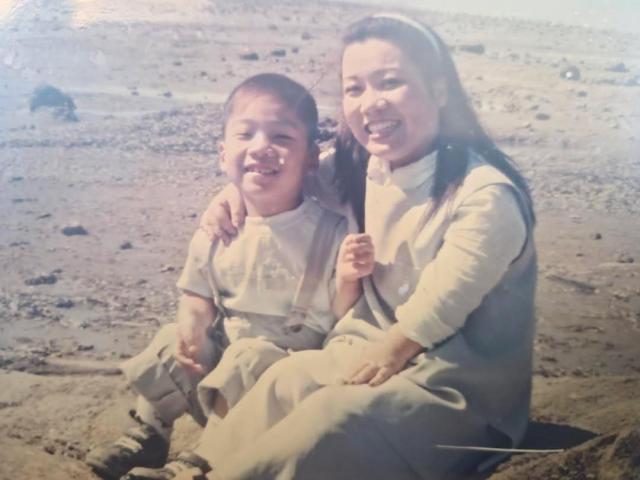
Kim’s take-it-in-stride attitude toward disability comes from his mother. Even though she uses a wheelchair, she has a cheerful personality and loved socializing. As an only child, Kim’s mother introduced him to many people and experiences, which helped him build confidence and a sunny disposition.
Thanks to his mother’s influence and those varied experiences, Kim learned early how to attract and enjoy friends’ attention. A teacher who noticed this suggested he become a comedian, and Kim enrolled in the Department of Theater, Film and Comedy at Yewon Arts University. Challenging himself across theater, musicals and film during school, he naturally became an actor by graduation.
Kim says dwarfism is a definite advantage for him as an actor. In a profession where commanding attention matters, his conspicuously small stature becomes an irreplaceable asset. He also reports high job satisfaction. “If I were born again I’d still want to be an actor. Every new role lets me try the job I’ve always dreamed of, and it’s fun,” he said.
His dwarfism also influenced his casting in Lee Chan-hyuk’s music video. Lee’s team wanted a range of faces, and Kim was among the actors they hired. Given the several media offers Kim received after the video’s release, the casting choice appears to have paid off.
But dwarfism doesn’t always work to his advantage. The public sometimes focuses less on Kim’s performance than on the fact that a disabled person is performing—treating the presence of disability itself as the emotional centerpiece, rather than the craft.
“I see acting as a job that presents a character to the audience. But when I act, I often feel people remember me rather than the character or the story. I want to keep developing as an actor, but people often get overly emotional just because I have a disability. That can make me complacent, which isn’t good, so I stay on guard against that mindset,”

In daily life and on stage, Kim refuses to be treated as someone to be pitied because of his dwarfism. That’s also why he introduces himself as a “dwarf actor.” He intentionally uses a familiar—even pejorative—term because he wants people to accept disabled individuals as ordinary members of society, rather than treating them as something to be feared.
Along those lines, Kim plans to form an agency that brings together actors with dwarfism. He hopes that increased visibility in mass media will dissolve misconceptions and build familiarity. He also wants to challenge the tendency to cast non-disabled actors in dwarf roles when performers with dwarfism are available.
“I’d love for people to treat disabled people—and me—as approachable. Ideally, I want people to think, ‘Kim Yoo-nam isn’t some saintly, inspirational disabled person; he’s just a regular troublemaker you might meet in your neighborhood.’ Of course, basic respect should always be there. But I want people to realize disabled people can be casual and approachable, and to feel comfortable asking questions when they don’t know something. I want to stress that people with disabilities often dislike being treated as too special or too difficult to approach,”














Most Commented