
Unveiling the Secrets: The Makeup and Costume Magic of ‘The Man Who Lives with the King’
Daniel Kim Views
@@@
Showbox
@@@
The Man Who Lives with the King has unveiled behind-the-scenes details of its makeup and costume design.
Set in 1457 at Cheongnyeongpo, the film tells the story of a village chief who voluntarily accepts exile to revitalize his community and a young deposed king who finds himself banished.
Makeup director Song Jong-hee, known for transforming actors in films like Concrete Utopia and Decision to Leave, prioritized creating relatable characters over strict historical accuracy. Song focused on showcasing emotional depth through makeup, explaining, “We aimed to highlight character traits within the era’s aesthetic constraints.” The team utilized period-appropriate elements like topknots and beards, while also employing nuanced details in skin tone, wrinkles, and eyebrows to convey each character’s complex narrative.
Village chief Eom Heung-do (Yoo Hae-jin) was portrayed as both a down-to-earth community leader and an archetypal Korean father figure. His makeup evolved from an initially carefree look to a more somber expression following his encounter with Lee Hong-wi.
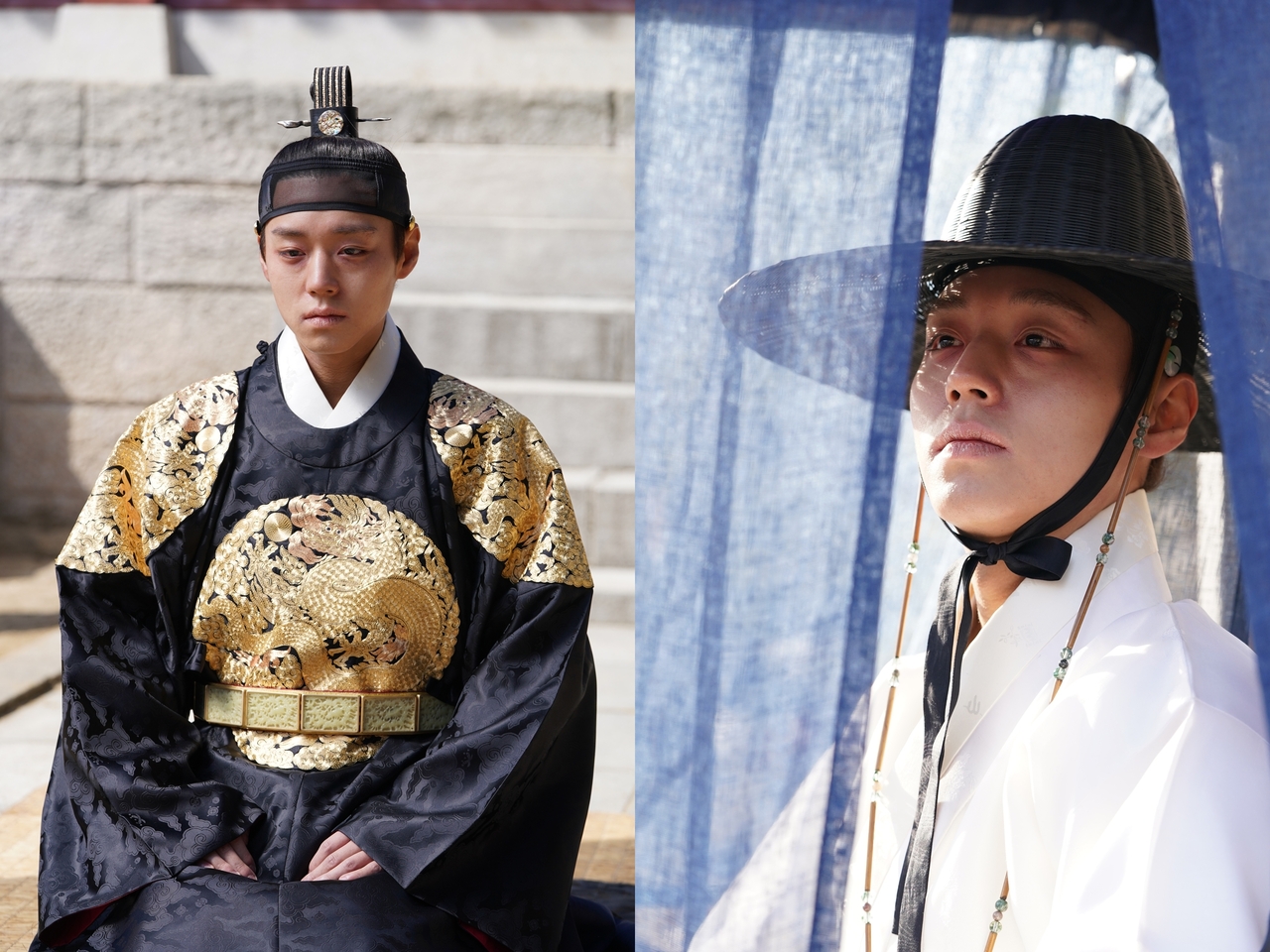
For the young exiled king Lee Hong-wi (Park Ji-hoon), the makeup team aimed to visually convey his life’s hardships. They designed his first appearance to carry gravitas, showing his transformation from a frail, powerless figure to one who regains vitality through interactions with villagers and ultimately reclaims his regal dignity.
The ambitious politician Han Myeong-hwe (Yoo Ji-tae) was given strong eyebrows and a goatee to reflect his inner strength and ambition. For palace maid Mae-hwa (Jeon Mi-do), the team emphasized her nurturing presence through a clean, understated look that highlighted the actress’s natural beauty. Song noted, “When an actor embodies the character on set, a new presence emerges that bridges the script and the performer.” This attention to detail enhances the audience’s immersion in the story.
Veteran costume designer Shim Hyun-seob, known for his work on historical dramas like The Face Reader and The Throne, stated, “We balanced historical accuracy with creative interpretations unique to our production.” Shim personally crafted about 500 costumes to bring the world of The Man Who Lives with the King to life. Natural fabrics and earthy color palettes were used to reflect the simple, rustic atmosphere of Gwangcheonggol. Eom Heung-do’s straw hat, for instance, reinforces his everyman appeal. For Lee Hong-wi, Shim recreated the authentic black royal robe worn by the deposed king during the Gyeyu Jeongnan incident, while also employing white and pastel tones to convey the character’s emotional state. Shim emphasized, “The deterioration of Lee Hong-wi’s white robe during his exile journey symbolizes his inner turmoil,” capturing the profound loss and unprecedented hardships faced by the character.
The costume design extends to other characters as well. Han Myeong-hwe’s layered robes create an imposing silhouette befitting his powerful status, while Mae-hwa’s soft, civilian attire reflects her tender feelings toward Lee Hong-wi. As Shim puts it, “Costumes create a unique world for each production,” and The Man Who Lives with the King offers viewers a visual feast that brings each character’s personality and emotional journey to life.
The Man Who Lives with the King has hit the ground running, attracting over 1 million viewers in just five days. The film continues to draw acclaim as it plays in theaters nationwide.














Most Commented