
Discover Incheon’s Timeless Delicacies: The Legacy of Incheondang’s Handmade Snacks
Daniel Kim Views
Translation result.
(22) Handmade Traditional Confectioner Incheondang… Owners Dong-gi Kang and Yong-hae Pyo
They insist on an oven with no thermometer and an iron mold
They judge the heat by how it feels on their cheeks
They knead the dough by hand instead of using machines
They use no preservatives and not a drop of water
We stay honest and modest…
We want to be remembered as a place whose taste never changes
Regulars span generations
City designates the shop a ‘Century Business’ and an Incheon legacy store
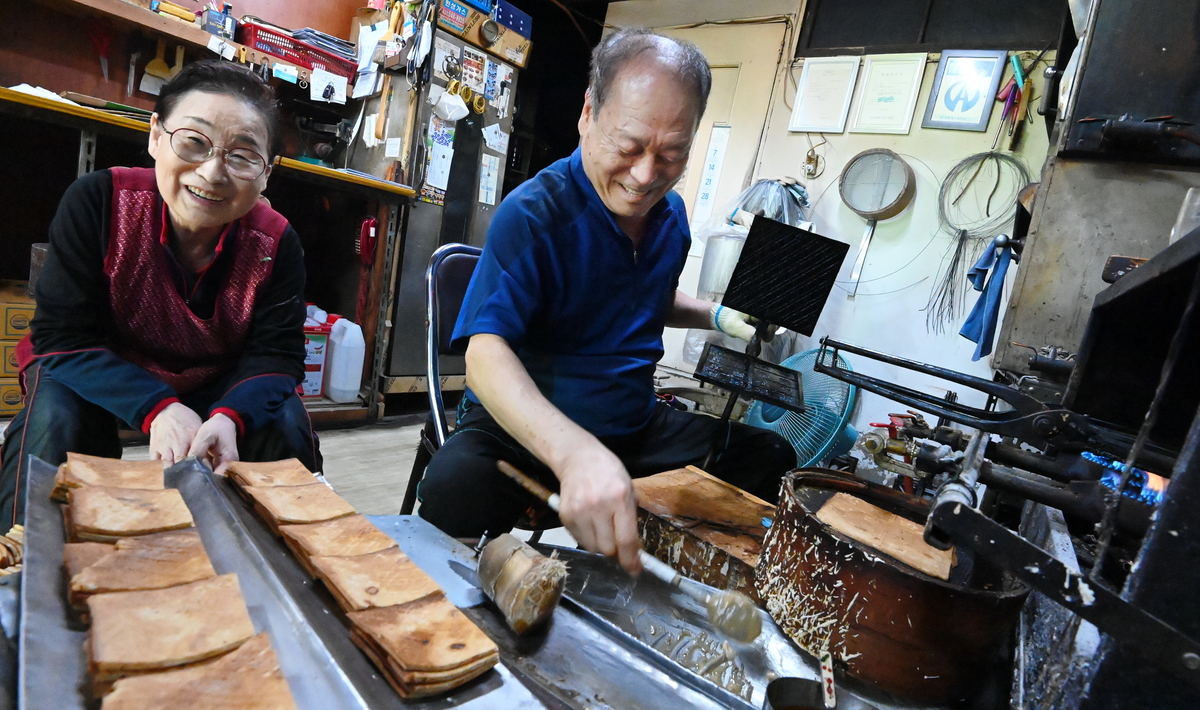 Photo: Ji Geon-tae, Incheon
Step out of Dongincheon Station on the Gyeongin Line and turn the corner onto the main road, and you feel as if time has slipped backward. Even amid the barren signs of redevelopment — a patchwork of old storefronts and modern buildings — the familiar scent in the air never changes.
Follow the sharp ginger and toasted peanut aromas and you find Incheondang, a longtime shop that has stood for more than half a century. Under a faded red sign, a creaky steel door opens to a glass case piled with rustic, comforting displays of ginger cookies, seaweed crackers and peanut snacks. But the true treasure sits beyond that glass. For 58 years, owners Dong-gi Kang (77) and his wife Yong-hae Pyo (73) have quietly tended the hot oven.
Kang treats baking almost like a ritual. He places a heavy brass (iron) mold on the fire, bends low and brings his face close. He presses the left side of his cheek to the mold, pauses, then moves to the right to judge the heat. There isn’t a thermometer in sight. His cheek’s memory of the heat — that finely tuned sense — serves as his only gauge.
“If the temperature is even a little off, one side burns while the other stays raw. The feeling on my face is my thermometer,” he says.
That countless, practiced touch is the craftsman’s way of finding the perfect crunch that handmade snacks demand. They don’t rely on machines to knead the dough, either. Kang mixes flour, sugar and eggs and works the dough by hand until it flows slowly off a spoon at the right consistency.
“If you use a machine, the dough gets tough,” he says, revealing a stubborn commitment to quality. The secret to Incheondang’s senbei (traditional crackers) lies in the strength the wrist remembers and the thickness the palm feels.
Kang learned the trade at cookie factories in his teens and opened this shop in 1968.
When I visited on the 6th, they were baking peanut crackers ahead of Parents’ Day (May 8). Customers lined up to buy a nostalgic gift for elderly parents. Kang turned brass molds weighing 5–7 kg (about 11–15 lb) by hand as he baked — grueling work that pits a person against heat all day. Peanut crackers are thicker than other crackers and require longer baking, so an iron mold is essential; lighter molds would warp quickly.
“Back then, snacks were precious and we could barely keep up with demand. During the holidays, the line stretched to the end of the block. We’d bake all night and still not have enough,” Kang recalled.
In his memories, Dongincheon buzzed with the scent of people and energy. Waves of industrialization brought workers, students and merchants who soothed their long days with Incheondang’s treats. Now, children who once held their parents’ hands at this counter return as parents themselves with their own kids in tow — a living thread of nostalgia.
Incheondang’s goods stand apart from mass-produced, machine-stamped snacks. Kang still insists on the original iron molds and an oven without a thermometer.
“We don’t add a single drop of water to the dough. We adjust texture only with eggs,” he explains, arguing that ingredient purity determines depth of flavor.
Given more than half a century of work, many would call him a master, but Kang waves off the title. “What great skill is there in baking?” he says modestly. Still, they know age will force them to close eventually, and the thought saddens the couple.
 In fact, a young person from Gunsan in North Jeolla Province recently tried to learn the craft but quit within a month. People today find it hard to endure the long hours in front of a hot oven and the heavy iron molds. Incheondang remains the only shop nationwide still committed to this handmade method.
The shop labels its crackers saeng (raw) because they use no preservatives. That makes them hard to manage.
“When it’s cool like now, we can sell them the next day, but in midsummer we have to make smaller batches more often, or they’ll quickly mold. That’s why we never considered mass shipping or large-scale packaging,” Pyo says.
The couple politely turns down kindergarten or bulk orders. “Last year, ten kindergartens ordered, but we couldn’t do it. We can only make a fixed amount each day. If we get greedy, the taste changes. Even if we could earn millions of KRW a day, we want to sell only what we can honestly make,” Kang says.
They make many kinds — fan-shaped crackers, sangtu cookies, round jeonbyeong — but ginger cookies remain the top favorite. The sharp ginger aroma and sweet balance hit the right note. Ginger cookies come single- and double-baked, each with a different color and flavor. Until recently, they sold bamppang (three for 1,000 KRW (approximately $0.75)) as a little lure for passersby, but they stopped after nearby bakeries complained about undercutting prices.
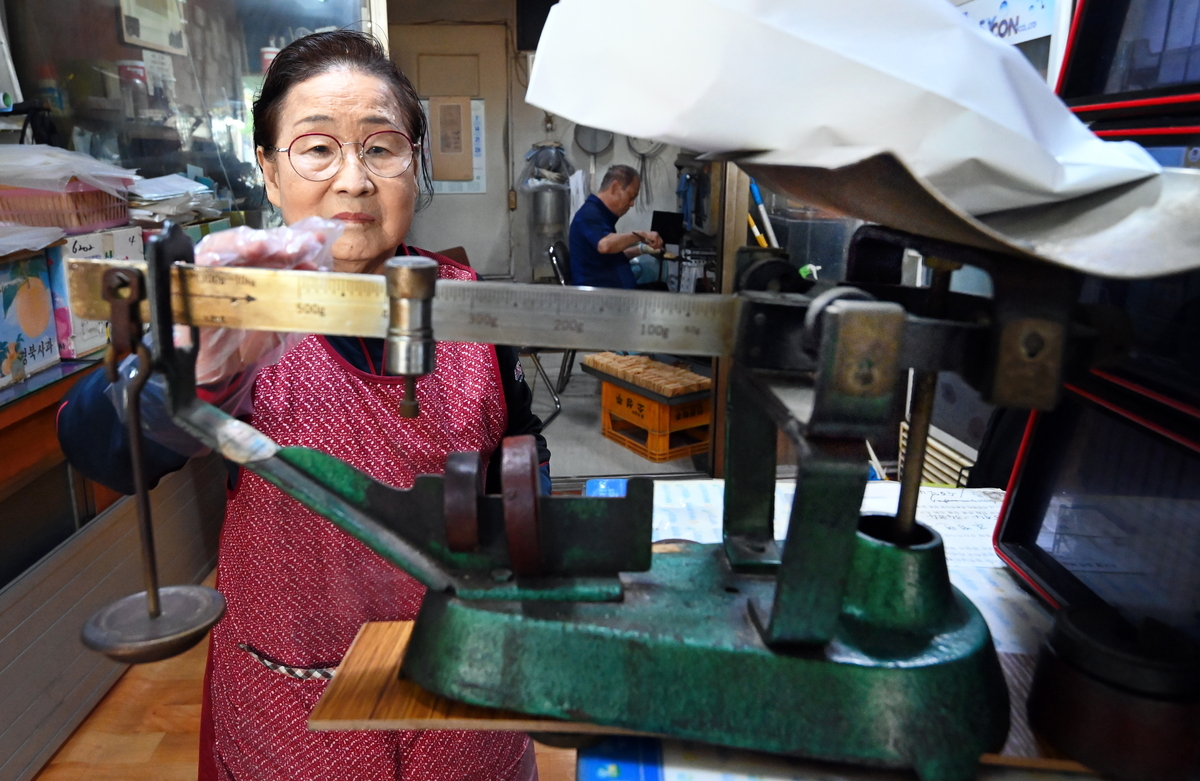
Young people who moved to Incheon from Gongju in Chungnam and Mungyeong in Gyeongbuk put down roots here roughly 60 years ago. Named after the once-bustling Dongincheon district, Incheondang has grown into more than a shop; it stores the neighborhood’s memories. That day a regular in his 70s shuffled in on a walker and calmly asked, “Pack me a geun of senbei” — one geun (350 g, about 12.3 oz). He handed over a 10,000 KRW bill (approximately $7.50). Pyo added an extra handful for his grandchild.
Pyo is Kang’s strongest partner and the shop’s warm neighborhood hostess. She neatly stacks fresh crackers in the glass case with obvious care for regulars. She often tells customers, “You don’t have to buy from us, but please eat snacks made in Korea.”
“Snacks that come from China must contain stuff to survive that long journey, right? Our snacks are raw, with no preservatives at all. They’re harder to manage in summer and can mold quickly, but they’re honest for the body,” she says.
That philosophy has kept Incheondang full of customers across generations. Children who came with their parents now bring their own kids. A middle-aged woman stopped by on her way home, bought a bag and asked for a few extra pieces — a small, warm exchange you rarely see in a cold city.
The city recognized that value by designating Incheondang a Century Business and an Incheon legacy store. In a Dongincheon roiled by redevelopment, the shop serves as a cultural asset that preserves local memory and supports the city’s identity.
For the couple, this alley is more than a livelihood; it’s family history and life itself. As redevelopment pushes neighbors away one by one, Kang still lights the oven at 6 a.m. every morning. “We don’t want much. As long as our health allows, we want to protect this alley and be remembered as a place with an unchanging taste whenever Incheon residents come back,” the pair says.
If you catch a warm ginger scent near Dongincheon Station, you can relax — a piece of Incheon’s warm memory is still baking there.










Most Commented