
Translation result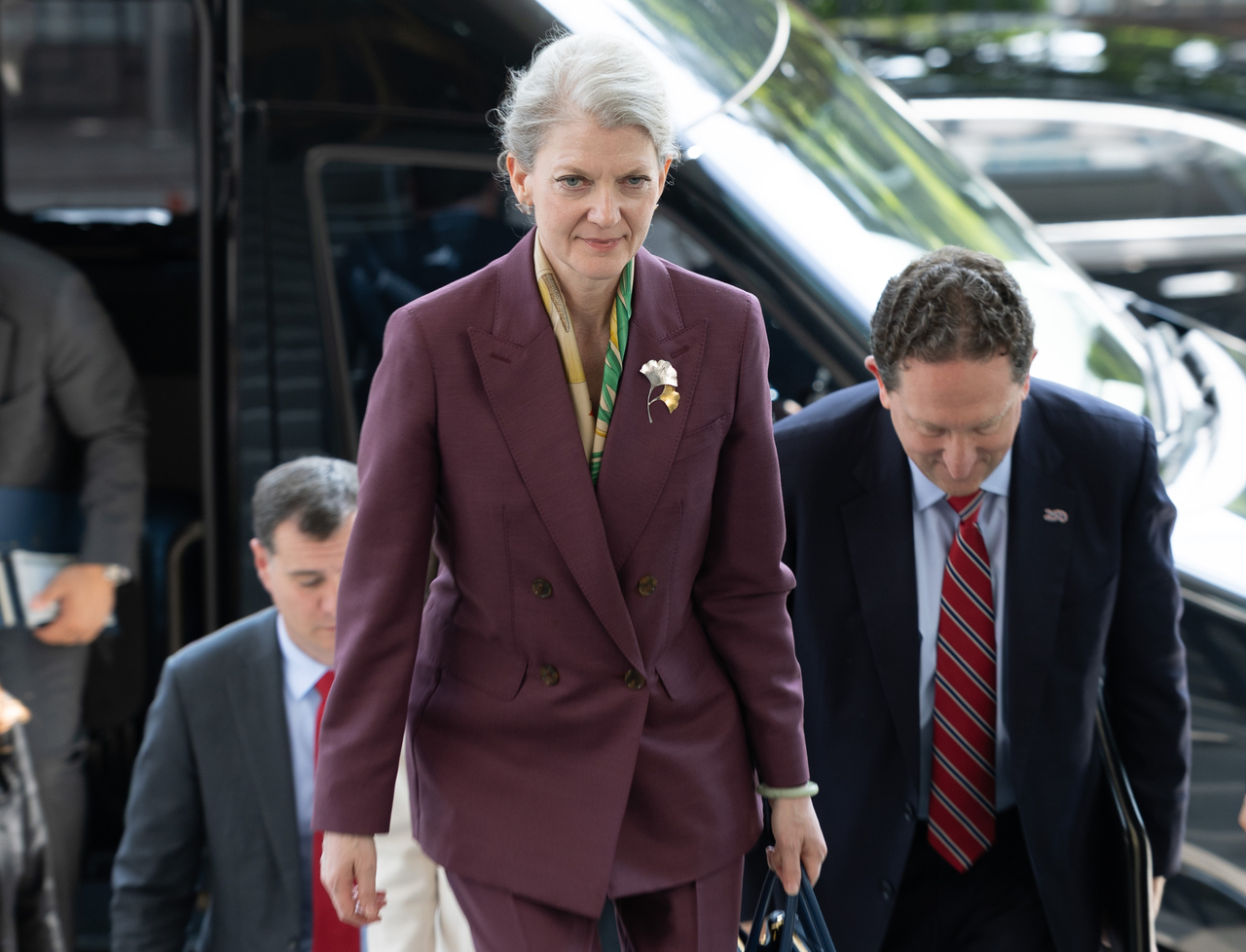 On June 2, South Korea and the United States opened formal talks aimed at implementing security commitments reached at their summit, with a central focus on building nuclear-powered submarines and authorizing uranium enrichment and spent-fuel reprocessing.
The two delegations convened a kick-off meeting that morning at the Government Complex Seoul annex to begin follow-up actions on the security section of the Korea‑U.S. summit joint fact sheet (JFS). The sessions are scheduled to continue through June 3.
The South Korean team was led by First Vice Foreign Minister Park Yun-ju and included representatives from the Blue House National Security Office, the Ministry of Foreign Affairs, the Ministry of National Defense, the Ministry of Climate and Energy, the Ministry of Science and ICT, the Ministry of Trade, Industry and Energy, and the Nuclear Safety and Security Commission.
The U.S. delegation, which arrived in Seoul the day before, was led by Under Secretary of State for Political Affairs Allison Hooker and included officials from the White House National Security Council, the State Department, the Department of Energy and the Department of Defense. Vice Minister Park and Under Secretary Hooker co‑chaired the kick-off meeting, after which each side’s national security offices led sector-specific working sessions. Because the U.S. team postponed a planned January visit amid developments in the Middle East, both sides said they intended this meeting to produce detailed agreements rather than serve as a mere introductory exchange. Working teams reportedly coordinated ahead of time to prepare.
Officials said the talks likely covered a broad set of issues, including South Korea’s plan to build nuclear-powered submarines, authority for uranium enrichment and spent-fuel reprocessing, and expanded Korea‑U.S. cooperation on shipbuilding. Seoul’s stated goal is to revise the Korea‑U.S. nuclear cooperation agreement to secure the right to build and operate domestic uranium-enrichment facilities for peaceful and commercial purposes and to obtain reprocessing authority for nuclear fuel.
The government has repeatedly emphasized that pursuing nuclear-powered submarines and enrichment/reprocessing authority will not lead to the development of nuclear weapons. Officials also likely discussed concrete verification and monitoring mechanisms to objectively demonstrate those nonproliferation commitments. After concluding the meetings on June 3, both sides are expected to announce preliminary results. Reporter Moon Hye-hyun















Most Commented