
Translation result.
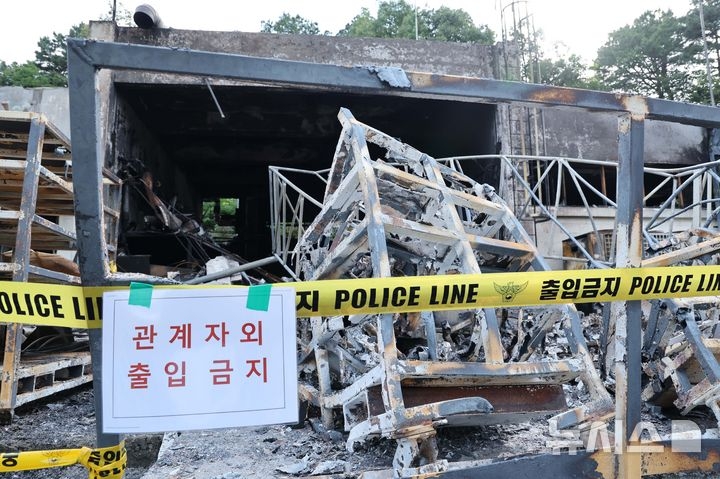 Hanwha Aerospace’s Daejeon plant suffered another large explosion tied to solid‑fuel rocket propulsion, bringing renewed scrutiny to structural hazards and safety management across propellant production. This is the third major fatal incident at the Daejeon facility, following accidents in 2018 and 2019.
Hanwha Aerospace and fire officials said an explosion and fire erupted around 10:59 a.m. on the 1st in Cleaning Room 56 at the company’s Daejeon plant in Oesam‑dong, Yuseong‑gu. Five workers were killed and two injured; one of the injured has life‑threatening, full‑body burns.
Fire authorities say the blast, whose cause is still unknown, occurred while equipment related to solid propellant was being cleaned. Investigators are probing the exact sequence of events. Rocket propellant refers to the devices or materials that generate a rocket’s thrust. It is a core element that produces high‑temperature, high‑pressure gases through chemical reactions and expels them through a nozzle to produce thrust.
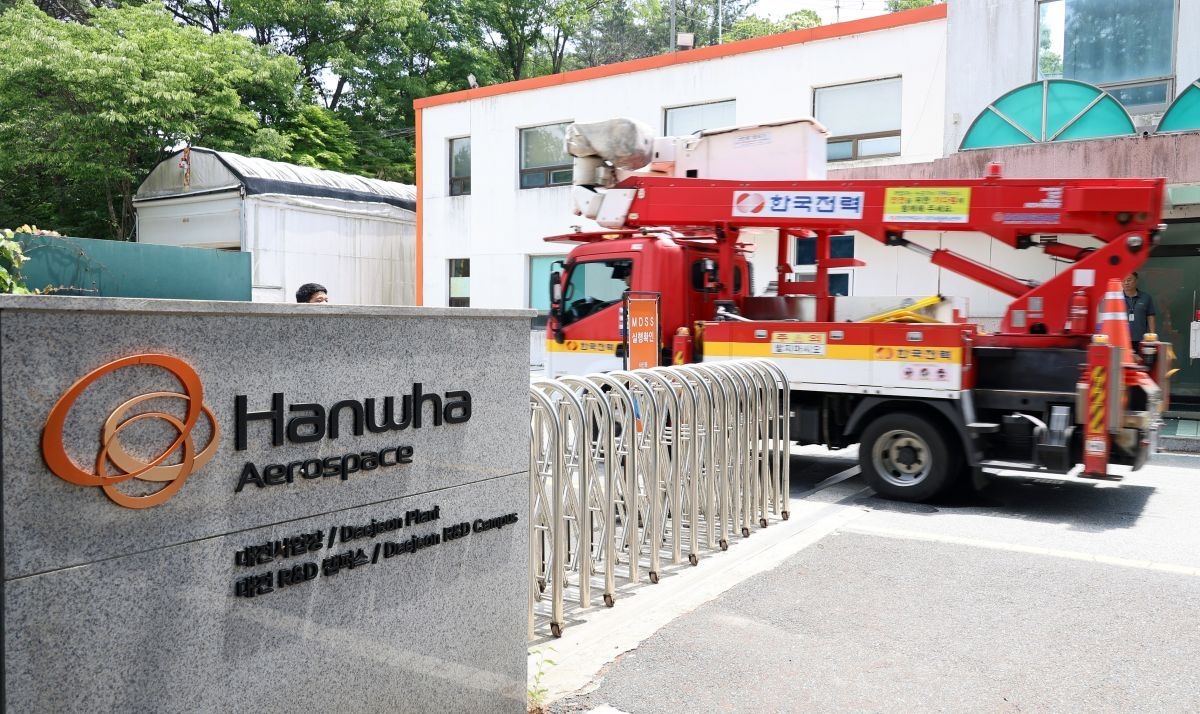 The repetition of similar accidents at the same site has prompted sharp criticism that these are not isolated mishaps but preventable, man‑made disasters.
At the Daejeon plant, a May 2018 explosion killed five workers during a solid‑fuel charging operation. In February 2019, an explosion in the demolding room — where fuel is removed from rocket motors — killed three people. Combined, fuel‑ and propellant‑related incidents at the facility have claimed 13 lives.
The specific processes differed each time: 2018 involved fuel charging, 2019 involved fuel removal, and this incident occurred during cleaning of equipment used after fuel injection. The common thread is that all occurred during operations involving solid propellant.
Critics say the pattern shows Hanwha and regulators failed to adopt comprehensive, system‑wide safeguards across propellant production despite prior catastrophic events.
The United States has recorded comparable large‑scale accidents in solid‑propellant production and maintenance. In 1987, a fire at a Morton Thiokol plant killed five people during an ICBM solid‑fuel operation. In 2003, a maintenance explosion at a Pratt & Whitney space propulsion facility killed one worker during repairs at a solid‑propellant mixing plant.
Investigators of the 2003 incident noted the plant had no bulk fuel present at the time, but probes suggested residual propellant may have contaminated equipment — a similarity experts point to in evaluating the Hanwha accident.
Solid propellant is the primary energy source for many missiles and rockets. Though it is physically solid, it is composed of highly energetic, viscous, and adhesive compounds.
Residual material can cling to piping, valves, containers, and tools even after charging, so dedicated cleaning processes are required. In the defense sector, charging, removal and cleaning of propellant are all classed as high‑risk operations because remaining propellant, fine particulates, static electricity or a stray spark can trigger an explosion.
Hanwha acquired the Daejeon site — originally operated by the Agency for Defense Development (ADD) for propellant production — in 1987 and has run it since. It remains a critical, high‑security facility for developing and producing missile and rocket propulsion systems.
The plant is known to perform propulsion production and fuel mixing and charging for systems such as the long‑range surface‑to‑air missile L‑SAM and the Chunmoo multiple‑rocket launcher.
Given the facility’s role in developing advanced systems tied directly to national defense, some observers question whether safety inspections and oversight were adequate after the prior accidents.
Civic groups, including the Daejeon Participatory Citizenship Alliance’s Peace and Solidarity Committee and the Daejeon Civic Group Solidarity, issued a joint statement saying, “Thirteen workers have died at a single facility in just eight years,” and called the repeated tragedies “clearly man‑made.”
A special labor inspection after the 2019 accident documented 486 legal violations, and the National Forensic Service’s probe at the time found shortcomings in anti‑static systems and other safety management failures.
Ongoing investigations by police, fire authorities and the Ministry of Employment and Labor are expected to focus on the explosion’s cause, compliance with work procedures, hazardous‑materials management, the condition and operation of safety systems, and the execution of emergency response protocols.
Hanwha Group and Hanwha Aerospace said in a statement they are “heartbroken and deeply saddened by the loss of five valued employees,” and pledged to “thoroughly investigate the cause and take all necessary steps to prevent a recurrence of such a tragic accident.”















Most Commented