
Yoon Seok-jun, Chamil, June 1, 2026
Why Are the U.S. and China Racing to Develop ‘Strange’ Weapons?
In recent months, the U.S. and China have accelerated development of a range of unconventional weapons systems — a shift from their long-running competition over high-end, next‑generation platforms.
Rather than focusing solely on unmanned tanks, sixth‑generation fighters, new surface combatants and submarines, or medium‑range hypersonic missiles, both nations are reviving shelved programs, revisiting concepts once confined to the drawing board, and adapting technologies their rivals abandoned to fit emerging battlefield needs.
Military analysts say this trend goes beyond the cheap unmanned systems (LUCAS) that dominated recent conflicts. They point to fierce competition to close capability gaps for a set of unusual systems: 1) railguns, 2) WIG (ground‑effect) military aircraft or WIG sea drones inspired by Soviet designs, 3) nuclear‑battery‑powered torpedoes and recoverable UUVs launched from 533 mm torpedo tubes, and 4) converting carriers into drone‑only platforms.
Analysts cite several drivers behind the shift.
First, the changing character of war. Modern conflicts increasingly measure success by minimizing casualties and infrastructure damage on both sides. That reality favors niche, asymmetric tactics over high‑attrition, symmetric battles, pushing planners toward approaches that achieve effects while limiting collateral harm.
Second, changes in weapons and C4ISR. Advances in long‑range communications, autonomy and remote operations have enabled new, faster weapon concepts. Systems designed for rapid, decisive effects now deliver greater tempo and destructive power. Some Cold War–era conventional concepts and hybrid weapons are getting second looks as lethality and reach improve.
Third, the rise of artificial intelligence. Concepts once stopped by human or biological limits are now being revisited because AI can help solve algorithmic and operational problems that previously prevented systems from reaching operational maturity.
Finally, the hunt for game changers. While many experts once saw fourth‑industrial‑revolution dual‑use technologies as the decisive advantage, the current focus is how to apply military science to achieve operational completeness — and AI is central to that effort. Renewed technical promise and shifting funding priorities mean programs that stalled for budget or operational reasons are getting new attention.
Below are some of the unconventional systems that have drawn the most attention.
First, renewed railgun efforts. On Dec. 22 last year, former President Donald Trump announced plans to field a railgun aboard a roughly 30,000‑ton “Trump‑class” next‑generation warship.
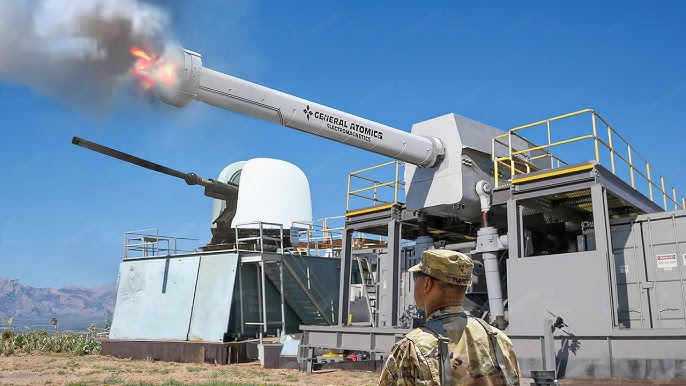
Source = YouTube @The Daily Aviation
The U.S. Navy has chased solutions to the range limits of naval guns for decades, exploring extended‑range guided munitions in the 1990s and pursuing railguns for the Zumwalt program. By 2021 the Navy had produced prototypes and run sea trials. But technical hurdles — rapid barrel wear, massive power demands and sensitivity of electromagnetic components — prompted Congress to cut funding in 2022. The Pentagon has since resumed railgun work aimed at equipping the proposed Trump‑class ship.
On May 31, 2026, Japan’s Maritime Self‑Defense Force mounted a roughly 40 kW self‑contained railgun on the JS Asuka test ship and fired a ~0.3 kg projectile at speeds between Mach 6.5 and 7 in sea trials. DARPA personnel reportedly visited Japan to discuss cooperation.
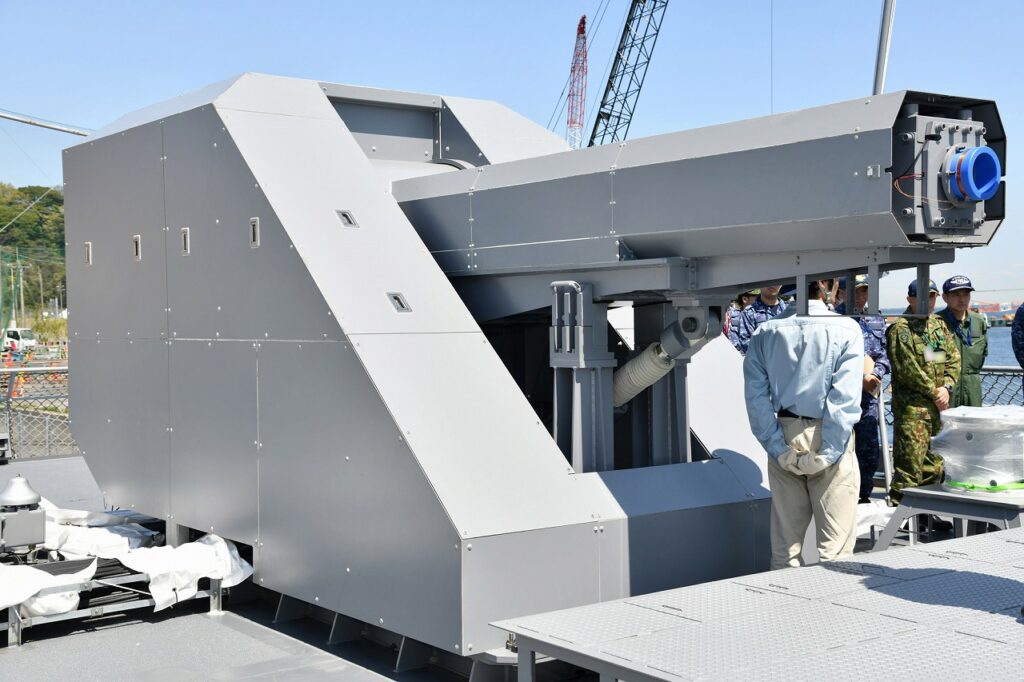
Source = Naval News
China began an X‑railgun program in the mid‑2010s and commercial satellite imagery suggested prototype work by 2014. Reporting in 2018 indicated a prototype railgun mounted on a Type 072 hull with generator containers on deck, and last year Asia Times reported China may be testing a system capable of firing a roughly 15 kg projectile at Mach 7 out to about 400 km.
Railguns offer hypersonic kinetic strikes without explosive warheads and remove the need for large magazines below deck. Their appeal is long‑range, high‑speed impact. But persistent drawbacks — limited barrel life, electromagnetic failure modes and the need for precise hit probabilities without a warhead — remain. Still, both navies press on.
Second, renewed interest in WIG (ground‑effect) military aircraft. Both Washington and Beijing are exploring concepts echoing the Soviet Project 903 Lun‑class Ekranoplan.

▲ Soviet Project 903 Lun‑class Ekranoplan / Aero Space Global News
On May 25, The War Zone reported China’s state shipbuilder research institute No. 711 produced a large WIG dubbed the “Bohai Sea Monster,” fitted with four turbojet engines on its wings, and conducted sea trials. The outlet suggested the platform could offer transport capability comparable to a C‑130.
Earlier reporting predicted China’s AR‑6000 seaplane family could be adapted into low‑altitude WIG platforms for logistics to South China Sea outposts, SAR, ASW reconnaissance and even long‑range strike roles. May reporting noted a Bohai Sea Monster variant with turboprops and multiple wing hardpoints, fueling speculation on sensors, auxiliary tanks or LUCAS payloads.
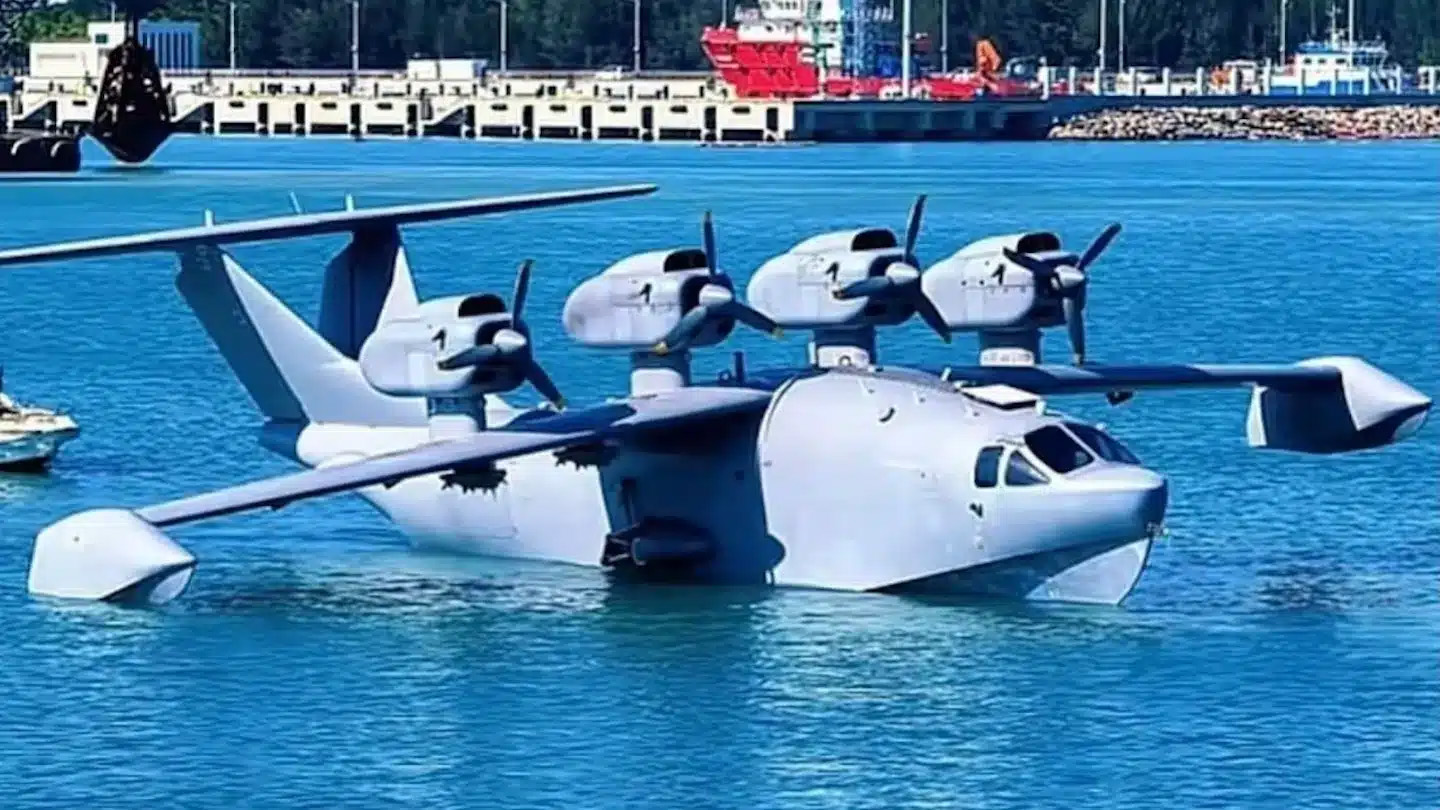
▲ ‘Bohai Sea Monster’ WIG military craft / Meta‑Defense
Analysts see primary roles for such platforms in combat search‑and‑rescue (CSAR), maritime patrol and coast guard support, logistics to artificial islands, and as a low‑altitude launch platform for long‑range anti‑ship strikes.
The U.S. path differs. The War Zone reported last April that the Navy, with DoD R&D backing, developed a WIG unmanned surface vehicle carrying roughly 50 lb of destructive payload, capable of about 80 kts and about 100 miles, intended for swarm operations. Budget documents suggest the prototype met only about 70% of required operational capability (ROC) for Navy and Coast Guard needs, and funding shortfalls likely shelved the program in the 2027 budget.
Aurora Flight Sciences, with DARPA, proposed the Liberty Lifter — a WIG heavy transport designed to fly about 30 m above sea level in sea state 5 — as a low‑altitude alternative to high‑altitude airlift. The Navy judged it couldn’t match C‑130 capability, but the Marine Corps found the concept attractive for expeditionary and amphibious operations where low‑altitude transit lowers exposure to enemy air defenses.
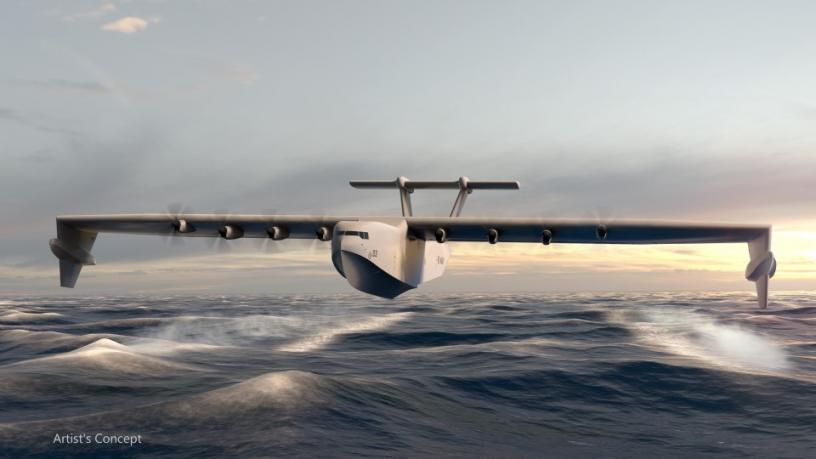
▲ Liberty Lifter WIG heavy transport concept illustration / DARPA
Analysts note a shift in Indo‑Pacific naval concepts toward littoral expedition operations rather than purely deep‑water campaigns. In that environment, asymmetric low‑altitude WIG transports fit urgent logistics and rapid response needs and could see accelerated development.
Third, nuclear‑battery torpedoes and recoverable UUVs. The U.S. and China are competing for undersea dominance across the Pacific. In July 2022 the South China Morning Post reported China had developed a disposable, nuclear‑battery‑powered torpedo modeled on Russia’s Poseidon.
Russia first unveiled a roughly 100‑ton nuclear‑armed torpedo concept in 2018, and Moscow reportedly commissioned Khabarovsk‑class submarines to carry such systems by late 2025.
The U.S. pursued an asymmetric approach. Under the Razorback effort, developers adapted the REMUS 600 UUV into a Yellow Moray underwater vehicle that Virginia‑ and Ohio‑class submarines could deploy and recover through 533 mm tubes to perform ISR against adversary SSBNs, UUVs or high‑speed nuclear torpedoes. The Yellow Moray concept reportedly weighs about 530 lb, can operate to roughly 200 m depth and sustain around 70 hours of underwater endurance.
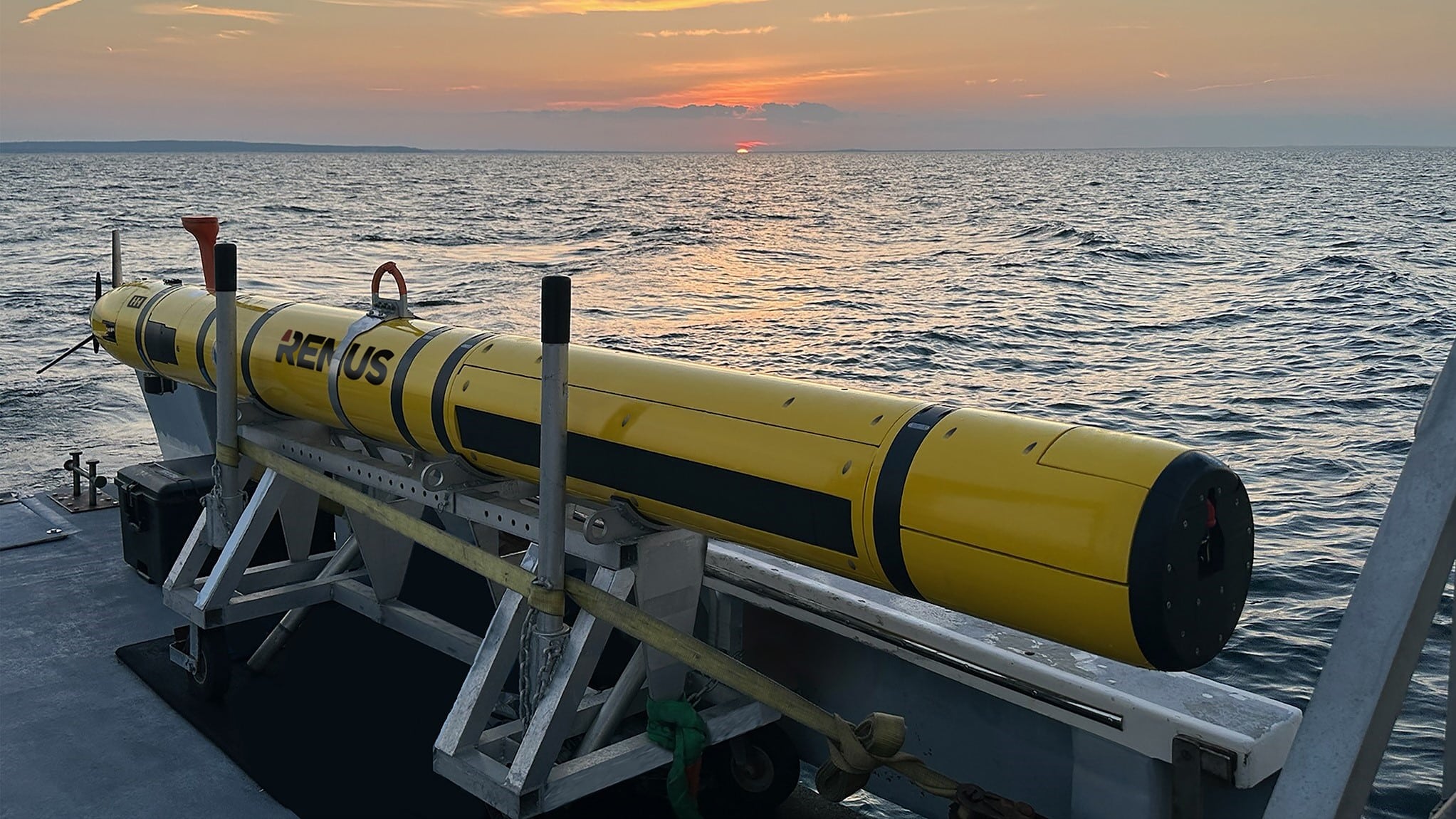
▲ REMUS 600 UUV / Naval News
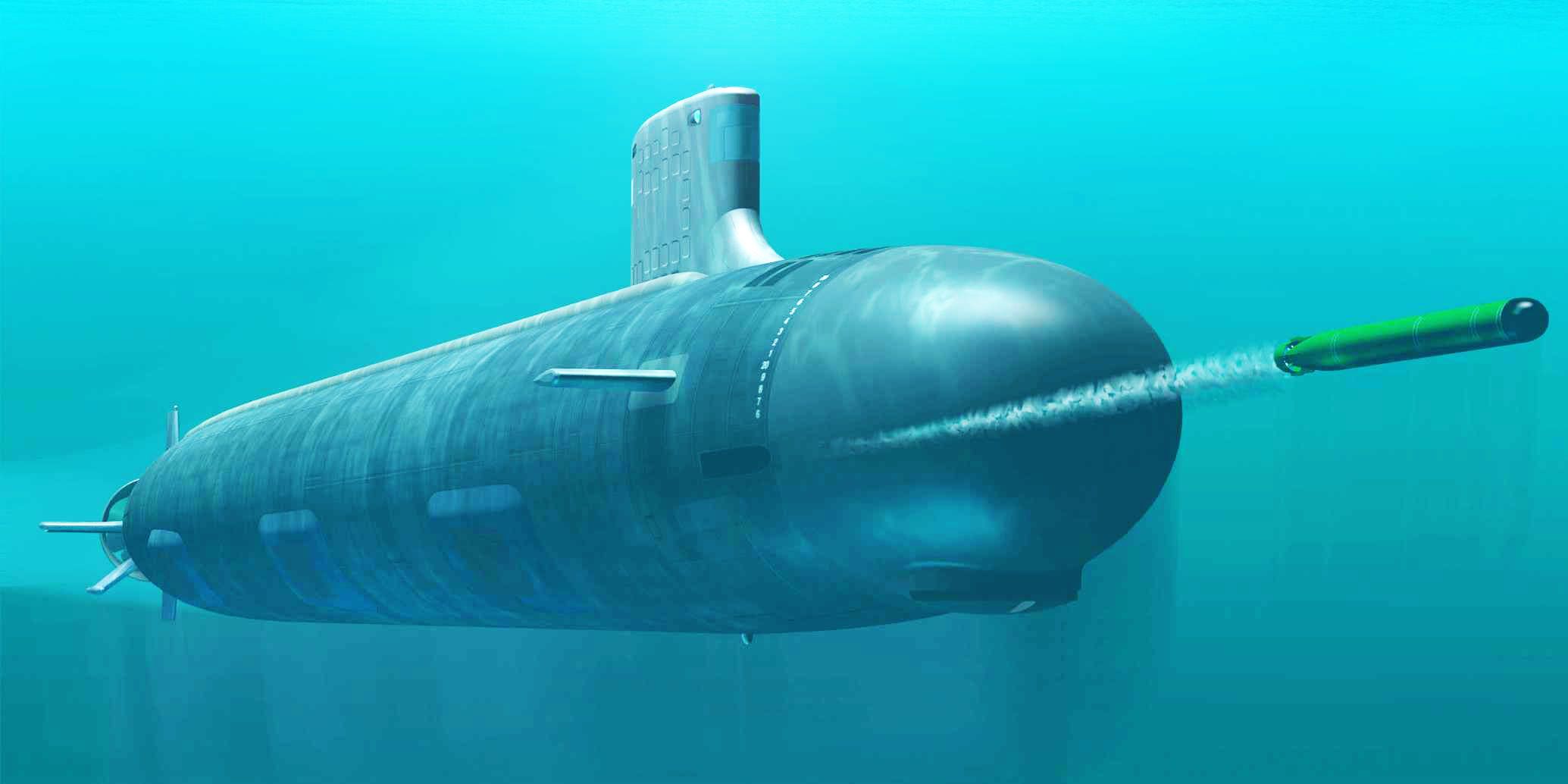
▲ Concept illustration of Yellow Moray launched from a Virginia‑class 533 mm tube / MercoPress
U.S. reporting indicates mechanical and integration challenges hampered efforts to reliably recover REMUS‑based vehicles into 533 mm tubes. Those issues kept speed, endurance and range below ROC, and Congress did not fund Razorback R&D in the 2026 budget, pausing further trials.
Australia and the U.K. are pursuing similar recoverable UUV concepts — Australia’s Rat Trap and the U.K.’s plans to field comparable systems on future AUKUS and Astute/Dreadnought submarines — with AI integration planned. Analysts expect allied navies to keep developing non‑expendable undersea ISR tools launched and retrieved via 533 mm tubes as an asymmetric countermeasure.
China, meanwhile, reportedly modified the HSU‑001 UUV propulsion to a single‑use nuclear battery and is testing a long‑range, high‑speed torpedo concept with reported speeds near 30 kt, endurance around 200 hours and ranges exceeding 10,000 km — a capability some analysts view as an asymmetric strike threat against U.S. forward bases in the Indo‑Pacific.
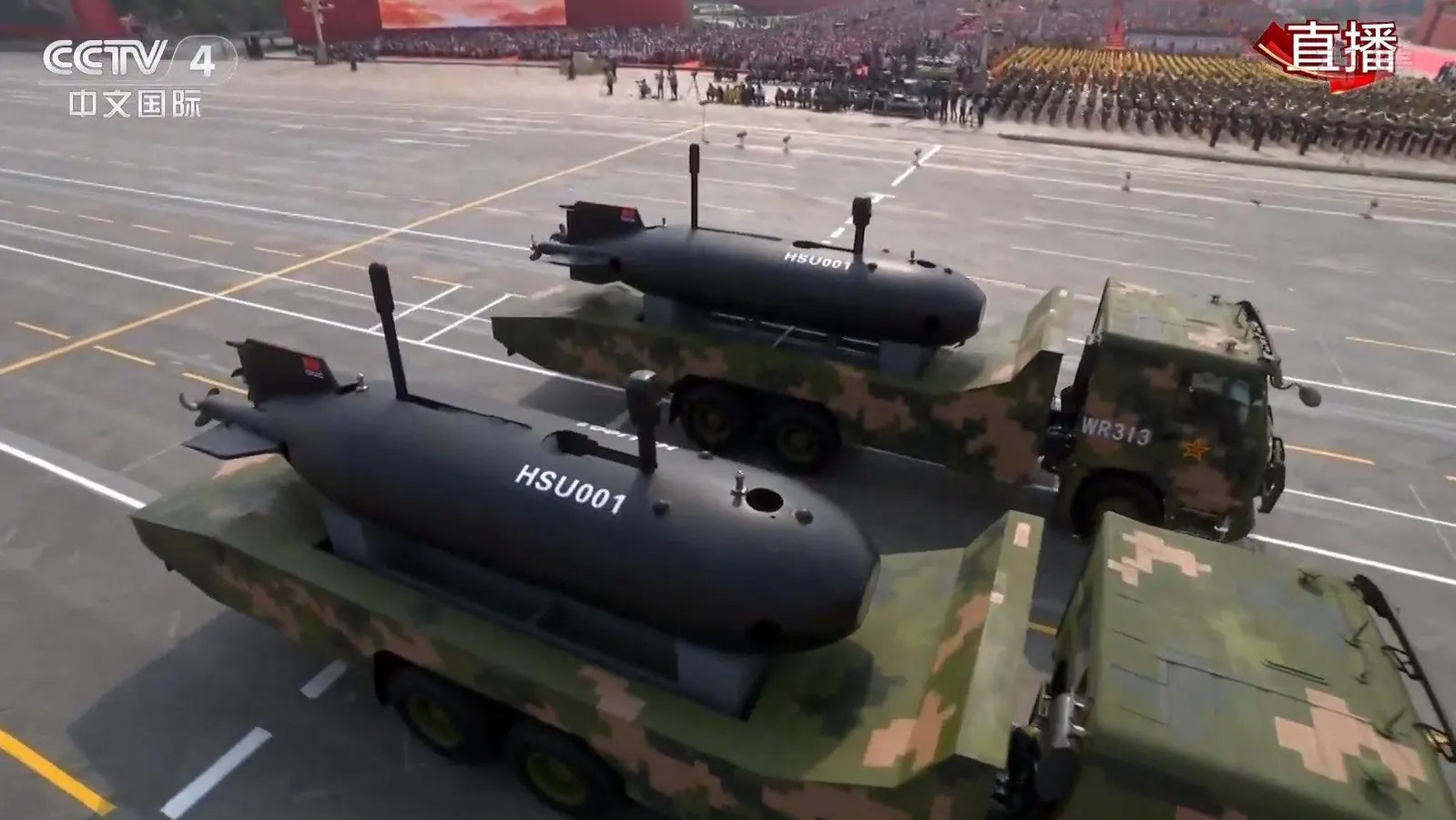
▲ HSU‑001 UUV / CCTV
Fourth, China’s unmanned‑aircraft‑only carrier. China began converting a Type 075‑derived hull into a Type 076 unmanned carrier and launched it on Dec. 27, 2024. Beijing says it is testing unmanned launch and recovery and at‑sea unmanned operations — a first for a purpose‑built drone carrier.
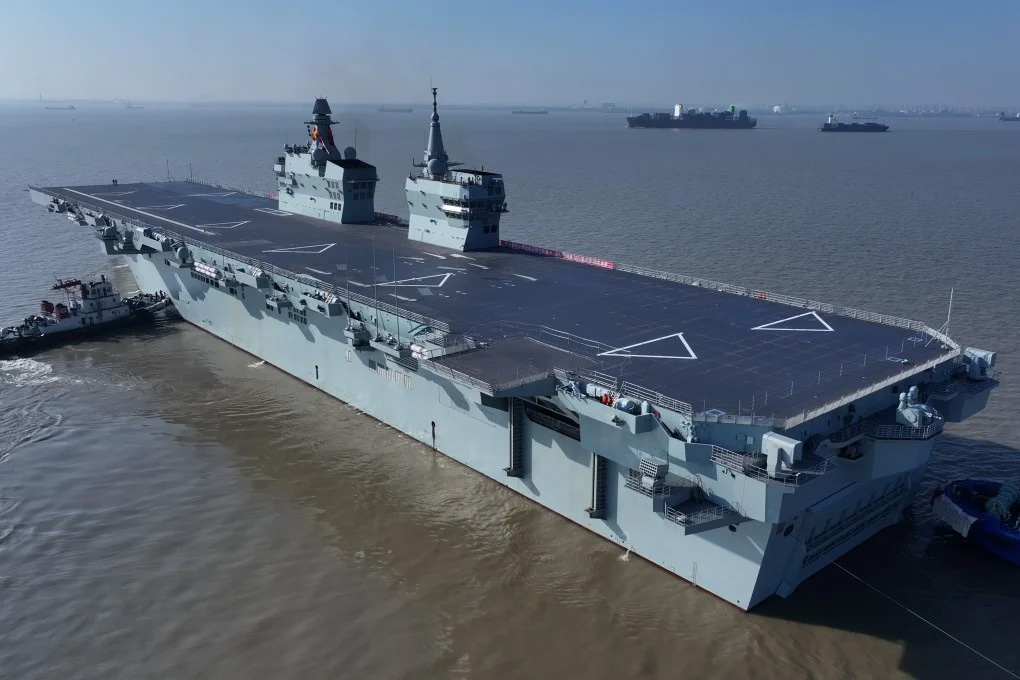
▲ China’s Type 076 unmanned‑drone carrier / South China Morning Post
Reporting indicates the Type 076 incorporates one EMALS catapult similar to the Ford class, three hybrid electric‑hydraulic arresting systems and an unmanned aircraft elevator of unspecified capacity. It reportedly can carry WZ‑7 reconnaissance UAVs (about 13 m long, wingspans ~14–24 m) and GJ‑11J carrier strike UAVs. Beijing also appears to plan MUM‑T and loyal‑wingman concepts using two‑seat J‑20 variants operating in concert with carrier and land bases.
Analysts note Beijing converted single‑seat J‑20s into two‑seat variants in 2021 with MUM‑T roles in mind, and they expect WZ‑7 and GJ‑11J assets aboard the Type 076 to help China project air power over parts of the Pacific.
In short, the U.S. and China now compete not just on expensive next‑gen platforms but also on lower‑cost, asymmetric systems that could become operational game changers. Observers say China may enjoy an edge because it faces fewer budgetary constraints than U.S. programs subject to congressional oversight, but both countries are likely to push these unconventional programs forward.
Author Yoon Seok‑jun is a visiting research fellow at the Korea Institute for Military Affairs,
a defense ministry policy adviser and a retired navy colonel.















Most Commented