
Translation result
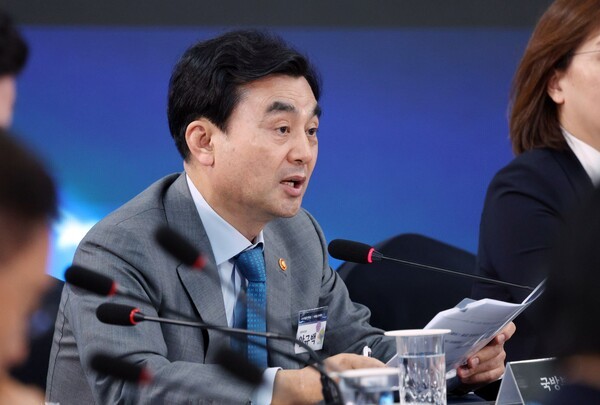
Public Times — The Ministry of National Defense said on May 26 it presented the basic plan to develop a South Korean nuclear-powered submarine at the first Future Defense Strategy Committee meeting in Jinhae, South Gyeongsang Province.
The ministry plans to launch the lead ship in the mid-2030s and to commission it into the Navy in the late 2030s.
The government has named this strategic, nationwide effort the Jangbogo N Project.
The name honors the spirit of the Republic of Korea Navy’s first submarine, the Jangbogo, and signals a next-generation, nuclear-powered platform that will integrate advanced technologies.
The submarine’s reactor will be fueled with low-enriched uranium (below 20% enrichment). Officials said they will develop a reactor designed for extended core life to minimize refueling.
The ministry plans to combine South Korea’s world-class civilian nuclear and shipbuilding expertise to produce a platform with high reliability and safety. Officials say the program will manage the vessel’s full life cycle—from design and construction to operation, maintenance, fuel management, and decommissioning—in a systematic, lifecycle-focused approach.
To allay international concerns, the basic plan lays out three firm nonproliferation commitments.
First, it pledged that South Korea will not possess or develop nuclear weapons.
Second, it vowed to maintain close communication with the United States and to handle the procurement and management of low-enriched uranium transparently.
Third, it committed to work with the International Atomic Energy Agency (IAEA) to implement safeguards and meet rigorous international obligations.
Defense Minister An Gyu-baek said the submarines will play a core role in countering North Korea’s submarine-launched nuclear missile threat. He said nuclear-powered boats are quieter and faster than diesel submarines, enabling more effective monitoring and tracking of North Korean undersea forces and strengthening the Navy’s underwater kill chain.
He added that, armed with precision-strike capabilities, South Korea’s nuclear-powered submarines will provide punitive deterrence and ensure the armed forces retain critical response options in any contingency.
Last October at the APEC leaders’ meeting in Gyeongju, the government secured official U.S. support from the Trump administration for building nuclear-powered submarines.
After seven months of interagency consultations, officials finalized the project’s direction. With the Navy’s recent submission of a requirements package to the Joint Chiefs of Staff, administrative procedures to acquire the system have moved onto a formal track.
Intern reporter Geon-hee Lee, pique_97@naver.com















Most Commented