
Translation result
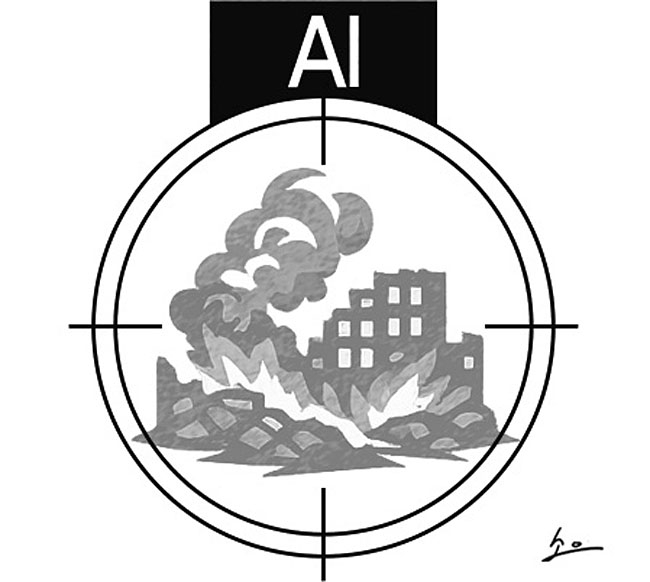 The New York Times recently ran a piece titled “Mutual Assured Destruction (MAD) — the escalating artificial intelligence (AI) arms competition.” It argues that the Cold War logic of MAD — the idea that nuclear attack is deterred by guaranteed nuclear retaliation — no longer applies to the AI arms race. The story says startups and venture capital now lead the competition, shifting defense influence toward Silicon Valley, and points to Palantir as a prime example.
Palantir, founded in 2003, is a data‑analytics company. Peter Thiel, a PayPal co‑founder, and Alex Karp — Thiel’s Stanford Law classmate who earned a Ph.D. in Germany studying fascism — launched the firm after the Sept. 11, 2001, attacks to help tackle terrorism and cybercrime.
The company received a $2 million (approximately 2.667 billion KRW) investment from In-Q-Tel, the CIA’s venture arm, to develop a defense‑oriented platform known as Gotham. Thiel and Karp have pushed to apply AI to military problems based on the view that deterrence through strength produces stability.
Palantir rose to prominence during Russia’s 2022 invasion of Ukraine. Early in the conflict, Karp met Ukrainian President Volodymyr Zelensky and argued that Gotham could enable a modern “David” to defeat a modern “Goliath.” Facing a material disadvantage, Ukrainian forces used the system to mitigate battlefield shortfalls and sustain a protracted defense.
Palantir also demonstrated its capabilities in a U.S.‑Iran clash. In concert with the Defense Department’s Maven program, Palantir fused trillions of fragmented pieces of data — satellite imagery, drone footage, radar returns and signals intelligence — to map military sites across Iran. That fused picture gave commanders evidence to select strike options, effectively creating a “Google Maps for war” that supported precision targeting.
Private companies driving AI for warfare could evolve into systems such as robotic infantry and autonomous weapons, fundamentally altering future combat. But AI is not infallible: in the Iran confrontation, an AI misidentified an elementary school as a military facility, with tragic civilian casualties. That failure raises urgent questions about how far corporate involvement in war should be permitted.















Most Commented