
Translation result
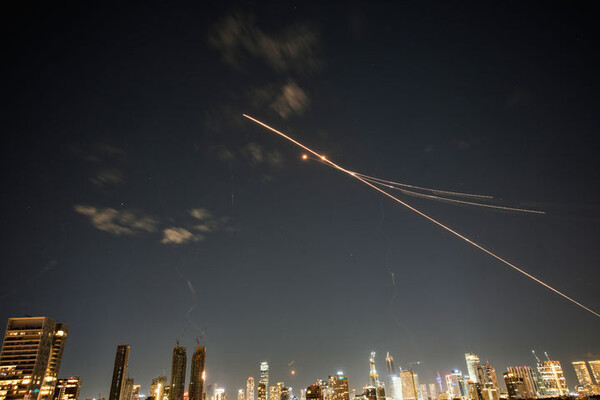
The Washington Post reported on the 21st (local time) that the U.S. has expended significant air-defense resources defending Israel since the war with Iran began, including roughly half of its THAAD interceptor inventory.
Citing sources, the paper said a Pentagon internal assessment found the U.S. fired more than 200 THAAD interceptors to protect Israel — nearly half of the U.S. stockpile.
U.S. forces also launched more than 100 SM-3 and SM-6 interceptors from vessels in the eastern Mediterranean. Israel, by contrast, expended about 100 Arrow interceptors and roughly 90 David’s Sling interceptors.
Kelly Grieco, a senior fellow at the Stimson Center, called the figures stark and said the U.S. assumed most of the missile-defense burden while Israel conserved ammunition.
Grieco warned that, even if the deployments made operational sense, the U.S. now has only about 200 THAAD interceptors remaining and production lines cannot meet demand. That shortfall could leave U.S. forces exposed on other battlefields unrelated to Iran.
The Post said the interceptor shortage is unsettling U.S. allies in Asia, particularly South Korea and Japan, which rely on American deterrence against potential threats from North Korea and China.
U.S. Forces Korea has reportedly already withdrawn — or plans to withdraw — some THAAD interceptors that had been deployed on the peninsula.
The Post noted that U.S. and Israeli officials routinely emphasize bilateral cooperation and the strengths of Israel’s multi-layered air defenses, but the Pentagon assessment exposes a clear imbalance.
With U.S.-Iran ceasefire talks stalled and the prospect of renewed fighting growing, a government official warned that any resumption of combat would likely deepen that imbalance.
Israel is reportedly dissatisfied with the current deal under discussion and prefers to resume offensive operations.
U.S. officials have bristled at Israel’s persistent push to restart the fighting, saying it has placed additional strain on American munitions stocks.
One government official said bluntly that Israel cannot conduct — or win — this war on its own, but that reality is obscured because observers do not see the U.S. support happening behind the scenes.















Most Commented