

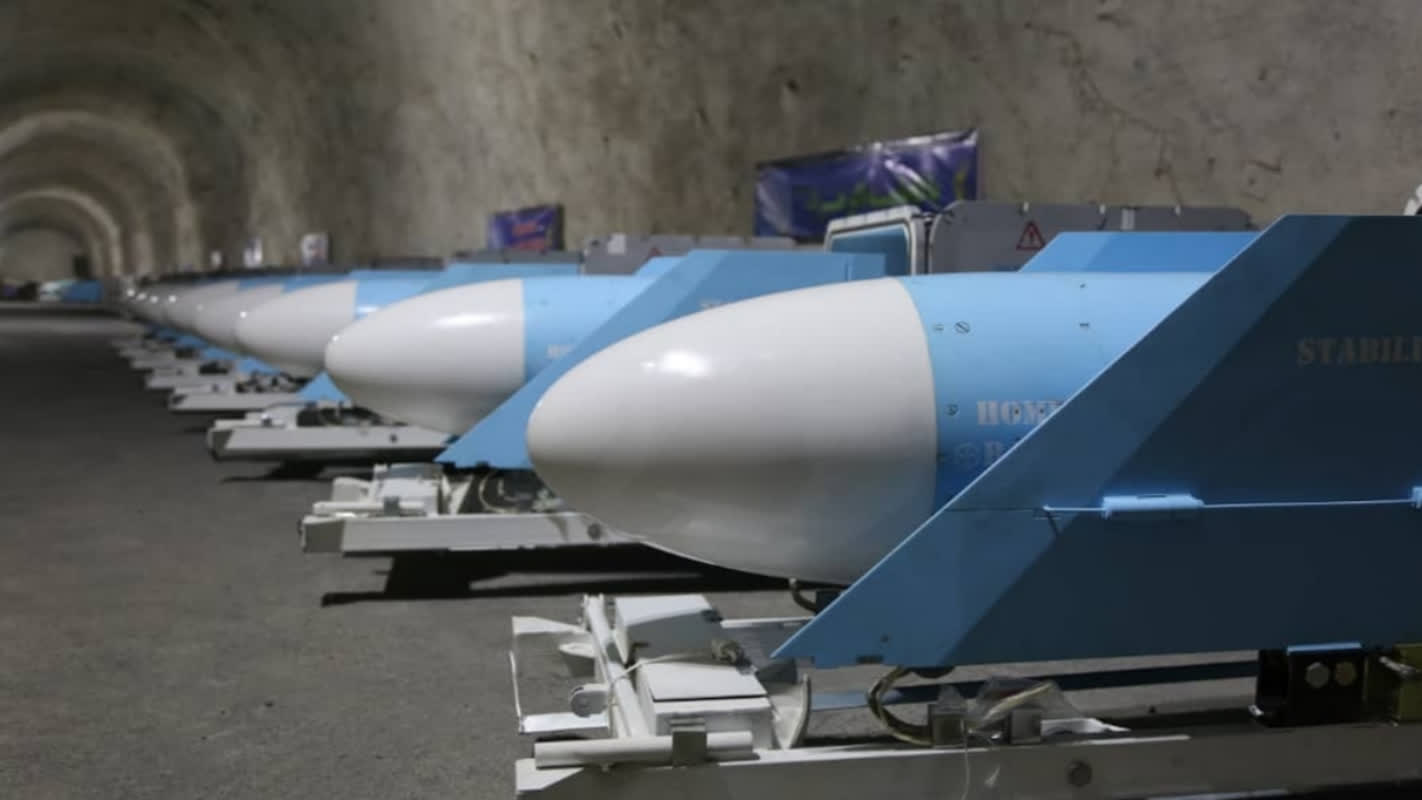
Russia announced it successfully test-fired the new R-28 Sarmat intercontinental ballistic missile (ICBM), a weapon Moscow says can carry roughly 10 nuclear warheads and reach about 35,000 km (21,750 miles). That range approaches the Earth’s circumference (about 40,000 km) and would allow strikes on the U.S. mainland from virtually any trajectory, including polar or exo-atmospheric paths. Moscow is also developing other hard-to-detect strategic systems, including nuclear-powered cruise missiles and undersea drones.
China is expanding its nuclear forces faster than any other country. The Stockholm International Peace Research Institute estimates Beijing’s arsenal, now about 600 warheads, could top 1,000 by 2030. Warhead production facilities in Sichuan’s mountainous region have seen large-scale expansion over the past five years, and analysts report indications that a new underground tunnel is being cut at the Lop Nur test site in Xinjiang.
The United States is also accelerating nuclear modernization. President Donald Trump ordered a resumption of nuclear testing last October after a cessation that began in 1992. The Pentagon is developing the LGM-35 Sentinel as a follow-on to the Minuteman III, and this year’s nuclear weapons budget rose roughly 26 percent over last year. As Daryl Kimball, executive director of the Arms Control Association, warned, the nuclear competition among the U.S., Russia and China is escalating toward an uncontrollable level.
That competition carries serious implications for South Korea. All three powers are regional neighbors, and their military dynamics have helped create conditions in which North Korea’s nuclear program can advance with limited restraint. U.S. reports, media and intelligence assessments indicate North Korea has miniaturized a nuclear warhead and fields ICBMs. Some analysts suggest Russia may have transferred submarine-reactor technology and key components to assist North Korea in developing a nuclear-powered ballistic missile submarine (SSBN). Officials have also warned of the risk of limited nuclear strikes in the Yellow Sea or near Dokdo (Liancourt Rocks).
At its core, this nuclear competition is about deterrence. Forward-deployed U.S. nuclear assets on the peninsula help reduce the risk of miscalculation by Pyongyang. Seoul and Washington should therefore move quickly to strengthen the legal framework for combined nuclear planning and operations. South Korea also needs robust strategic anti-submarine capabilities to counter SSBN threats and should consider pursuing its own strategic nuclear-submarine options. Given the regional trajectory, Seoul can use this moment to build the diplomatic and technical case for retaining credible latent deterrent options.










Most Commented