Translation resultSouth Korea rejects software-based military security; parliament moves to back tactical phonesA photo of a U.S. service member wearing a smartphone on his chest while on duty went viral in September 2023, prompting surprise that the device was not an iPhone but Samsung’s Galaxy. The handset was the Galaxy S23 Tactical (TE) Edition—a model co-developed by Samsung and the U.S. Department of Defense with features tailored for battlefield use. It is the third tactical smartphone Samsung has developed and delivered to U.S. forces.Built on the Galaxy S23 platform, the military edition adds durability and tactical capabilities and is not available to civilian buyers. Samsung previously released the Galaxy S9 TE in 2019 and the Galaxy S20 TE in 2020. The S23 TE is rated to operate after 30 minutes submerged at 1.5 meters (about 4.9 feet) and can interface with tactical radios, drone feeds, laser rangefinders and external GPS units. At about 8.5 ounces (240 grams), the device is relatively light for a ruggedized phone.Samsung equipped the phone with Knox to meet U.S. government security standards and implemented dual data encryption based on U.S. National Security Agency (NSA) criteria to protect classified information. The handset also includes a camera mode that allows troops to record and share video without revealing their location. Key features include a 5G Band Lock to limit security exposure, a Stealth Mode that blocks wireless signals such as LTE and RF for off‑grid communications, and an automatic touch-sensitivity adjustment for gloved operation.Samsung reportedly supplies the U.S. military with roughly 12,000–13,000 units annually. The per-unit price is about 1.96–2.26 million KRW (about $1,300–$1,500).Despite that partnership with the U.S. military, Samsung has not been able to supply the Republic of Korea Armed Forces with comparable tactical phones because of differences in security policy. The U.S. military accepts software-based security solutions; South Korea requires hardware-based protections. South Korea’s defense rules, including the “Defense Capability Development Work Directive,” favor hardware security systems such as embedded security chips. Those rules reflect a requirement that, if an adversary captures a tactical phone, personnel must be able to physically remove and destroy the device’s cryptographic key.As battlefield smartphones—commonly called “tactical phones”—have become more integral to operations, the South Korean Army has begun moving to adopt Galaxy tactical phones by 2034. On May 6, the Army signed a memorandum of understanding (MOU) with Samsung to expand exchanges in advanced science and technology. Under the MOU, the two sides will pursue practical cooperation on artificial intelligence, next-generation networks (5G/6G) and mobile security, with the aim of adapting solutions already fielded by the U.S., NATO partners such as Germany, and other militaries.The Army and Samsung plan to work on AI-enabled mobile systems, build a 5G/6G-based military mobile operating environment, improve soldier situational awareness via smartphones, and develop intelligent decision‑support tools to modernize the digital combat environment. An Army official said, “We’re targeting 2034 to field 5G-based tactical phones within a mobile integrated communications system.” The Army expects to complete initial communications requirements and field trials for mobile software encryption by the end of 2027.Security concerns have delayed tactical-phone adoption in the past, forcing soldiers to carry multiple devices into the field. If the Army fields military smartphones in 2034, the Galaxy S34 edition—expected that year—will likely be selected as the tactical phone.The National Assembly’s National Defense Committee has also introduced a draft bill—the “Special Act on Software Weapon Acquisition Systems”—to support tactical-phone procurement; the bill is pending in the legislature. After formally identifying requirements, the Army says it will move quickly through Joint Chiefs and other approval steps.U.S. and NATO militaries, including Germany, continue to adopt and evolve Galaxy phones for tactical use. Israel and Japan’s Self‑Defense Forces have accelerated their own adoption efforts.


 30 of 33 Iran Missile Bases Still Active: Intelligence Defies Trump Claims
 US Javelin Missiles Deployed in Taiwan's High-Stakes Live-Fire Drill
 North Korea's 10-Year Nuclear Threat: Is a Limited Strike Imminent?
 AI vs. Video Compression: How RMX is Redefining Tactical Edge Tech
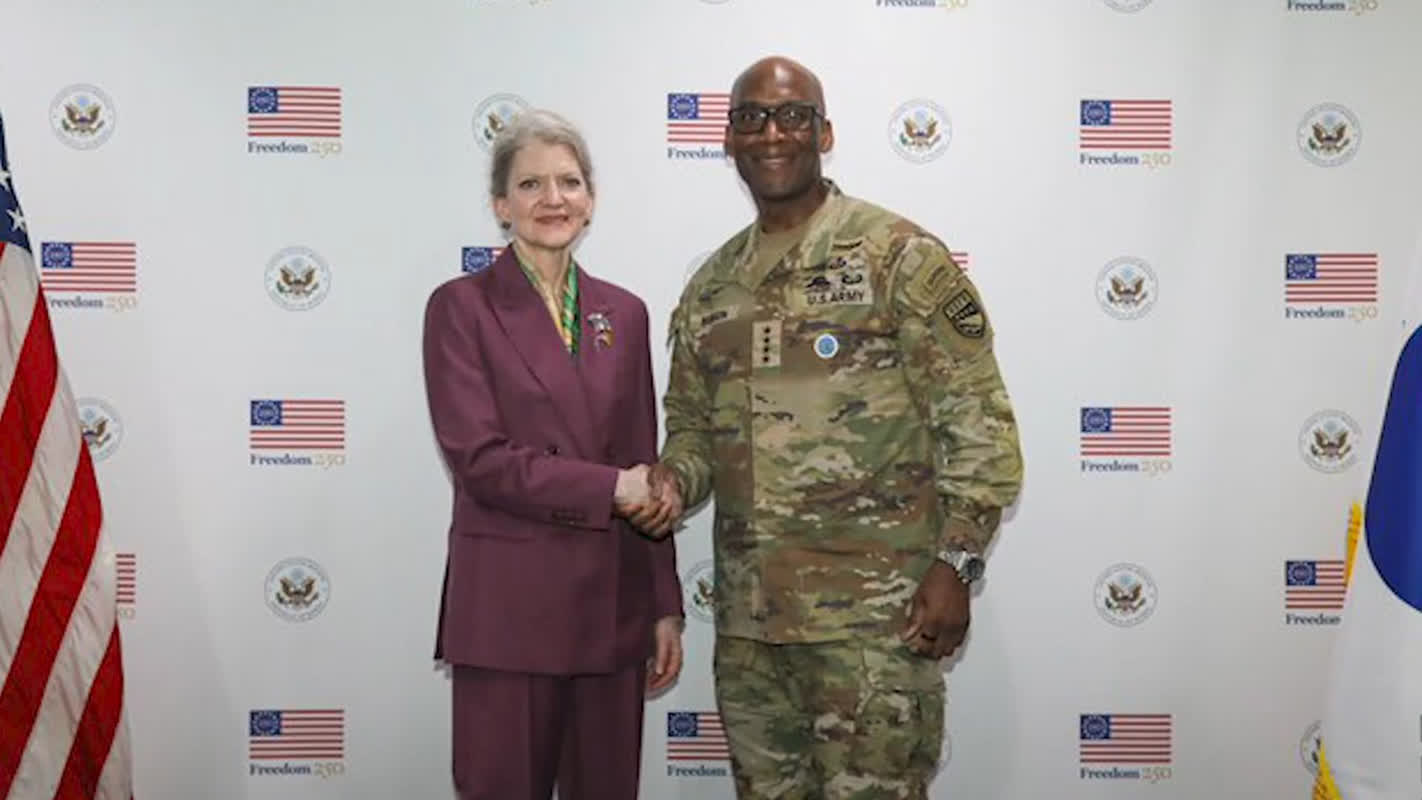 US-South Korea Security Meeting Sparks Tension Over Military Control
 Iran Claims Missile Strikes on U.S. Military Bases: Did They Hit?








Most Commented