
Why the K2 Black Panther Tank Ranks 3rd in the World: A Deep Dive into Its Cutting-Edge Features
Daniel Kim Views
Translation result
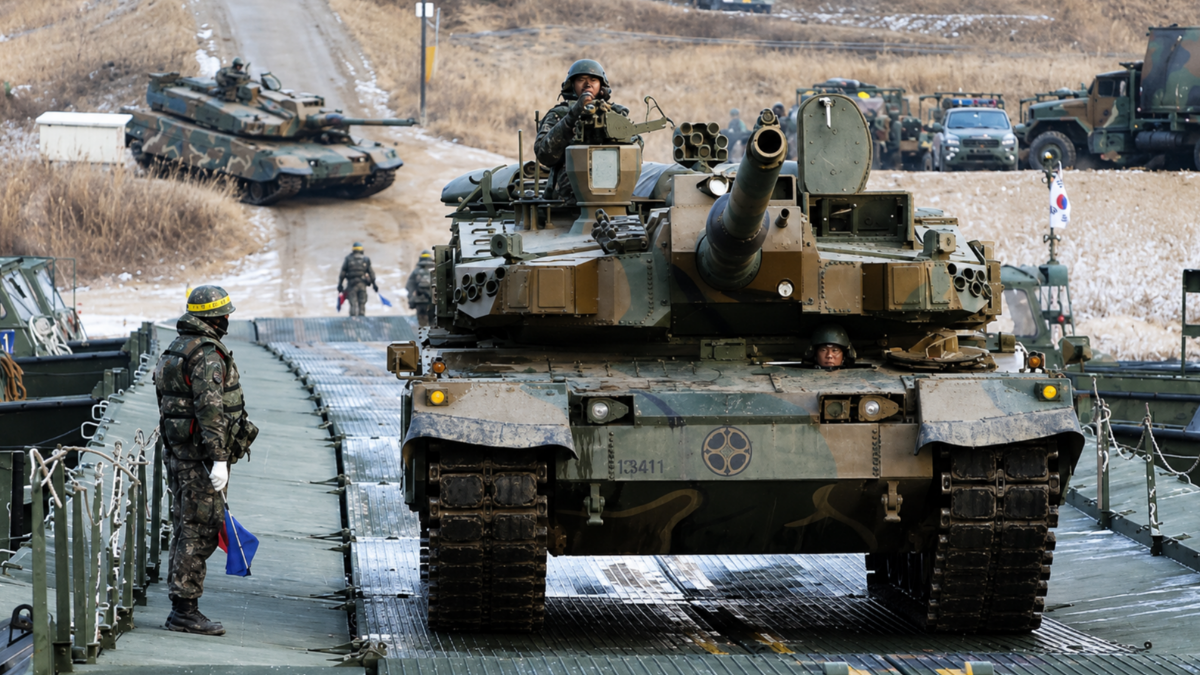
“The Tank That Shocked Putin” — Why the K2 Ranked Third in the World
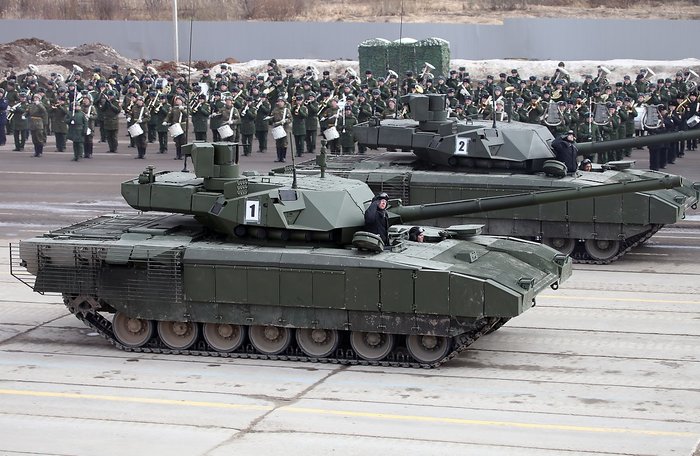
U.S. security outlet 19FortyFive placed South Korea’s K2 Black Panther third in its “Top 5 Tanks in the World for 2026.” That ranking goes beyond a simple list; it cements the view that the K2’s firepower, sensors, mobility and terrain adaptability are on par with—or exceed—leading Western main battle tanks. While Russia’s much‑touted T‑14 Armata has stumbled amid doubts over combat readiness and production, the K2 has made a different impression: a field‑proven platform validated by exports and operational deployment.
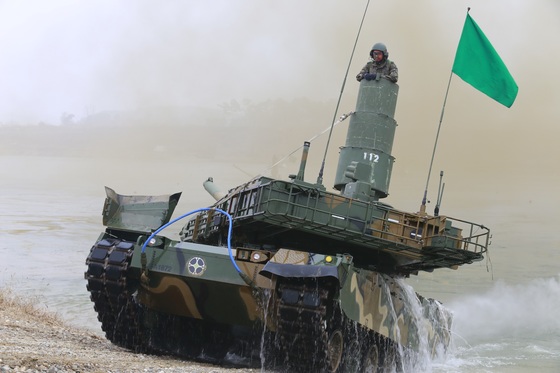
“The Underwater Hunter” — How a 4.1 m Fording Capability Creates an Edge
Observers singled out the K2’s exceptional underwater fording. Built with riverine and marshy terrain—like that on the Korean Peninsula and in parts of Eastern Europe—in mind, the K2 changes how commanders approach tactical maneuver. Where the U.S. Army’s M1A2 Abrams can ford to roughly 2 m, the K2 uses a snorkel kit to cross depths up to about 4.1 m. Crucially, crews can fire the main gun immediately after emerging without removing equipment, allowing an almost instantaneous transition to combat and enabling surprise river‑crossing strikes. That capability has earned the K2 the nickname “the tank that walks out of the water and shoots first.”
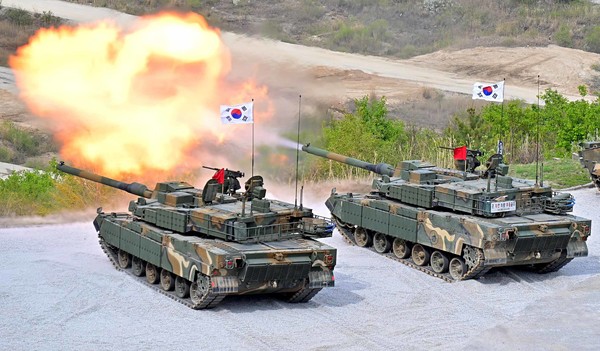
A Smart Tank That Locks Onto Targets at 9.8 km
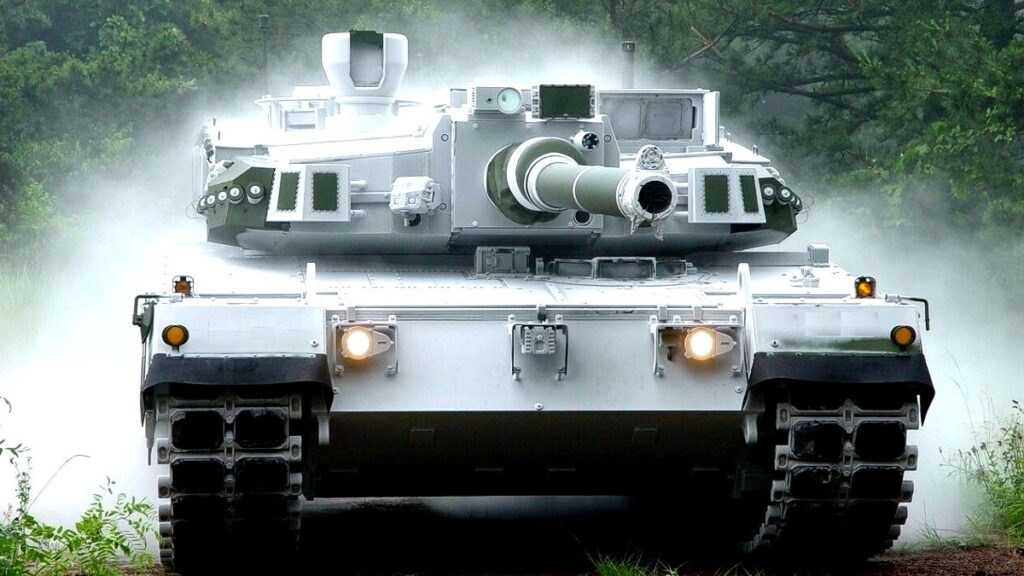
The K2 Black Panther is more than armor and a gun; it’s a networked, sensor‑heavy platform. Its thermal‑imaging system can detect and track targets out to roughly 9.8 km, letting crews engage before they’re detected. Unlike tanks that rely on a human loader, the K2 uses an autoloader capable of sustaining about 15 rounds per minute. The design reduces the crew to three while increasing the speed of fire, reinforcing the doctrine: see first, shoot faster.
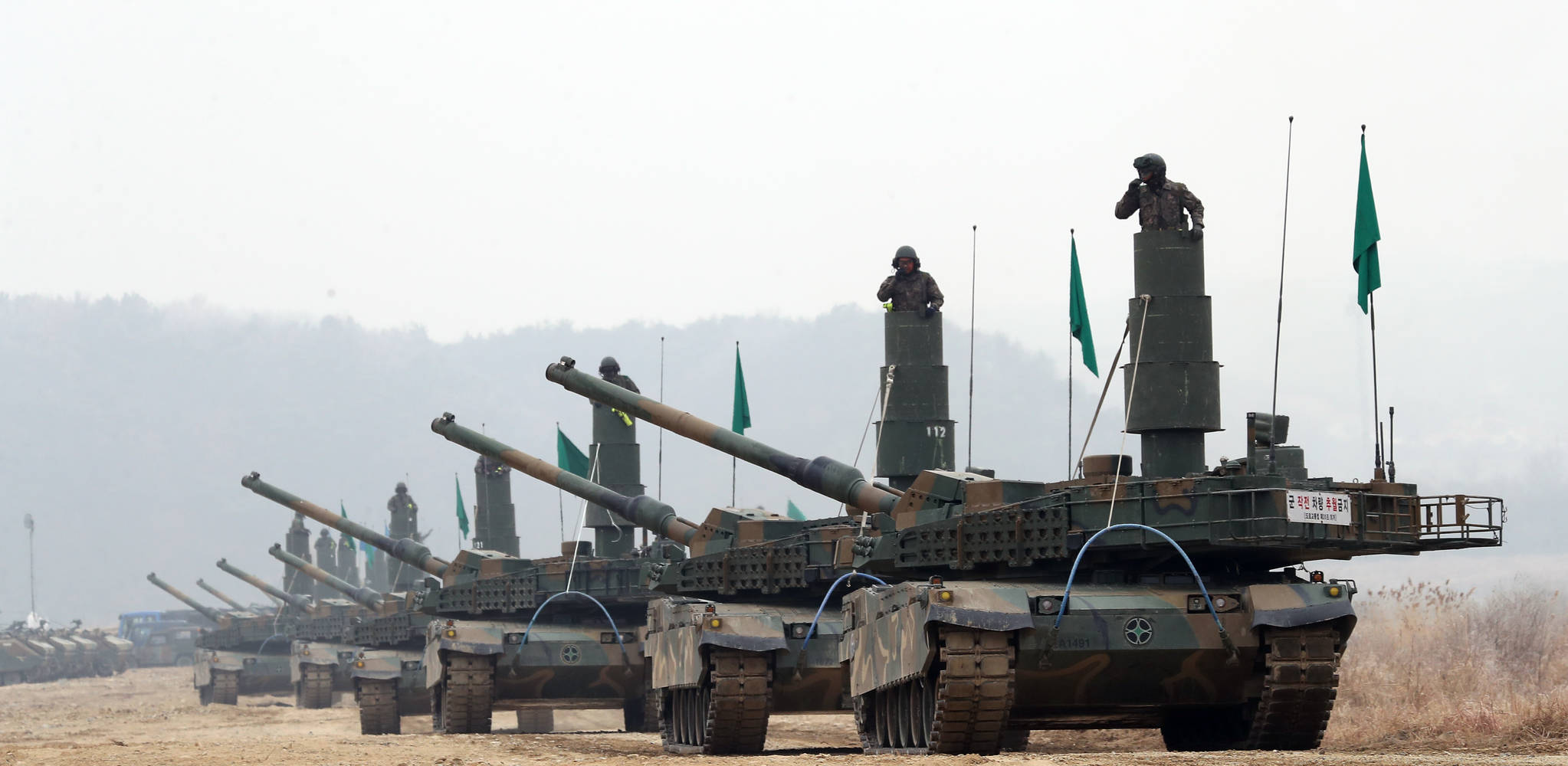
If It’s Targeted, It Evades; If It’s Seen, It Disappears — Active Protection and Lightweight, High‑Protection Armor
The K2 doesn’t rely on passive armor alone against missiles and anti‑tank rockets. Its millimeter‑wave radar can detect incoming threats, calculate their trajectories and trigger automatic countermeasures such as smoke grenades to degrade enemy sensors and targeting. The tank uses silicon‑carbide ceramic composite armor to maximize protection while keeping combat weight near 55 metric tons. That weight is significantly lower than many legacy Western designs in the 60–70 ton class, offering improved mobility without a major sacrifice in survivability.
 무기백과>
무기백과>The T‑14 Became a “Paper Tiger,” While the K2 Proved Itself in the Field
The list underscores the decline in the T‑14 Armata’s standing. On paper, the Armata promised an unmanned turret and advanced protection, but delays in mass production and doubts about operational readiness have led critics to dismiss it as more showpiece than battlefield winner. By contrast, the K2 has demonstrated capability through South Korean service and a major export agreement with Poland. 19FortyFive even noted that some experts already rank the K2 at the very top globally—testament to its perceived potential. For Russia, the prospect of Korean tanks becoming the standard on Eastern Europe’s front lines carries a distinct symbolic sting.
![사진]](https://cdn-union.tenbizt.com/contents/crawler-dev/image/2026/05/CP-2025-0103/image-c0217714-9eb8-452a-a733-2061f3582be9.jpeg)
Priced at about 12 billion KRW Each, Yet Nearly 1,000 Units — “This Is the Backbone Tank”
At roughly 12 billion KRW apiece (about 9 million USD), the K2 is expensive. Poland’s decision to acquire close to 1,000 units, including licensed production, signals that Warsaw sees the K2 as more than equipment—it intends the tank to be a backbone of national defense. Poland will field a K2PL variant adapted for local terrain, integrating Korean armor into European defense structures. That transition elevates the K2 from a national asset to a growing component of NATO’s eastern deterrent.
The Weight Behind the Title “A New Standard for World Tanks”
Analysts who now place the K2 among the world’s best emphasize a holistic design philosophy: it balances traditional measures—gun caliber and armor—with IT, sensors and terrain adaptability. The K2 is designed for network‑centric operations and complex terrain maneuvering, not merely thicker armor or a larger gun. As Poland leads the way, expect interest in the K2 to expand across Europe, the Middle East and beyond, fueling both adoption and debate.















Most Commented