
Translation result.
「윤석준 차밀, 2026년 4월 27일」
Why the U.S. Army Holds the Edge Over China’s Ground Forces
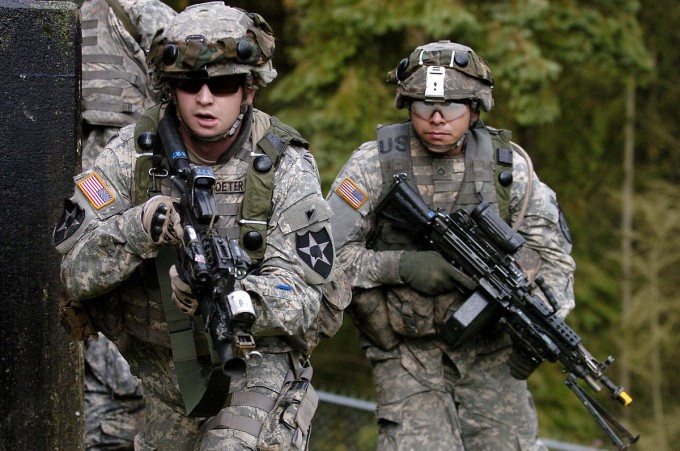
Military analysts have flagged a notable trend: modern warfare is showing renewed emphasis on air-dominant campaigns rather than the multi-domain operations (MDO) paradigm long touted as the model for future conflict. That shift has raised questions about the future role and relevance of traditional ground campaigns.
This dynamic was evident in the Russia-Ukraine war, which began as a ground-centric invasion on Feb. 28, 2022. By its third and fourth years, the conflict had evolved into an air-centered action‑and‑reaction cycle, driven by ballistic missiles and unmanned aerial systems — a real‑world illustration of how ground war can be overtaken by air campaigns.
Over the past eight months, President Trump, the 47th U.S. president, has ordered three major air-focused operations. Notable examples include Operation Midnight Hammer against Iran on June 22 last year and Operation Epic Fury on Feb. 28 this year.
Those strikes did not resolve diplomatic talks. Iran used its position in the Strait of Hormuz as leverage, prompting U.S. planners to consider deploying ground forces to islands near the strait to secure vital sea lanes. That consideration suggests a possible swing back from air campaigns to ground operations.
Even as advances in military science reduce close‑combat casualties through long‑range fires, robotics and unmanned systems, ground warfare still produces profound human and physical costs — territorial damage, violations of sovereignty and indiscriminate effects that linger long after the shooting stops. For that reason, armies preparing for future ground campaigns are proceeding with extreme caution.
U.S. media recently tied this tension over ground operations to the abrupt removal of Gen. Randy George as Army chief of staff. Reports tied his dismissal to a dispute with Defense Secretary Pete Hegseth over plans to launch ground operations on islands near the Strait of Hormuz on April 2, and to broader concerns about the Trump‑era operational tempo over the past eight months.
One precedent that signaled a shift in ground‑operation concepts was Operation Absolute Resolution on Jan. 3. That action combined covert intelligence operations with law enforcement tactics: federal agents reportedly captured former Venezuelan president Nicolás Maduro in a rapid, closely coordinated operation and flew him to the U.S. Southern District of New York. Analysts labeled it a “three‑second ground action” and argued it previewed a new approach to decisive ground actions.
The Iran strikes also introduced new weapons and methods. U.S. forces employed the next‑generation PrSM surface‑to‑surface missile for the first time, and commanders used artificial intelligence to prioritize roughly 2,000 Iranian targets, automating target selection. Those innovations suggest how the Army may integrate precision fires and AI into future ground doctrine and force development.
Some analysts have gone further, arguing that the recent U.S. operations and the multi‑year Russia‑Ukraine war echo the geopolitical turbulence that preceded the world wars of the 20th century. Their stark takeaway: ground warfare is transforming rapidly, and forces that fail to adapt risk having ground operations reduced to support roles under air and space campaigns.
I read these developments as a test of how the U.S. Army and China’s ground forces will position themselves as ground combat’s role shifts. The decisions each makes about doctrine, organization and capabilities — particularly around decisive, end‑state ground missions — will shape which force holds the advantage in future conflicts.
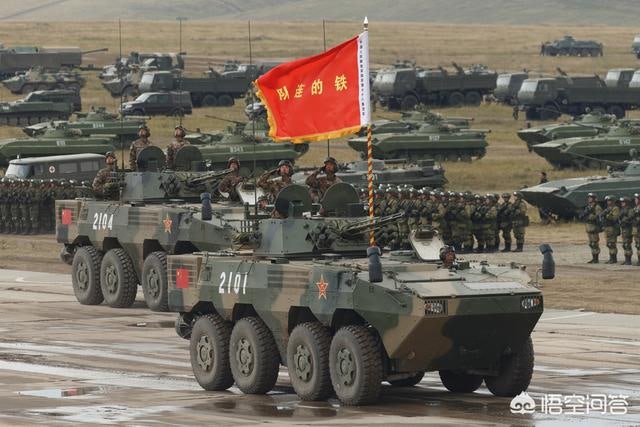
First, both armies reworked force structure. Ground forces typically attract less public attention than navies and air forces, which dominate accounts of sea and air battles. Both the U.S. Army and the PLA ground force took that visibility gap seriously and accelerated reforms to move from traditional, ground‑centric models toward force packages optimized for modern, navy‑and air‑centered warfare. Each side rethought operational concepts, reorganized units and pushed faster development of next‑generation capabilities.
The reforms share common ground. On March 16, 2021, the U.S. Army created Multi‑Domain Task Forces (MDTFs) to break free of rigid unit templates and reshape ground operational concepts. Under the Army’s 2024 Structural Transformation Initiative, brigade‑level MDTFs will include four battalions and eight functional companies — among them a mid‑range missile battalion capable of firing LRHW hypersonic and other land‑attack/anti‑ship missiles from HIMARS‑type and MRC launchers. The Army plans five such brigades: two in the Indo‑Pacific, one in Europe, one near the Arctic, and one on the U.S. mainland.
In Beijing, Xi Jinping’s 2015 “China Defense and Military Reform” separated the PLA ground force into an independent service and restructured bloated group armies into division‑level synthetic combined combat brigades and regiment‑level combined battalions. The PLA moved from uniform infantry‑tank‑artillery formations to heavy, medium and light combined‑arms brigades designed to handle diverse threats.
China also created a Strategic Support Force (SSF) to integrate information, cyber and space functions, explicitly to blunt U.S. deployments along China’s eastern seaboard and support an anti‑access/area‑denial (A2/AD) posture. Last year, Xi further refined that architecture by splitting the SSF into an Information Support Force (ISF), a space operations component (AF), and a Cyber Force (CF).
Second, differences emerge in power‑projection and capability development. The U.S. Army is building forces for global, expeditionary ground operations and investing in advanced systems to support that concept. By contrast, the PLA ground force continues to emphasize defensive capabilities for homeland and border defense, placing less priority on long‑range expeditionary power.
Following the 2015 reforms, China reorganized seven military regions into five theater commands based on threat assessments and reduced its group armies from 18 to 13. While the U.S. Army has long depended on helicopter‑centric maneuver, the PLA has moved beyond its earlier reliance on Soviet‑type Mi helicopters and upgraded its rotary‑wing fleet for modern operational mobility.
A key differentiator is airlift and aerial refueling to support expeditionary operations. The U.S. has emphasized tactical airlift and aerial refueling to turn garrisoned forces into truly expeditionary units. The PLA, even after reforms, remains focused largely on internal security and border missions, balancing mobility and firepower without a comparable global reach.
For example, the U.S. Army fields upgraded MH‑47 Chinook variants for long‑range and special operations lift. The PLA has prioritized development of unmanned cargo transports capable of moving roughly 10 metric tons of supplies from southern theater commands to artificial islands in the South China Sea.
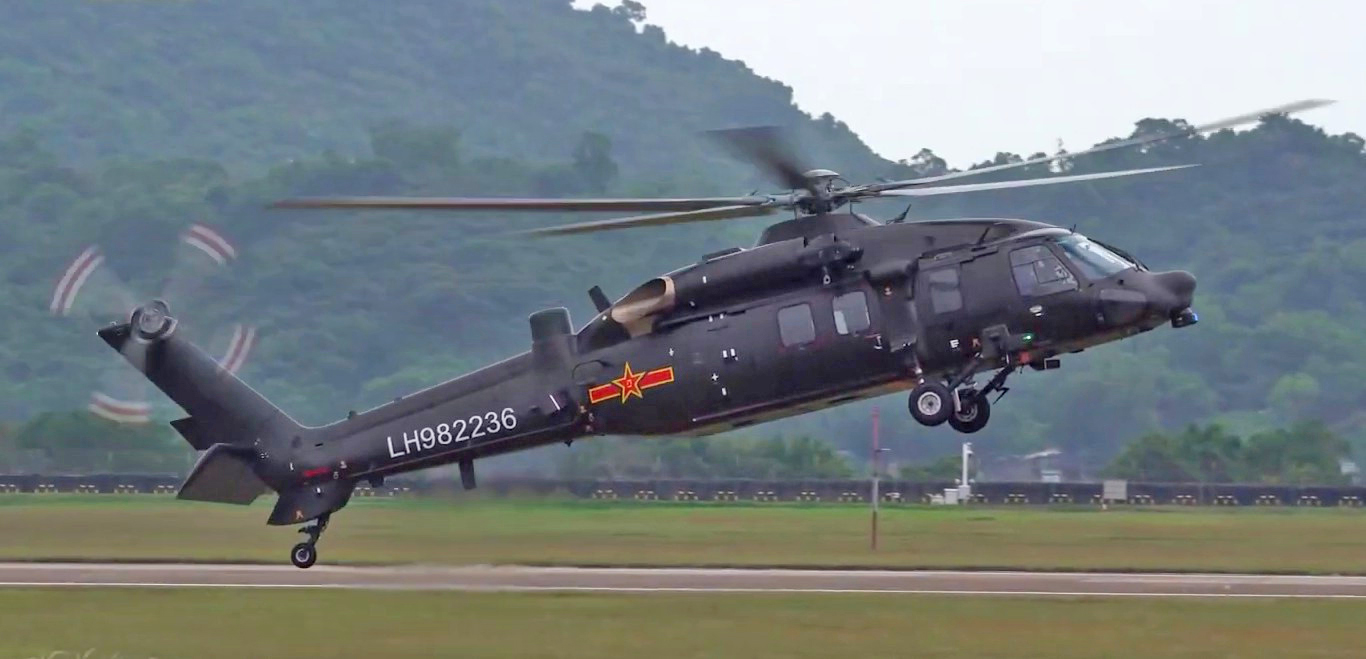
The two forces also diverge on rotorcraft and tiltrotor programs. Since 2013 Harbin Aircraft has built the Z‑20, a 10‑ton utility helicopter modeled after the U.S. UH‑60 Black Hawk, and begun fielding it to the PLA on Oct. 1, 2019. The Z‑20 was designed to operate at high altitudes — up to about 4,000 meters — without engine performance problems. Changhe developed the Z‑10 attack helicopter, inspired by the AH‑64 Apache, and fielded it with domestic WS‑9 engines from 2009. Some Z‑20 variants were slated for anti‑submarine and amphibious operations (Z‑20J) and to embark on Type 075 amphibious assault ships, but those efforts have faced technical hurdles.
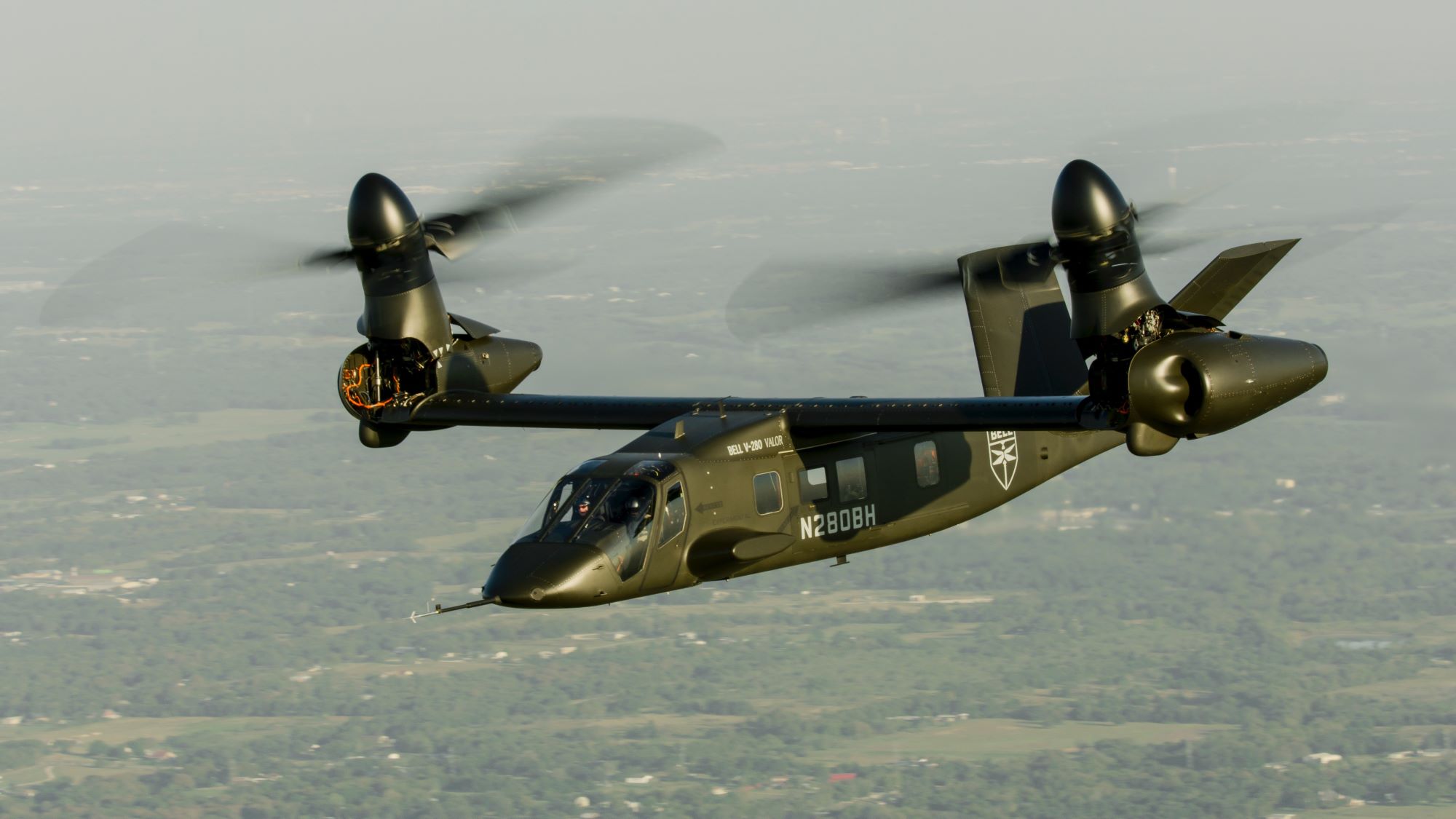
Both armies are replacing aging rotorcraft and pursuing next‑generation tiltrotors. The U.S. prioritized speed, range and interoperability with existing Army systems, advancing the MV‑57A Shaiyen II tiltrotor with deliveries slated between 2027 and 2031. The program builds on lessons learned from the long development of the V‑22 Osprey and aims to expand Army expeditionary reach.
Bell’s MV‑57A uses carbon‑fiber composite materials to lower cost and mounts two GE T64 turboshaft engines, delivering performance sufficient to lift an M777 A2 howitzer. Specs call for two pilots, two crew, up to 14 troops, a length of 25 meters, a height of 7 meters, a service ceiling near 6,000 meters and three rotor blades with a rotor area of about 89.4 m². The Army is expected to assign the aircraft to specialized units such as the 160th Special Operations Aviation Regiment (the Night Stalkers). Key sensors include an AN/APQ‑187 “Silent Night” radar for terrain avoidance and an aerial refueling probe on the right fuselage side.
By contrast, the PLA has leaned on adapting civil tiltrotor designs for military use. The War Zone reported on Aug. 18, 2025, that China United General Aviation in Shenzhen modeled a military Lanying R6000 tiltrotor on Italy’s Leonardo AW609 to carry six to twelve troops and was conducting trials. The Lanying sits smaller than the V‑22 Osprey but larger than Bell’s V‑280 or the MV‑57A.
Harbin also developed the UR‑6000 large cargo UAV to ferry roughly 13,000 pounds of supplies from southern theater commands to artificial island garrisons in the South China Sea, according to The War Zone on Oct. 14, 2024. Observers see the UR‑6000 trials as a stepping stone toward a manned Lanying R6000 program.
In short, the U.S. pursued a purpose‑built military tiltrotor while the PLA repurposed civilian designs, trialed heavy cargo drones and then moved to a manned variant. Both sides reached solutions that reduce dust and debris at helicopter landing zones, and they differ mostly in sensors and engines; the overall trajectories are comparable.
The decisive divergence lies in aerial refueling. The U.S. has pushed both strategic and tactical refueling to enable truly global tiltrotor operations. On April 16, The War Zone reported the Army plans to equip the MV‑57A with an aerial refueling probe and treat ground‑based tactical aerial refueling as essential for global expeditionary ground operations when deliveries begin in 2027.
The Army plans close coordination with the Navy and Air Force. The Navy converted the proposed UCLASS unmanned carrier aircraft into the carrier‑based MQ‑25 Stingray tanker and began fielding it; reports indicate the Army intends a ground‑launched MQ‑25 variant to perform tactical refueling for the MV‑57A. The War Zone noted the MQ‑25 is roughly 15.8 meters long, has a 22.9‑meter wingspan, a 3.0‑meter height and uses a Rolls‑Royce AE3007N turbofan. The Air Force would provide strategic refueling support — from KC‑135 Stratotankers and KC‑46 Pegasus tankers — to extend MQ‑25 reach, which sits around 930 km.
Analysts expect Navy and Air Force support to bolster the Army’s tactical refueling network, extending MV‑57A global reach and its special‑operations mission set. Stars & Stripes reported on April 22 that the Air Force plans to convert C‑130 transports into tankers to refuel MQ‑25s in flight, enabling rapid, theater‑spanning tiltrotor deployments to meet the tempo of modern ground operations.
Even if the MV‑57A’s basic specs resemble the PLA’s Lanying R6000 or Harbin’s UR‑6000, the PLA platforms lack aerial refueling. That limits Lanying and UR platforms to theater‑local troop and cargo movements, while the U.S. intends to operate the MV‑57A globally with MQ‑25 tactical tankers supplemented by Air Force KC‑135 and KC‑46 strategic tankers.
In the end, both sides developed next‑generation tiltrotors for ground operations, but the U.S. has a clear advantage in the integrated aerial‑refueling architecture that enables global expeditionary ground power. That gap will likely widen the difference between single‑theater and global ground‑operation capabilities in future conflicts.
Author Yoon Seok‑jun is a visiting researcher at the Korea Institute for Military Affairs,
a policy advisor to the Ministry of National Defense, and a retired navy colonel.










Most Commented