
Translation result
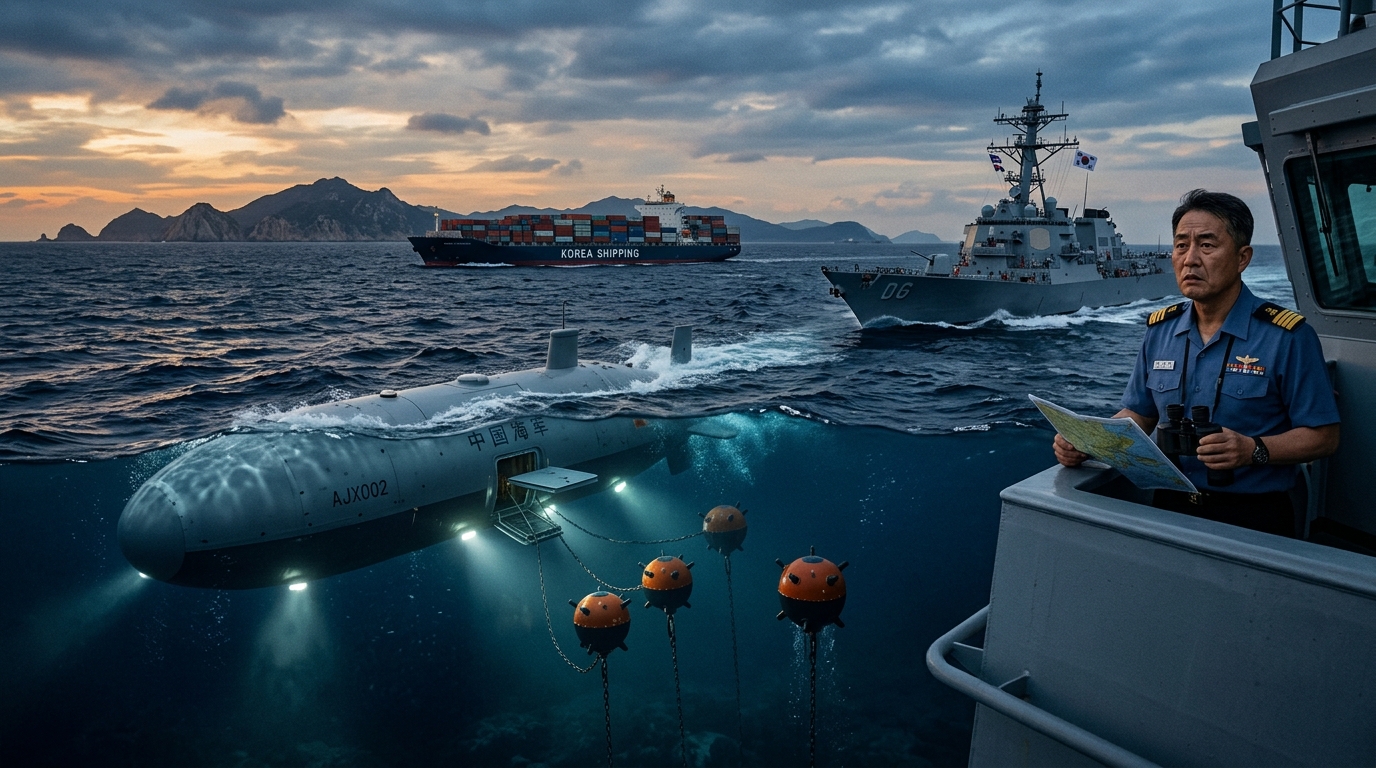
China has formalized a plan to use naval mines to completely block U.S. reinforcement routes in the event of a Taiwan contingency. Its targets are not the waters off Taiwan, but the Ryukyu island chain and the northern Philippine straits. Those sea lanes also happen to serve as the main artery of the SLOCs that bring Middle East oil and LNG into South Korea and carry South Korean semiconductors and automobiles out.
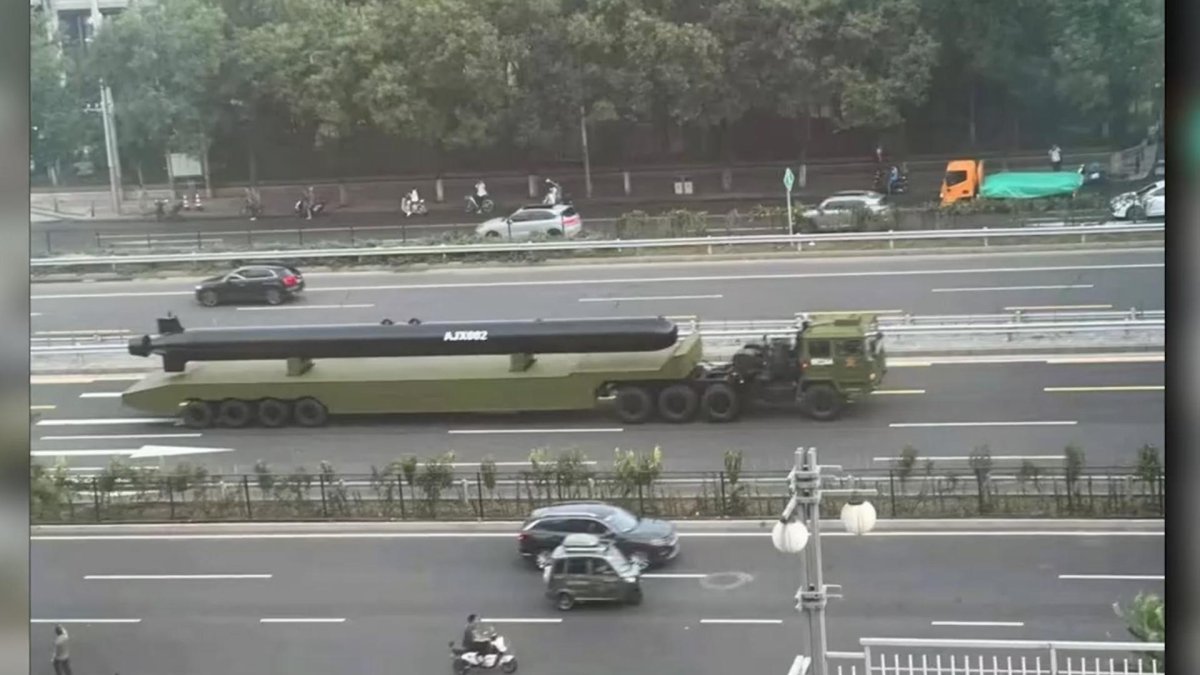
The latest issue of China’s leading military journal, Shipborne Weapons, lays out the plan in detail and names specific weapon systems. The centerpiece is the large unmanned underwater vehicle (UUV) called the “AJX002,” which analysts estimate has an operational range of about 1,800 km. Developed as a counter to the U.S. extra-large unmanned undersea vehicle (XLUUV) Orca, the AJX002 can operate deeper and more covertly than manned submarines.
It targets the outer edge of the first island chain, not Taiwan
A key feature of China’s mine-laying concept is that waters off Taiwan are excluded from the operational area—those waters would need to be controlled by Chinese naval and landing forces. Instead, Beijing would covertly insert AJX002s outside the Pacific and seed large minefields across the outer straits of the first island chain—chokepoints through which U.S. reinforcement forces would be forced to pass.
The objective is clear: delay the U.S. Seventh Fleet’s entry into the Western Pacific by roughly one to two weeks to secure a golden window for a Taiwan assault. By blocking allied sea approaches within the first 24 hours of a conflict, China would seek to create a fait accompli before U.S. and Japanese forces can arrive on scene.
A foreign war could halt South Korea’s exports
The real danger of this plan is that it would strike South Korea directly rather than just the combatants. The Ryukyu and Philippine waters are the critical southern export-import routes where Middle East oil and Australian LNG flow in and South Korean semiconductors and cars flow out. The moment underwater drones seed those straits with mines, merchant shipping would be effectively unable to transit—even if South Korea does not intervene directly in a Taiwan conflict.
Detecting and clearing seabed mines is a slow, resource-intensive process that consumes time and specialized ships. In a scenario where U.S. and Japanese mine-countermeasure forces are focused on Taiwan’s defense, South Korea would shoulder the burden of opening alternative routes using only its own mine-countermeasure capabilities.
South Korea’s military must tackle this strategic task now
China’s AJX002 mine-laying plan is a variable that could fundamentally reshape maritime security in East Asia. Because it could directly paralyze South Korea’s logistics and economy, the threat goes beyond a simple U.S.-China confrontation and becomes a distinct security issue for Seoul.
To counter this threat, expanding anti-submarine and mine-detection assets and developing a layered strategy to protect southern sea lanes are urgent strategic tasks for the South Korean military. In today’s East Asian security environment, a war in another country can no longer be treated as someone else’s problem.
실시간 인기기사
- “Promised a strong military, then gutted its core”… Xi’s purge leaves China’s military command in crisis
- “K2 and K9 potential markets have swung pro-Russia”… Bulgaria election forces strategic recalibration for Korean defense exports
- “We built the KF-21, but China doubled its factories”… the mass-production gap remains South Korea’s challenge















Most Commented