
Translation result.
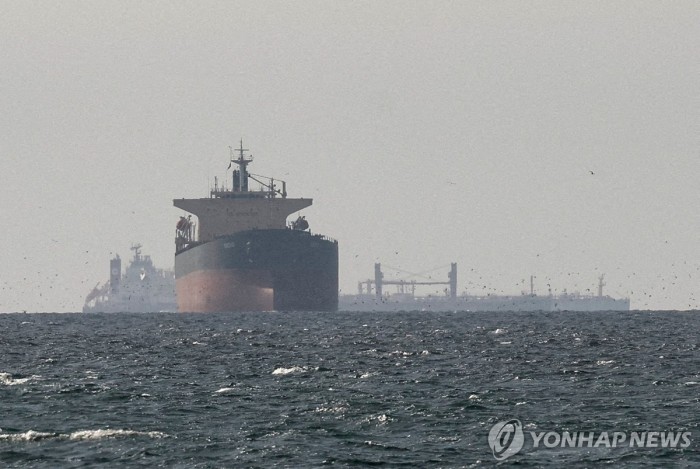 |
The Iran-aligned Houthi movement in Yemen announced it will enter the war alongside Iran against the United States and Israel. That declaration raises the prospect of the Red Sea shipping lane—another critical global artery after recent threats to the Strait of Hormuz—being shut down. The route connects to the Suez Canal and provides the shortest maritime path between Asia and Europe. If it closes, cargo ships would have to reroute around the Cape of Good Hope at Africa’s southern tip. Global shipping already suffered from Houthi attacks on Red Sea vessels in 2024; a simultaneous closure of both sea lanes would deal a much larger blow to South Korea’s export-dependent economy.
On the 28th (local time), Houthi military spokesman Yahya Saree said the group had launched missiles against major Israeli military targets and that the operation was coordinated with the Iranian military and Lebanon’s Hezbollah—an effective confirmation of their entry into the fighting. Although Western governments label them “rebels” and do not formally recognize them, the Houthis control Yemen’s capital and constitute the country’s dominant military force. With Iran leveraging the Strait of Hormuz, Houthis acting to assist Tehran are likely to attempt to interdict the Bab el-Mandeb Strait at the southern entrance to the Red Sea. If both of the Arabian Peninsula’s major sea lanes are blocked, global logistics will worsen significantly.
The Red Sea route is also a primary export corridor for South Korea to Europe. A shutdown would impose crippling costs on an economy that is highly dependent on exports. Key Korean exports—electronics, automobiles and batteries—transit this route, and parts and materials bound for overseas factories pass through it as well. When the Houthis blocked the Red Sea in November 2023, Asia–Europe sailings lengthened by roughly 9,000 km and took an additional 10–15 days. Shipping costs spiked accordingly.
The outbreak of war in Iran has already driven related costs sharply higher. The tanker Worldscale index (WS) stood at 359.4 on the 27th, up 59.9% from 224.72 on the 27th of the previous month, just before the war began. Compared with the start of the year, the index has risen nearly sevenfold. The Shanghai Containerized Freight Index (SCFI) shows Middle East route rates at $3,728 per TEU (20-foot container), roughly 2.8 times prewar levels. Those increases have occurred even though the Red Sea remains open; if it closes, the downstream effects could be severe. Shipping industry analysts warn that simultaneous closures of both sea lanes would paralyze the global logistics network. For a country like South Korea—dependent on imported energy and with a large export-oriented industrial base—that scenario would be extremely difficult to withstand.
The ruling Democratic Party and the government have begun considering export controls on synthetic resins after earlier restrictions on naphtha. Related small and medium-sized firms reportedly hold only five to six days’ worth of raw materials. If supplies of these inputs break down, affected manufacturers could halt production one by one, and essentials such as food and bottled water could face shortages because of packaging container shortfalls. Waiting until inventories fall before responding would be too late.
The government must immediately implement a range of stabilization measures—coordinated closely with the private sector—to blunt the economic impact of surging oil and logistics costs and to reduce the risk of stagflation.















Most Commented