
Taiwan’s Defense Budget: How U.S. Senate Visit Could Shape Military Strength Against China
Daniel Kim Views
|
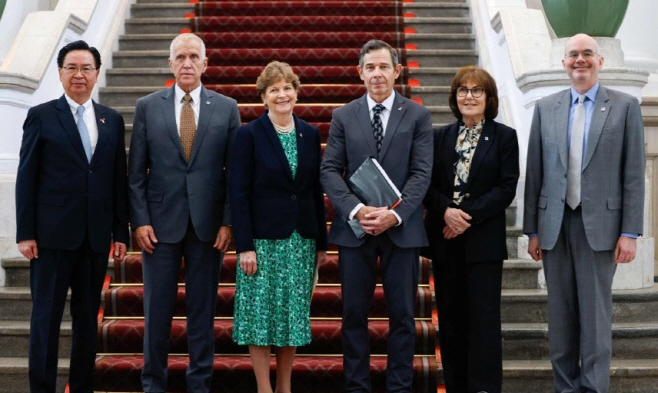
According to Beijing sources familiar with cross‑Strait affairs, President Lai received a bipartisan U.S. Senate delegation led by Sen. Jeanne Shaheen (D) and Sen. John Curtis (R) at the presidential office on the 30th.
After the meeting, Sen. Curtis told reporters, “Passing Taiwan’s special defense budget matters greatly to me and my colleagues in Washington. While we are investing in this region, you are investing as well. We want to make clear that we stand together.”
The delegation also expressed concern about rising Chinese military pressure and reaffirmed U.S. support for Taiwan. Sen. Shaheen said, “We are worried about increasing pressure from China, including military activity around Taiwan that raises the risk of miscalculation.”
She added, “U.S. support for Taiwan remains strong and steady. Bipartisan backing for maintaining Taiwan’s defenses endures, and I hope the two sides deepen their cooperation.”
President Lai responded, “The special defense budget has undergone rigorous review. Public support at home exceeds 60 percent, but political factors have delayed the legislature’s consideration. Our government’s resolve and commitment to strengthen self‑defense and deepen cooperation with the United States to safeguard national security remain unchanged.”
He continued, “As authoritarian threats grow, the core tenet of national security is to enhance self‑defense, deepen security cooperation with allies such as the United States, and work to preserve peace and stability in the Taiwan Strait.”
The ruling Democratic Progressive Party drafted a Special National Defense Budget Act late last year worth NT$1.25 trillion (60 trillion KRW, about $45 billion).
The plan aims to build an air‑defense network dubbed “Taiwan’s Shield,” accelerate artificial‑intelligence systems, and strengthen non‑China supply chains. But the bill has stalled in the Legislative Yuan amid opposition from the Kuomintang, the main opposition party and current majority in the legislature, which argues the special defense budget would raise tensions in the Taiwan Strait.
The Senate delegation’s visit was the first since August of last year and carried added significance because it came ahead of U.S. President Donald Trump’s scheduled visit to China on May 14–15. If Taiwan feared U.S. support might waver around that trip, the visit was likely meant to address those concerns.
In December, the Trump administration approved a weapons sale to Taiwan worth $11.1 billion (about 14.8 trillion KRW). The administration is pursuing an additional weapons package of about $13 billion (about 17.3 trillion KRW), but it has been cautious about timing congressional notifications, reportedly delaying them out of consideration for the president’s China trip.










Most Commented