
Translation result
|
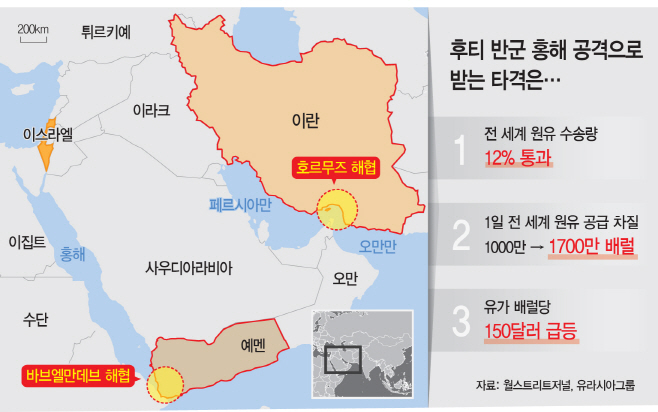
Yemen’s Iran-aligned Houthi rebels launched missiles and drones at Israel, a move that now threatens the Red Sea after earlier warnings about the Strait of Hormuz. The Wall Street Journal reported March 28 that analysts fear the strikes could further disrupt oil flows and push global prices higher.
Israeli officials told the WSJ they detected missiles fired from Yemen toward Israeli territory that morning and activated air defenses to intercept them. The Houthis had stayed out of direct military action since open hostilities between the U.S. and Iran began on the 28th of last month.
The Houthis said in a statement, “We carried out our first military operation, including missile strikes, targeting key Israeli military objectives.” The group added it will keep up operations “until our goals are achieved” and until attacks on all resistance fronts cease, signaling an official entry into the broader conflict.
Unlike other Iran-backed groups, the Houthis had previously avoided direct intervention. Analysts warn that renewed Houthi attacks tied to the U.S.–Iran confrontation could send further shockwaves through the oil market. In 2023, during the Gaza war, the Houthis targeted vessels transiting the Red Sea in the name of supporting Palestine, disrupting maritime shipping and trade.
Energy analysts say that if the Red Sea — a major export route to Europe — is also disrupted after threats to the Strait of Hormuz, the supply shock to oil markets could intensify.
Saudi Arabia ships much of its crude bound for Asia from the Persian Gulf via the Red Sea port of Yanbu. That routing has served as an alternative when the Strait of Hormuz is threatened, helping to limit the extent of global price spikes so far.
But a Houthi-driven closure of the Red Sea would make price shocks unavoidable. Eurasia Group estimates a Red Sea blockade would raise the global daily oil-supply shortfall from about 10 million barrels per day to roughly 17 million barrels per day, and projects prices could surge to $150 per barrel.
Energy and commodities firm Argus warned the Houthis’ strikes are raising simultaneous risks to global energy supplies and maritime transport, adding upward pressure to oil prices that have already risen by more than 50%.
|
















Most Commented