Quick access to main page (top) Direct access to main contents Quick access to main page (bottom)

US Support for Japan’s Self-Defense Forces: What Does It Mean for Regional Security?

Daniel Kim Views  

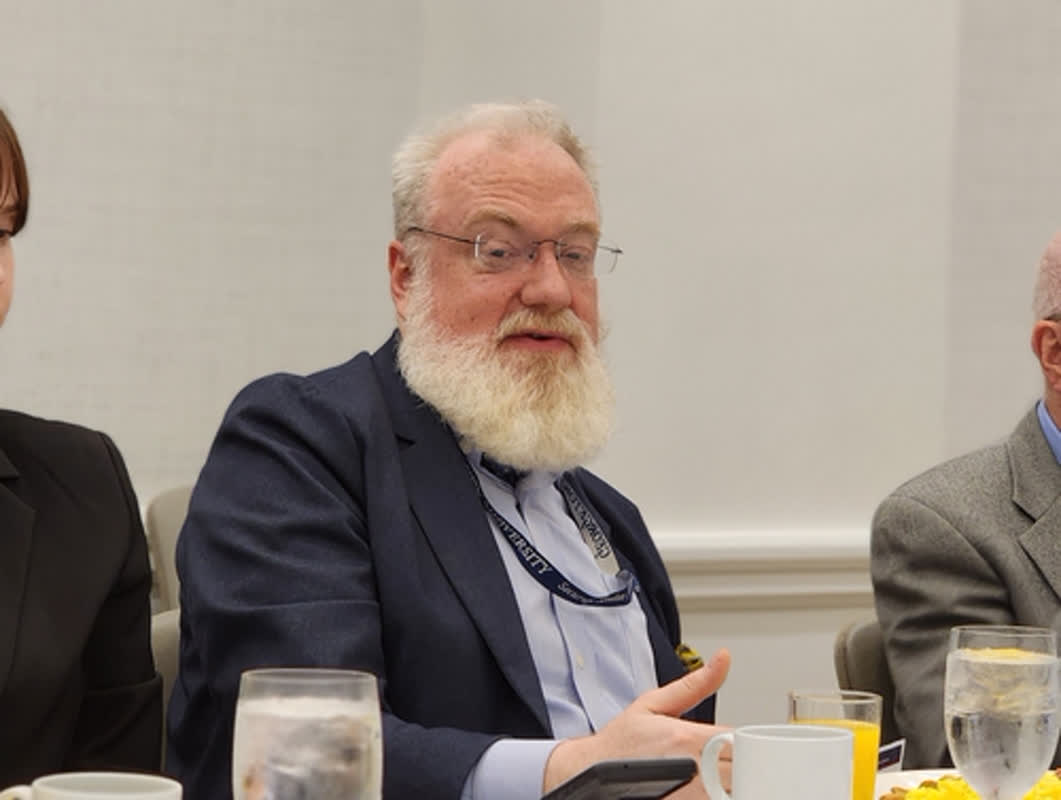
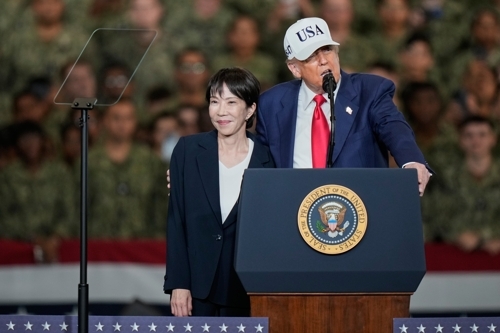
At a recent Asia Society panel discussion, Herbert McMaster, former National Security Advisor under the Trump administration, declared, “The U.S. will support Japan in enhancing its Self-Defense Forces’ capabilities.” McMaster indicated that the U.S. would likely back Prime Minister Sanae Takaichi’s efforts to revise Japan’s pacifist constitution.

He stressed that strength is the only way to prevent U.S. entanglement in Indo-Pacific conflicts.
McMaster pointed to Russia’s invasion of Ukraine as a result of perceived weakness.
He also cited the Korean War, noting how North Korea and China miscalculated America’s resolve to defend its allies.

In the wake of Takaichi’s Liberal Democratic Party’s landslide victory in the recent House of Representatives election, securing 316 out of 465 seats, U.S. officials are discussing the Trump administration’s potential support for amending Japan’s pacifist constitution, particularly Article 9, which renounces war and military force.
 AP / Associated Press
 AP / Associated Press

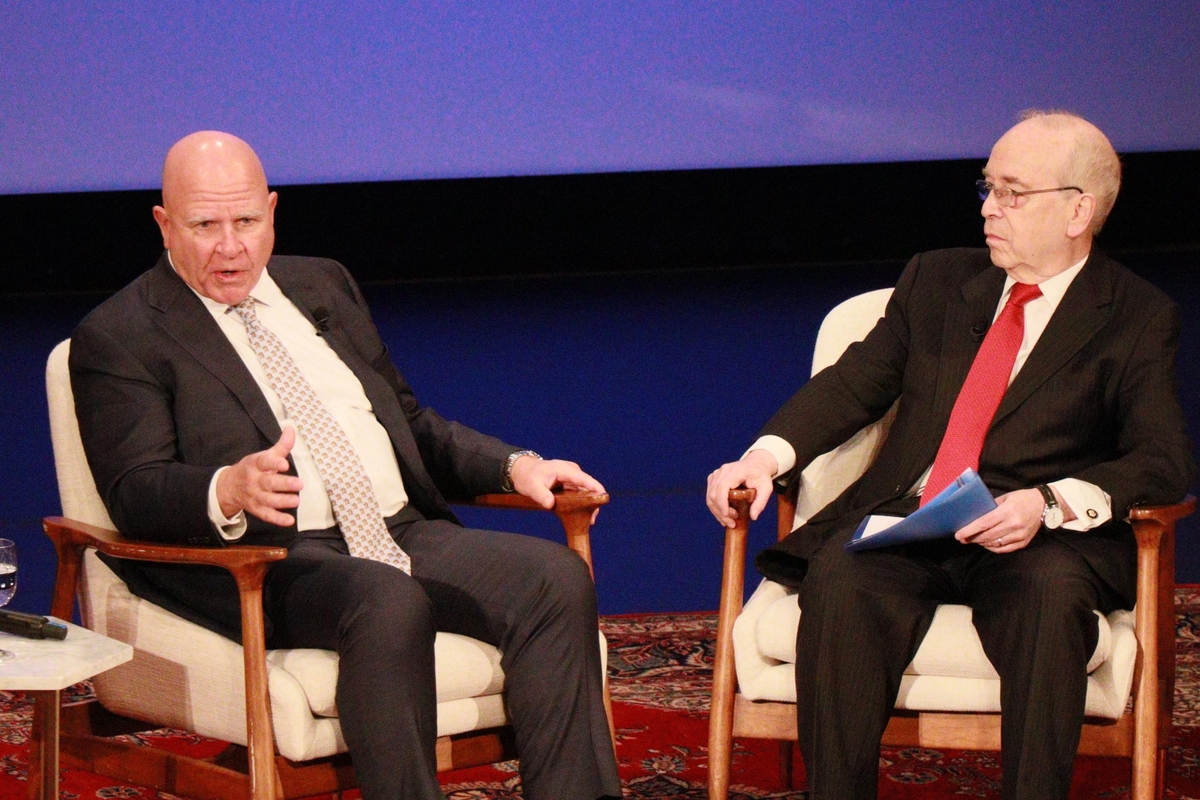
During the February 9 panel in New York, McMaster, now a senior fellow at the Hoover Institution, stated, “The U.S. will back Japan’s efforts to bolster its Self-Defense Forces, and if Prime Minister Takaichi moves to amend the constitution beyond reinterpretation, we’ll likely support that initiative.”

He emphasized that this aligns with Trump’s “peace through strength” global security doctrine. Takaichi has consistently advocated for constitutional amendments to explicitly define the Self-Defense Forces’ role, especially in light of Japan’s post-World War II renunciation of war and military action.

Following the ruling party’s electoral triumph, Takaichi reaffirmed his commitment to constitutional reform.

McMaster emphasized, “Our top priority now is avoiding entanglement in major Indo-Pacific events. This can only be achieved through strength.”
He argued that potential adversaries like China must be convinced that military force won’t achieve their goals and that the costs and risks of aggression are too high.

Regarding Russia’s invasion of Ukraine, McMaster observed, “They saw a ‘weakness’ in Ukraine,” suggesting that recognizing such vulnerabilities often leads to aggression.
Daniel Russell, vice president of the Asia Society Policy Institute and former Assistant Secretary of State for East Asian and Pacific Affairs, joined the discussion, criticizing the term “strategic ambiguity” as inapplicable to military capabilities.
 AP / Associated Press
 AP / Associated Press

Russell asserted, “While final decisions on war or peace rest with military commanders based on the situation, there should be no ambiguity about U.S. commitments or capabilities.” McMaster concurred, referencing the Korean War in June 1950 as an example of how misjudgments about U.S. resolve to defend allies led to catastrophic consequences.

McMaster, a retired Army general, served as National Security Advisor during the early Trump administration when U.S.-North Korea tensions escalated over Pyongyang’s nuclear program. He stepped down after about 13 months due to disagreements with Trump over North Korea policy.

Daniel Kim
content@tenbizt.com

[Military] Latest Stories

  • 30 of 33 Iran Missile Bases Still Active: Intelligence Defies Trump Claims
    30 of 33 Iran Missile Bases Still Active: Intelligence Defies Trump Claims
  • US Javelin Missiles Deployed in Taiwan’s High-Stakes Live-Fire Drill
    US Javelin Missiles Deployed in Taiwan's High-Stakes Live-Fire Drill
  • North Korea’s 10-Year Nuclear Threat: Is a Limited Strike Imminent?
    North Korea's 10-Year Nuclear Threat: Is a Limited Strike Imminent?
  • AI vs. Video Compression: How RMX is Redefining Tactical Edge Tech
    AI vs. Video Compression: How RMX is Redefining Tactical Edge Tech
  • US-South Korea Security Meeting Sparks Tension Over Military Control
    US-South Korea Security Meeting Sparks Tension Over Military Control
  • Iran Claims Missile Strikes on U.S. Military Bases: Did They Hit?
    Iran Claims Missile Strikes on U.S. Military Bases: Did They Hit?

Weekly Best Articles

  • Choi Dong-seok’s Family Bond: How a Simple Engraving Reveals Deep Love for His Children
  • Kwak Sun-hee’s Stunning Wedding Photos: A Celebration of Love and Courage
  • Is ‘I Am a Natural Person’ Just a Big Lie? Comedian Yoon-taek Reveals Shocking Secrets!
  • Health Scare: Why Fans Are Worried About Go Ji Yong’s Dramatic Weight Loss
  • Discover the Winter Gongju Chestnut Festival: A Taste of Korea at H-Mart in the USA!
  • 2026 Spring Wildfire Prevention: How Gyeryong City is Cutting Response Time to 30 Minutes!

You May Also Like

  • 1
    Trump Slashes AI Review Window to 30 Days Amid National Security Debate

    Politics 

    Trump Slashes AI Review Window to 30 Days Amid National Security Debate
  • 2
    Ukraine’s EU Bid Surges as Hungary Drops Opposition Amid Russian Attacks

    Politics 

    Ukraine’s EU Bid Surges as Hungary Drops Opposition Amid Russian Attacks
  • 3
    Trump Backs Colombia's 'El Tigre' — What It Means for U.S. Relations

    Politics 

    Trump Backs Colombia’s ‘El Tigre’ — What It Means for U.S. Relations
  • 4
    Trump Backs Colombia's Far-Right Outsider—What's at Stake?

    Politics 

    Trump Backs Colombia’s Far-Right Outsider—What’s at Stake?
  • 5
    12.5% Tariff Hit: South Korea Faces New U.S. Trade Penalties

    Politics 

    12.5% Tariff Hit: South Korea Faces New U.S. Trade Penalties

Popular Now

  • 1
    12.5% Tariff Alert: Why the U.S. Is Targeting South Korean Imports

    Politics 

  • 2
    Marta Kostyuk Makes History at French Open Amid Ukraine Crisis

    Politics 

  • 3
    37 Years in Exile: The Tiananmen Leader Who Just Wants to Go Home

    Politics 

  • 4
    South Korea's Cheongju Airport Faces Crisis as Passenger Numbers Explode

    Politics 

  • 5
    Nuclear Submarine Race: South Korea's High-Stakes Bid for U.S. Fuel

    Politics 

Weekly Best Articles

  • Choi Dong-seok’s Family Bond: How a Simple Engraving Reveals Deep Love for His Children
  • Kwak Sun-hee’s Stunning Wedding Photos: A Celebration of Love and Courage
  • Is ‘I Am a Natural Person’ Just a Big Lie? Comedian Yoon-taek Reveals Shocking Secrets!
  • Health Scare: Why Fans Are Worried About Go Ji Yong’s Dramatic Weight Loss
  • Discover the Winter Gongju Chestnut Festival: A Taste of Korea at H-Mart in the USA!
  • 2026 Spring Wildfire Prevention: How Gyeryong City is Cutting Response Time to 30 Minutes!

Must-Reads

  • 1
    Trump Slashes AI Review Window to 30 Days Amid National Security Debate

    Politics 

    Trump Slashes AI Review Window to 30 Days Amid National Security Debate
  • 2
    Ukraine’s EU Bid Surges as Hungary Drops Opposition Amid Russian Attacks

    Politics 

    Ukraine’s EU Bid Surges as Hungary Drops Opposition Amid Russian Attacks
  • 3
    Trump Backs Colombia's 'El Tigre' — What It Means for U.S. Relations

    Politics 

    Trump Backs Colombia’s ‘El Tigre’ — What It Means for U.S. Relations
  • 4
    Trump Backs Colombia's Far-Right Outsider—What's at Stake?

    Politics 

    Trump Backs Colombia’s Far-Right Outsider—What’s at Stake?
  • 5
    12.5% Tariff Hit: South Korea Faces New U.S. Trade Penalties

    Politics 

    12.5% Tariff Hit: South Korea Faces New U.S. Trade Penalties

Popular Now

  • 1
    12.5% Tariff Alert: Why the U.S. Is Targeting South Korean Imports

    Politics 

  • 2
    Marta Kostyuk Makes History at French Open Amid Ukraine Crisis

    Politics 

  • 3
    37 Years in Exile: The Tiananmen Leader Who Just Wants to Go Home

    Politics 

  • 4
    South Korea's Cheongju Airport Faces Crisis as Passenger Numbers Explode

    Politics 

  • 5
    Nuclear Submarine Race: South Korea's High-Stakes Bid for U.S. Fuel

    Politics 

Share it on...