
Urgent Call: Should South Korea Prioritize Repatriation of North Korean POWs from Ukraine?
Daniel Kim Views
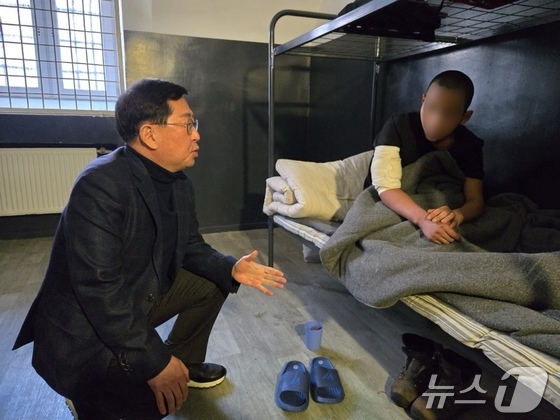
Kim Tae-won and Lee Kyu-chang, directors at the Korea Institute for National Unification, presented findings in a report titled, “Tasks and Considerations for the Repatriation of North Korean POWs to South Korea: In Light of MBC’s PD Notebook Report”. They warn that Ukraine may face pressure if Russia demands the POWs’ return, urging Seoul to act swiftly to secure their repatriation before any potential transfer to Russia.
The report highlights the severe consequences awaiting POWs if returned to North Korea. Under North Korean law, treason carries a minimum five-year hard labor sentence, with execution possible for serious offenses. The POWs’ public desire to return to South Korea could be deemed a capital offense, significantly increasing their risk.
Even if spared execution, these POWs likely face life sentences in political prison camps known for extreme forced labor. The report cites numerous cases of individuals imprisoned for perceived anti-state activities.
The authors argue that North Korean POWs should be protected under South Korea’s constitution. Article 3, which defines South Korean territory as the entire Korean Peninsula, effectively makes these POWs South Korean citizens. This interpretation aligns with international law against forced repatriation and human rights protections.
To break the current impasse, the report calls for high-level diplomacy. It suggests direct communication between South Korean and Ukrainian leaders is crucial, recommending a bipartisan special envoy team to negotiate with Ukrainian detention officials.
The upcoming fourth anniversary of the Russia-Ukraine conflict on February 24 could provide a diplomatic window to elevate the POW issue in potential peace talks.
The report emphasizes involving the International Committee of the Red Cross (ICRC) to verify the POWs’ voluntary intentions, adhering to international norms. Registering them as protected persons with proper documentation would counter any North Korean claims of forced repatriation.
The authors stress the need for comprehensive support systems if these POWs reach South Korea. No North Korean POWs have been repatriated since the 1953 armistice. These individuals have unique needs stemming from military service, war trauma, and family separation.
Recommendations include specialized psychological treatment, trauma therapy, tailored vocational training for former soldiers, enhanced security measures, and family support programs.









Most Commented