
Poland’s Bold $3 Billion K2 Tank Prepayment: What It Means for the Future of Defense
Daniel Kim Views
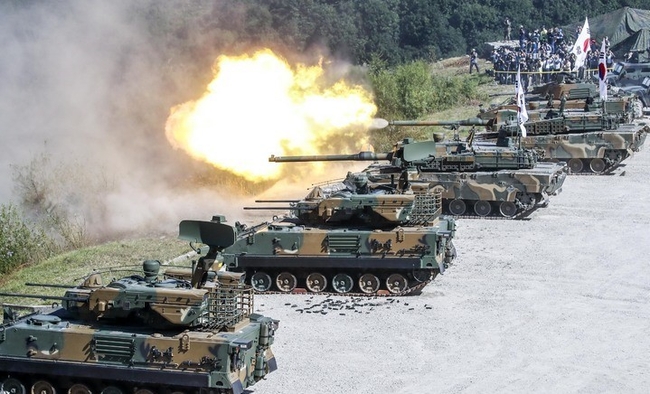
Poland’s Decisive 3 Trillion KRW (2.25 Billion USD) Advance Payment
In late January 2026, the Polish Ministry of Defense transferred a 3 trillion KRW (2.25 billion USD) advance payment to South Korea’s Hyundai Rotem in just two weeks. This amount represents 30% of the 9 trillion KRW (6.75 billion USD) second contract for K2 Black Panther tanks. Such a swift, no-questions-asked full payment is rare in international arms deals, with Poland sending the money immediately after the contract took effect, much like cargo ships.
Polish President Andrzej Duda stated, “South Korea’s strict adherence to delivery schedules and early delivery reliability is our lifeline.” Unlike the 10% long-term installments for European Leopard 2 tanks or F-35 jets, Poland opted for an immediate 30% payment. The Defense Minister revealed, “We were promised production priority if we paid upfront.” CNN headlined the story: “Poland Building a 1,000-strong ‘Made in Korea’ Steel Army.”
This decision is not merely a purchase but a survival strategy amid fears of Russian invasion.
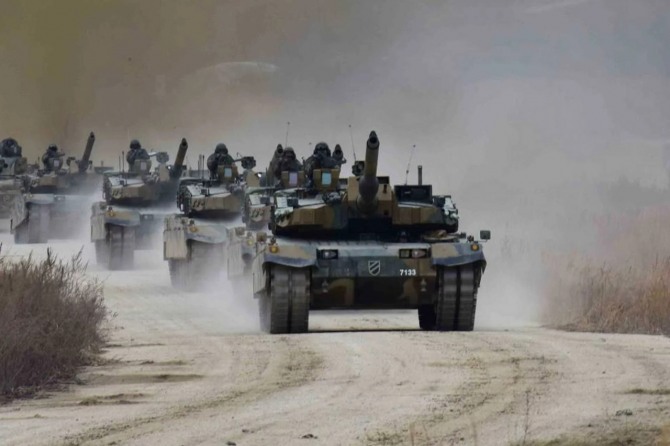
Ambitious Plan to Acquire 1,666 K2 Black Panther Tanks
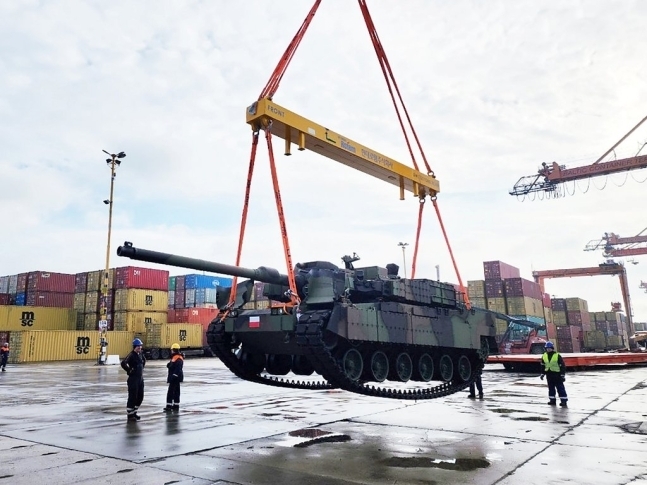
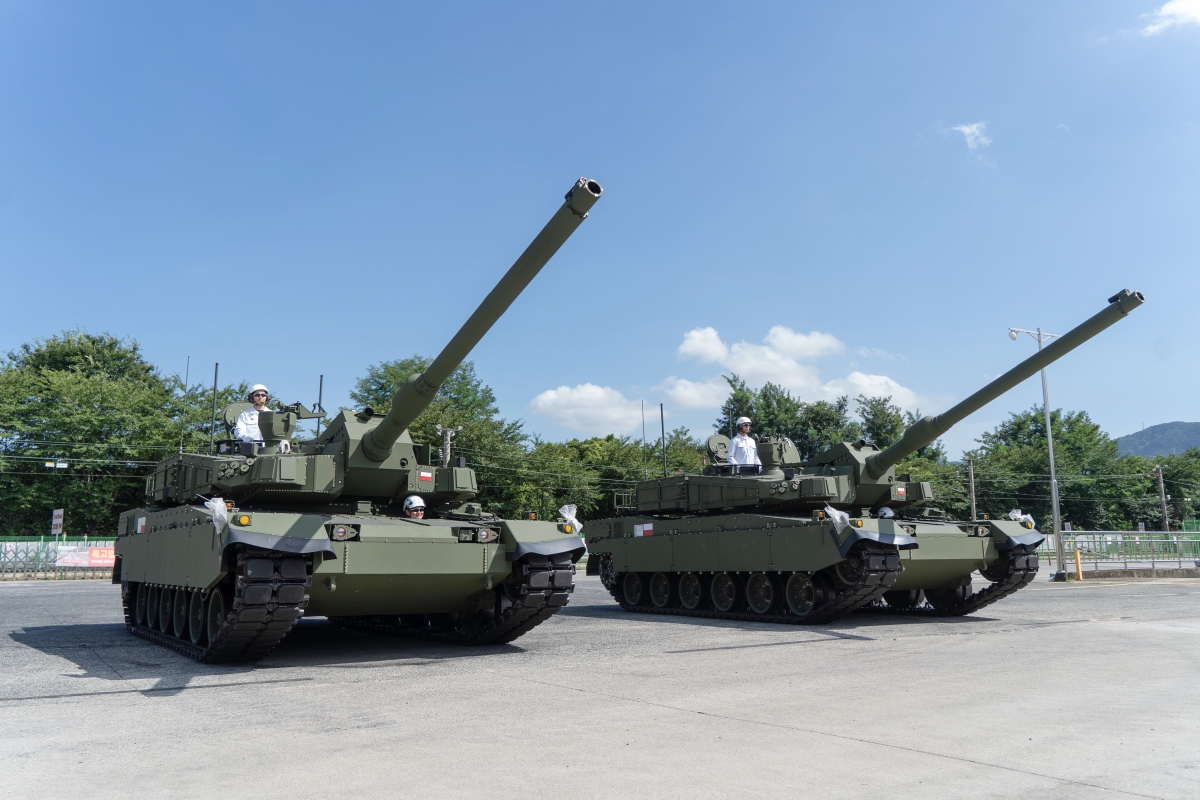
Poland has finalized plans to procure over 1,000 K2 tanks, including 180 from the first contract and 820 from the second. The total, including engineering and bridge-laying variants, will reach 1,666, forming Europe’s largest tank corps. The roadmap includes producing the first 116 in South Korea, followed by 64 assembled at Poland’s PGZ factory, with completion set for 2030.
The K2’s composite armor, autoloader, and 8km-range gun outclass Russia’s T-90. The Polish K2PL version will be NATO-compatible and serve as an export hub for Czech and Slovak markets. President Duda praised the K2’s maintenance efficiency, contrasting it with the Leopard 2’s six-month wait for German parts.
These 1,666 tanks will transform the Polish Army into Eastern Europe’s strongest force.
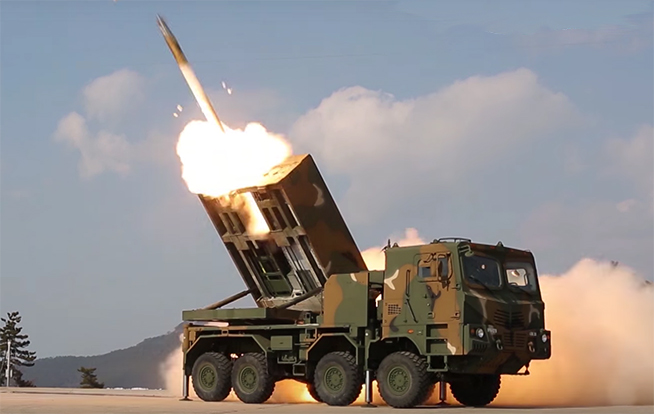
Aggressive Acquisition of Chunmoo Multiple Rocket Launchers
Alongside K2 tanks, Poland will produce 290 K239 Chunmoo launchers and 10,000 239mm guided rockets at PGZ factories. These 80km-range precision rockets counter Russia’s Kalibr missiles, creating an iron fortress along the Belarusian border with their 80-second saturation strike capability.
Poland is adding 200 K9 howitzers to its initial 212, plus FA-50 light attack aircraft, totaling 25 trillion KRW (18.75 billion USD). PGZ announced plans to produce 2,000 Chunmoo rockets annually, strengthening NATO alliances by supplying Ukraine. The 3 trillion KRW advance payment secures exclusive production lines, aiming to dominate 40% of Europe’s artillery market.
Chunmoo is a game-changer, outclassing Russia’s Iskander missiles.
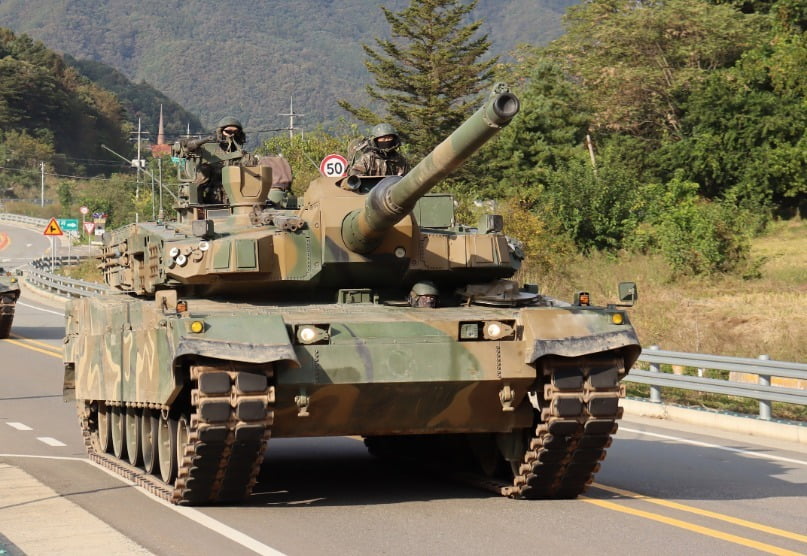
Global Reactions to Poland’s Bold Move
Poland’s advance payment has shocked European nations. Czech Republic and Bulgaria are following suit, while Romania is forming an Eastern European cluster linked to its K9 factory. Norway has contracted 24 Chunmoo systems for 1 trillion KRW (750 million USD) and is considering K2 tanks.
Iraq is eyeing 400 K2 tanks, with Saudi Arabia and UAE pursuing 250 in the Middle East. Chile and Peru are competing for K2s in South America, while Romania discusses increasing its advance payment to “catch up with the 3 trillion KRW.” Global Firepower warns of imminent saturation in South Korean production lines.
Nations worldwide are rushing to send money first, following Poland’s lead.
South Korean Production Limits and the Advance Payment Race
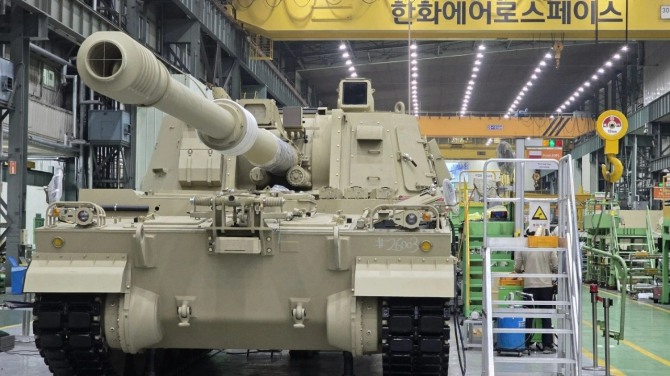
South Korea’s annual production capacity is around 300 K2 tanks, 400 K9 howitzers, and 100 Chunmoo systems. After Poland’s 3 trillion KRW secures priority, other countries face a 5-year wait, sparking discontent. Hyundai Rotem and Hanwha have established a “first pay, first served” policy, intensifying global competition.
While South Korea’s production rate is six times faster than Europe’s Leopard 2 (50 per year), surging demand risks overload. Czech military YouTubers advise, “30% upfront payment is crucial for securing inventory.” Iraqi delegations are lining up to visit South Korea as the race for production line exclusivity heats up.
Advance payments are becoming the new standard in global arms deals.
Poland’s Proactive Strategy and European Export Hub Ambitions
Poland’s PGZ factory will start producing 180 K2PL tanks in 2027, evolving into an export hub for Czech and Slovak markets by 2028. They’re developing K9 mine-laying and ammunition supply vehicles, with technology transfers from Hanwha and Hyundai Rotem building self-reliance. CNN predicts “Made-in-Poland K2 becoming the European tank standard.”
The 3 trillion KRW advance payment reflects a trust premium, departing from past F-35 long-term installments. Poland’s 1,000-tank force will rival Germany and France combined, forming an Eastern European K-defense cluster. South Korean weapons will guard peace on Russia’s frontiers.
This marks a seismic shift in European defense industry dynamics.
South Korea’s Global Defense Industry Dominance and Future Outlook
Thanks to Poland, South Korea’s defense sales have surpassed 50 trillion KRW (37.5 billion USD), boosting 500 partner companies. K2 and Chunmoo exports lead globally, driving 3% GDP growth. Follow-up deals with Iraq and Middle Eastern countries forecast 24/7 production.
Chunmoo Block 2 hypersonic rockets and K2 Black Eagle upgrades aim for global standardization by 2030. Poland’s 3 trillion KRW triggered an advance payment race, ushering in the K-defense era. South Korea emerges victorious in this arms procurement war.















Most Commented