
Is Iran Preparing for a Strike? The Hidden Truth Behind Covered Nuclear Entrances in Isfahan
Daniel Kim Views
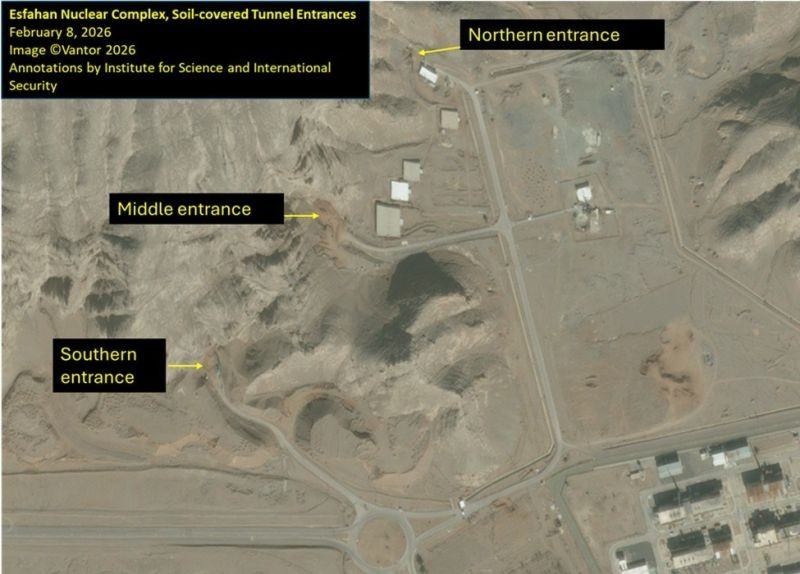
Recent satellite imagery reveals that the underground entrances to Iran’s Isfahan nuclear facility, known for its uranium enrichment capabilities, have been covered with soil.
A report released on February 9 by the Institute for Science and International Security (ISIS), a U.S. think tank, analyzed satellite photos taken the previous day. The analysis confirmed that all three underground access points to the nuclear site in central Isfahan were buried under dirt. No vehicular activity was detected in the vicinity of these entrances.
ISIS suggests that Iran’s actions likely stem from concerns over potential U.S. or Israeli airstrikes or surprise attacks, prompting protective measures for its nuclear installations.
The report draws parallels to similar precautions taken by Iran just before the U.S. executed its “Midnight Hammer” operation last June, which targeted Iranian nuclear facilities in Fordow, Natanz, and Isfahan.
According to the ISIS analysis, covering tunnel entrances with soil could serve to dampen the impact of airstrikes and complicate efforts by special forces to either secure highly enriched uranium or sabotage the facilities.
On February 6, Iran re-engaged in nuclear talks after an eight-month pause, with indirect discussions held in Muscat, Oman, between U.S. President Donald Trump’s Middle East envoy, Steve Winokur, and Iranian Foreign Minister Abbas Araghchi.
Despite the diplomatic overtures, the U.S. maintains a strong military posture in the region. U.S. Central Command (CENTCOM) Commander Brad Cooper attended the meeting in his Navy dress uniform. Following the talks, Winokur and Trump’s son-in-law Jared Kushner reportedly visited the USS Abraham Lincoln, an American aircraft carrier deployed in Middle Eastern waters.
Jang Ki-young, Global Economic Reporter kyjangmon@g-enews.com















Most Commented