
Alaska Airlines’ Global Training Center: How Safety Training Transforms Air Travel in 2026
Daniel Kim Views
Translation result
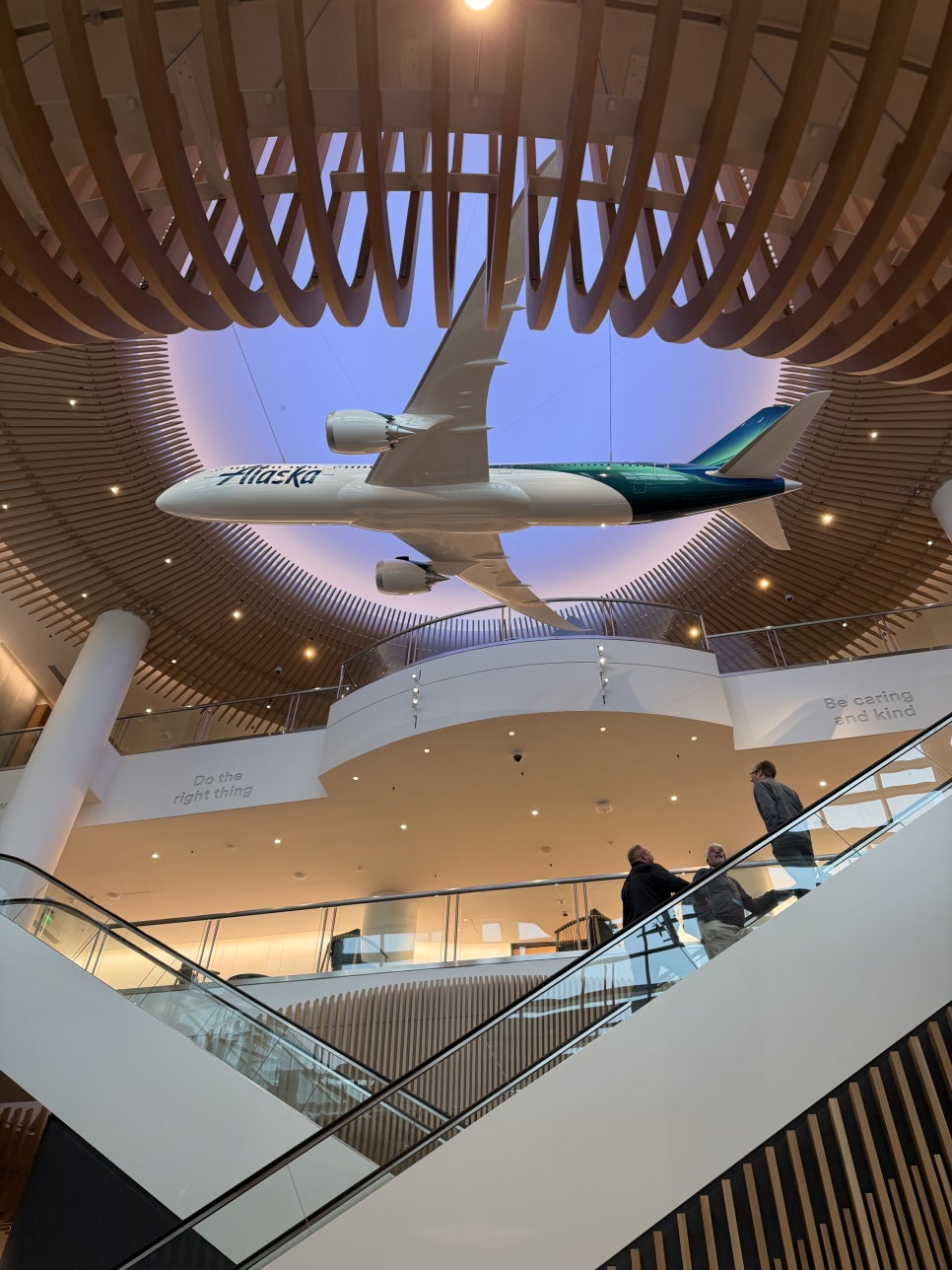
Alaska Airlines Global Training Center (GTC). /Photo: Ye-shin Kang, Travel+ reporter
From the moment you buckle your seatbelt to the moment you step off at your destination, every service you notice is backed by meticulous training and careful planning.
Seattle-based Alaska Airlines recently pulled back the curtain on its Global Training Center (GTC), revealing the safety philosophy at the airline’s core—and the local stories behind its inflight meals.
Learning from failure, training relentlessly: inside the GTC
Learning from failure, training relentlessly: inside the GTC
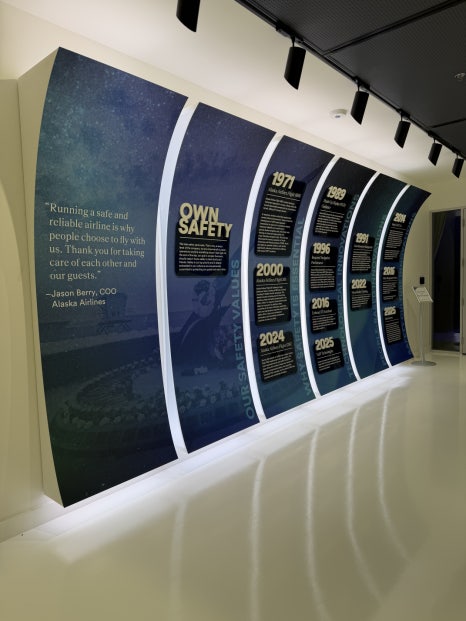

Exhibit space at Alaska Airlines’ Global Training Center. /Photo: Ye-shin Kang, Travel+ reporter
When you step into the GTC near Seattle–Tacoma International Airport, the first thing that grabs your attention isn’t a wall of trophies but a candid record of past incidents. One exhibit lists Alaska Airlines’ major accidents openly—no glossing over. That kind of transparency signals a company determined to confront mistakes and prevent repeats.
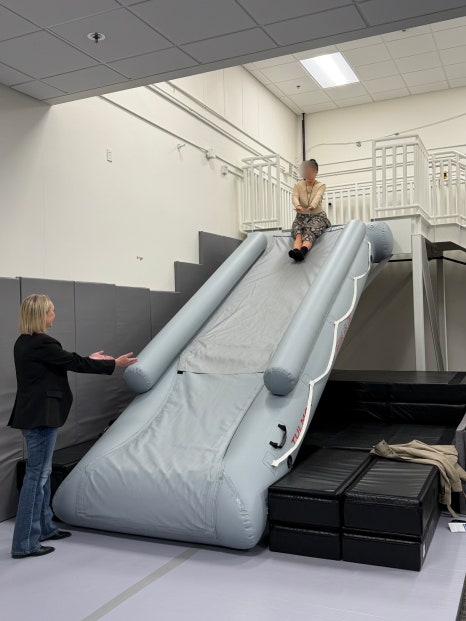
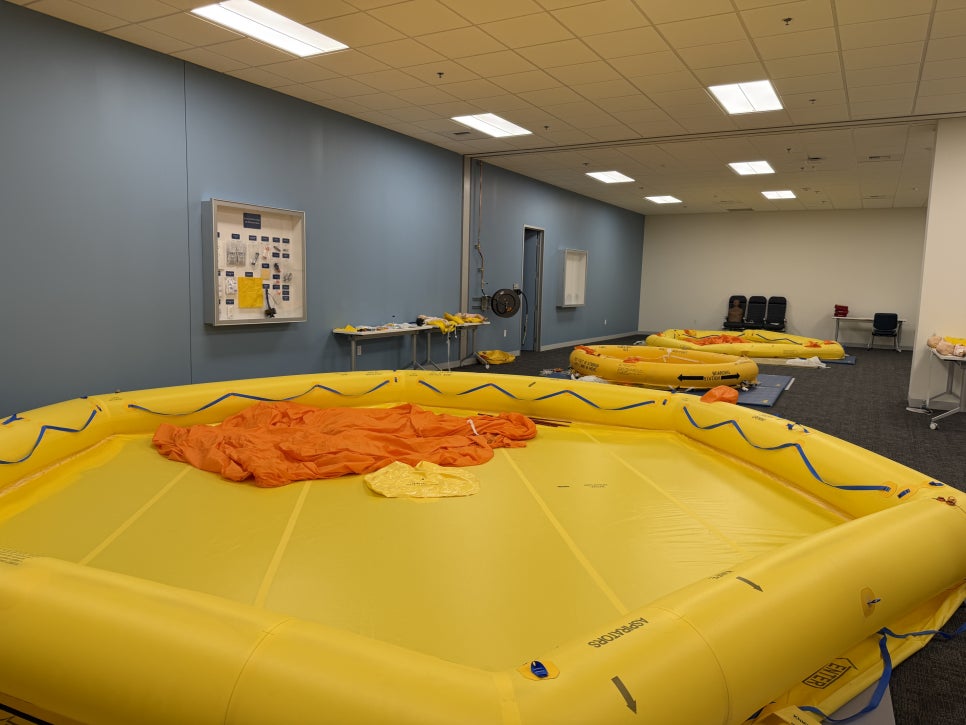
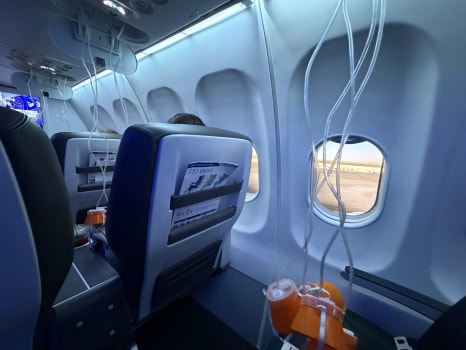
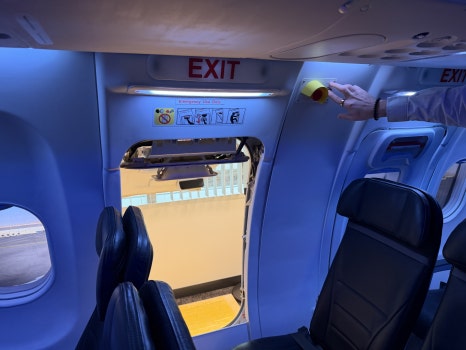
Training facilities designed for in-flight emergencies. /Photo: Ye-shin Kang, Travel+ reporter
The GTC is a sprawling facility that can accommodate more than 300 people at once—flight attendants, pilots, and customer service teams all train here. Alaska Airlines requires every crew member and pilot to come through the center annually to complete mandatory training.
Training is relentlessly hands-on. In realistic cabin simulators that mirror actual aircraft, crews drill emergency routines—putting out fires, operating oxygen masks, and deploying evacuation slides—until reactions become second nature.
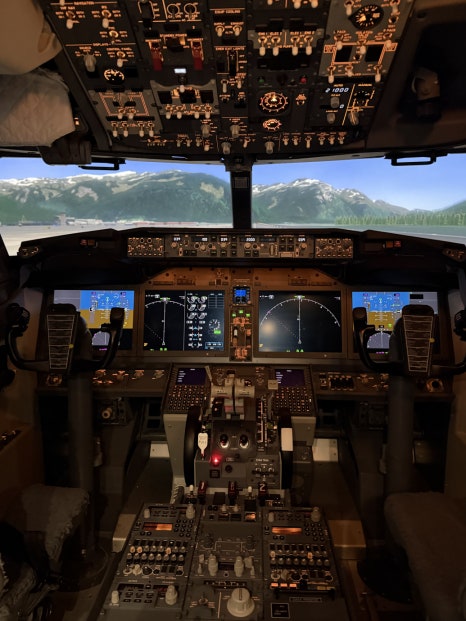
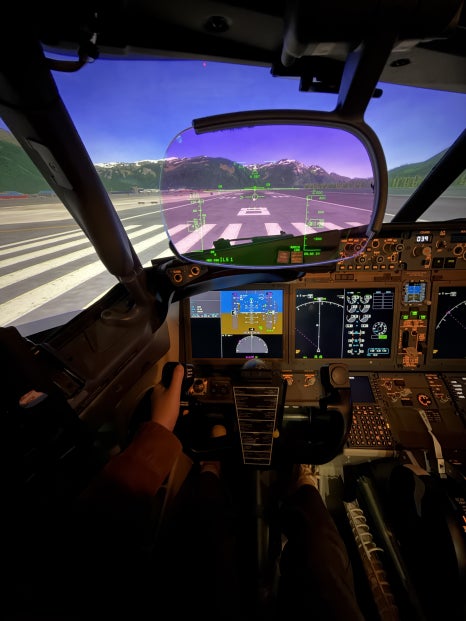
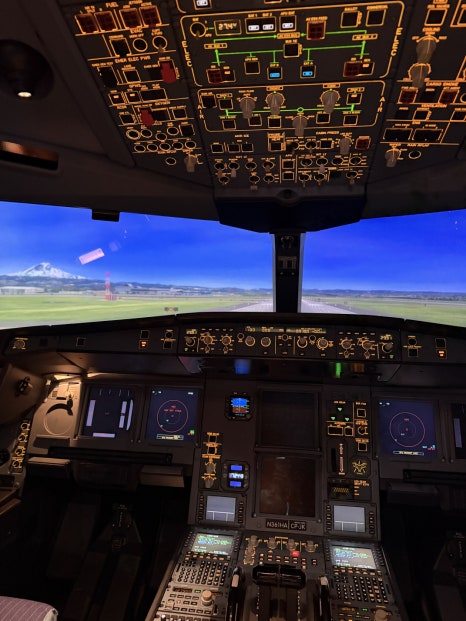
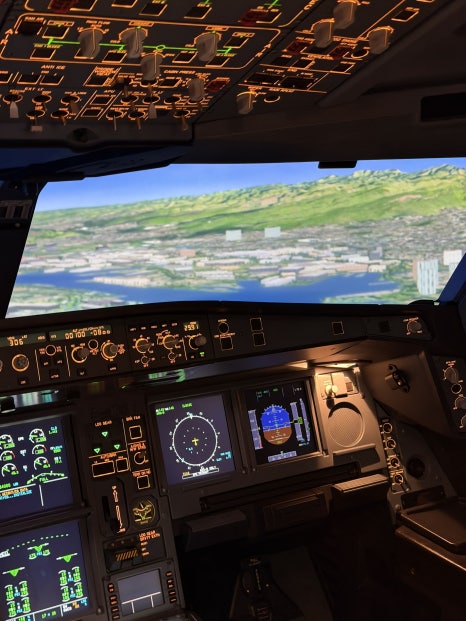
Flight simulator used for pilot training. /Photo: Ye-shin Kang, Travel+ reporter
The airline updates its flight simulators in real time to follow Boeing and U.S. Federal Aviation Administration (FAA) guidelines. Pilots can practice takeoffs and landings in severe weather or challenging terrain by simulating real airport environments from around the world.
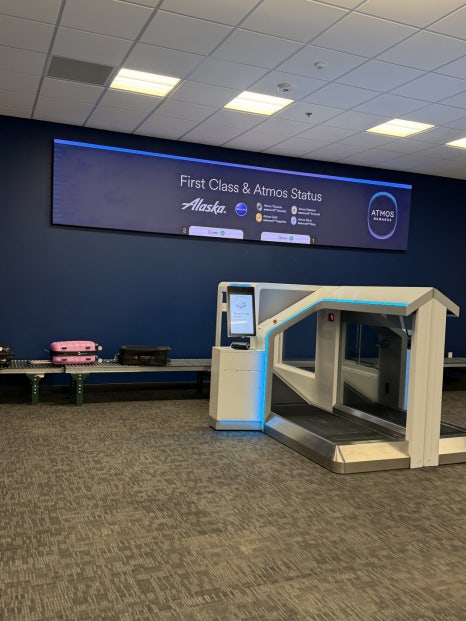

Check-in training zone. /Photo: Ye-shin Kang, Travel+ reporter
There’s even a lifelike mock-up of check-in counters and gates where ground staff rehearse passenger service and practice handling unexpected situations with calm and speed.

Sustainability exhibit. /Photo: Ye-shin Kang, Travel+ reporter
The airline also leads the industry on eco-friendly policies. Alaska Airlines was the first to remove plastic stirrers, single-use cups, and fruit picks from cabin service as part of its push for more sustainable flying. It’s also known for its bold special-livery jets—from a Star Wars edition to a Seattle Kraken hockey design.
Seattle in the sky: pride on the inflight menu
Seattle in the sky: pride on the inflight menu
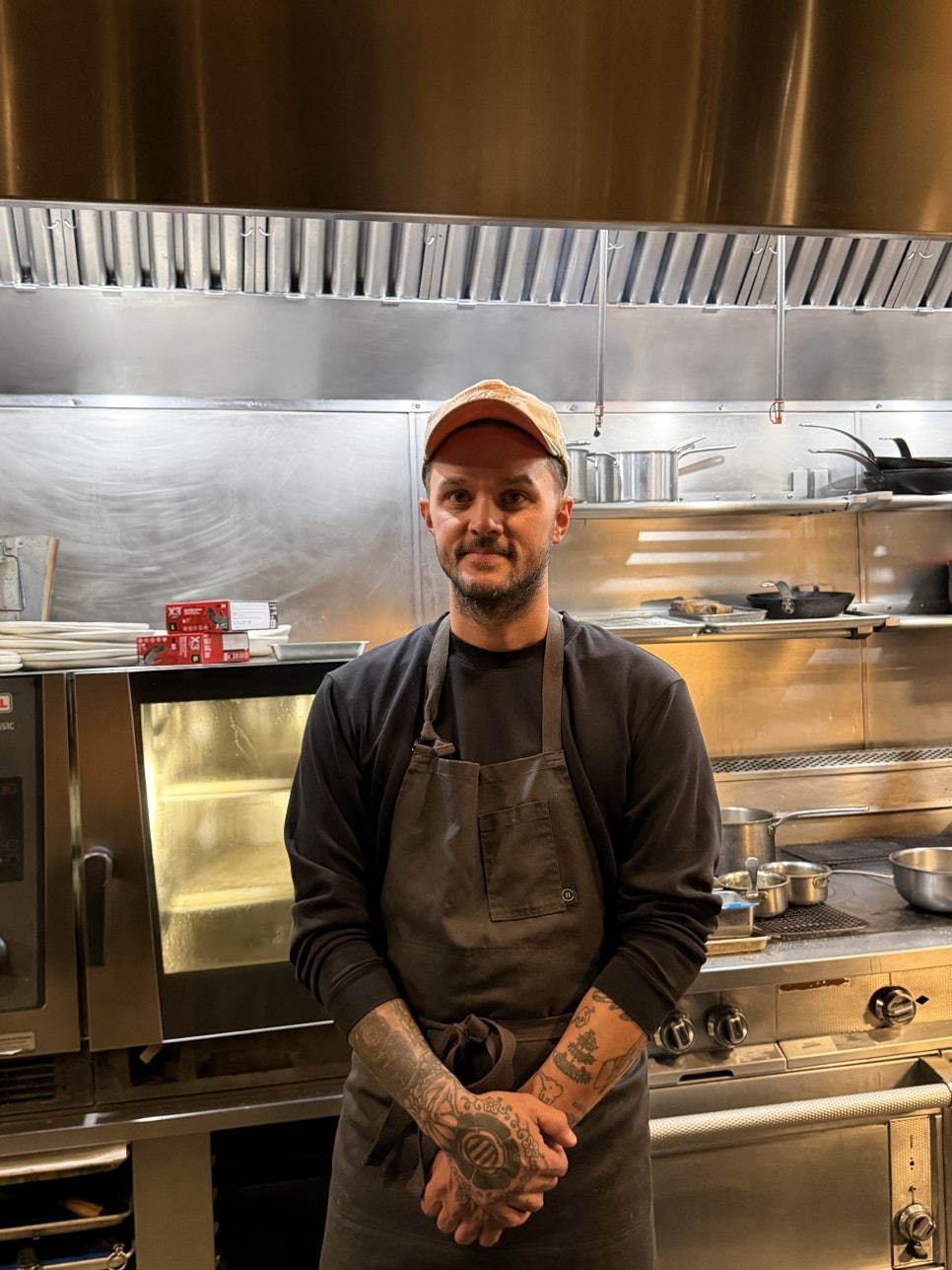
Chef Brady Ishiwata Williams of TOMO restaurant. /Photo: Ye-shin Kang, Travel+ reporter
If safety is an airline’s backbone, inflight food is the part passengers notice first. Alaska Airlines teamed up with Chef Brady Ishiwata Williams of Seattle’s TOMO to level up the onboard dining experience.
Chef Brady’s cooking philosophy is rooted in family and a strong sense of place. He learned to cook in the kitchen of the family restaurant, raised by a grandmother who was an exceptional cook. At TOMO, the chawanmushi (Japanese steamed egg custard) on the menu is a modern reinterpretation of his grandmother’s recipe.
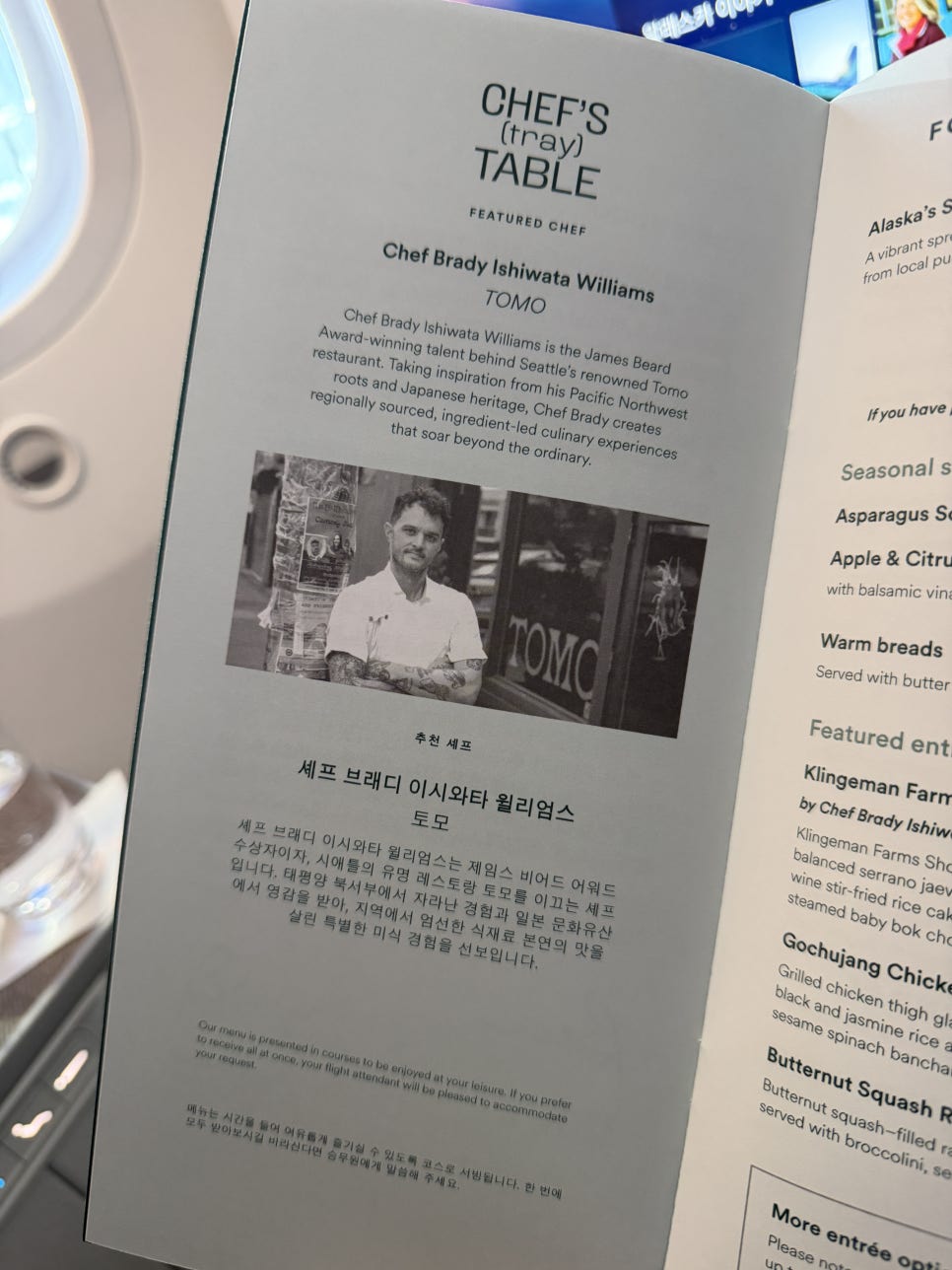
Chef Brady featured on Alaska Airlines’ Business Suite menu. /Photo: Ye-shin Kang, Travel+ reporter
The partnership began with Seattle’s tourism board Guest Chef Dinner Series. During the pandemic, Brady hosted chefs from around the world at his restaurant, and Alaska Airlines supported their travel—what started as practical support grew into a creative partnership.
Over three and a half years they collaborated on more than 25 events, building trust that naturally led to jointly developing inflight menus.
Developing inflight meals demands a level of precision that’s worlds away from a restaurant line. As Chef Brady puts it, “Dishes must hold their quality even after being cooked on the ground, chilled, and reheated onboard.”
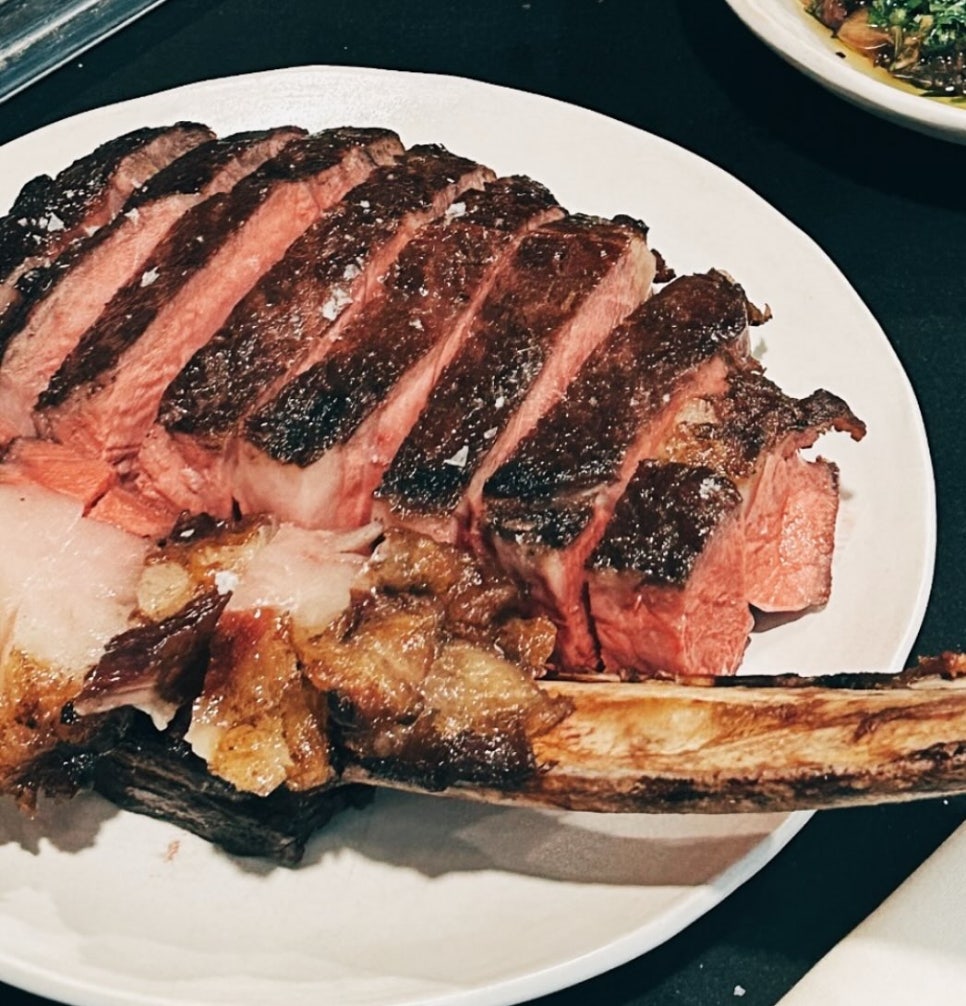
Klingman Farm ribeye. /Photo: Tomo restaurant
The newly introduced Klingman Farm ribeye features high-quality beef from a local farm just 37 km (23 miles) from the restaurant—a deliberate nod to community-based sourcing.
He also suggested a light, refreshing soba dish designed for how passengers often feel on arrival—tired but ready to refresh. “Ultimately,” he says, “inflight meals should give passengers a comforting familiarity.”
Alaska Airlines and Chef Brady aim to put the value of Seattle’s community on the global table, sharing local flavors with travelers from around the world.
From the outset, Alaska Airlines made it clear they wanted Chef Brady’s cuisine to benefit the local community, and that commitment has extended the collaboration from domestic routes to international flights.

Decor made from luggage tags on a GTC wall. /Photo: Ye-shin Kang, Travel+ reporter
Pairing rigorous safety training with inflight service rooted in local flavor and genuine care, Alaska Airlines in Seattle shows that substance—and steady craft—win over flash. It’s a model of an airline strengthening its core rather than relying on surface dazzle.
The most striking part of the GTC tour was the airline’s refusal to hide its incident records. That honesty mirrors Chef Brady’s pursuit of “family taste.” Their uncompromising approach to safety, paired with the effort to place warm, refined local flavors on passengers’ trays, makes Seattle’s sky routes feel genuinely special.
Seattle, U.S. — Ye-shin Kang, Travel+ reporter

Maeil Business News — Ye-shin Kang’s reporter page. Helping you live a life of travel and relaxation. Tips welcome.
naver.me
✈
Follow Travel+ on Instagram
and get trendy travel updates

21K followers, 38 following, 1,903 posts — See Travel+ (@trip_plus) on Instagram
www.instagram.com















Most Commented