
Translation result
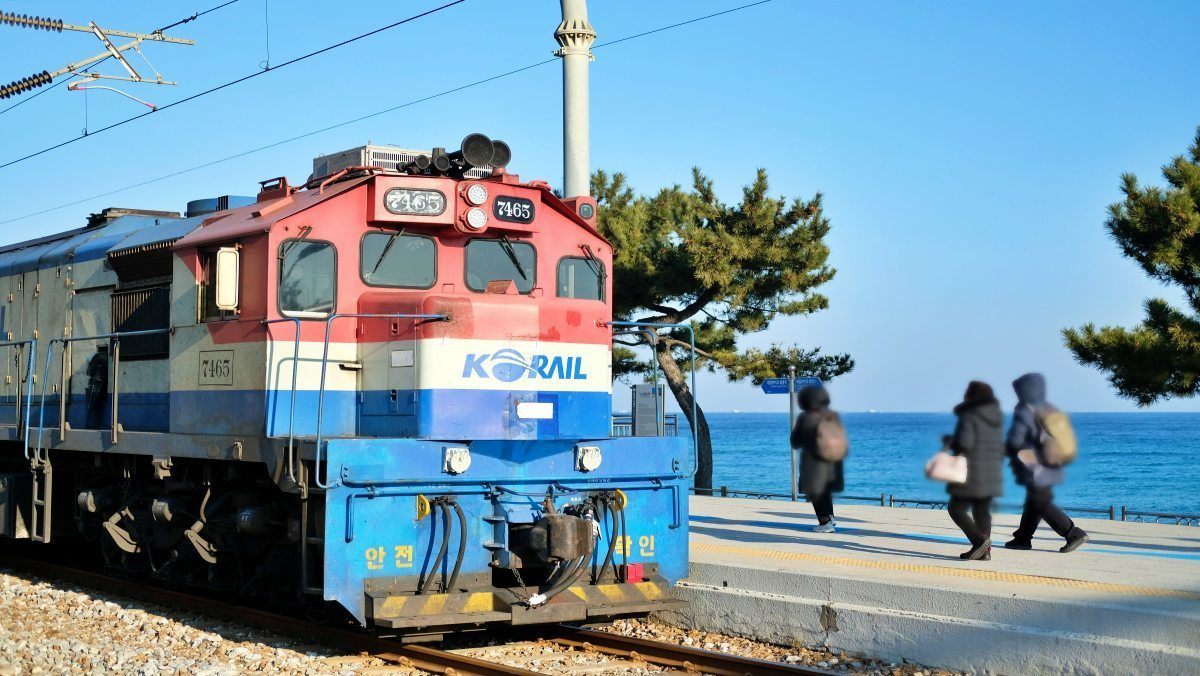
When the train slows and you step onto the platform, the East Sea’s horizon hits you first. Tracks and ocean sitting shoulder-to-shoulder make Jeongdongjin Station the effortless kickoff for a Gangneung escape.
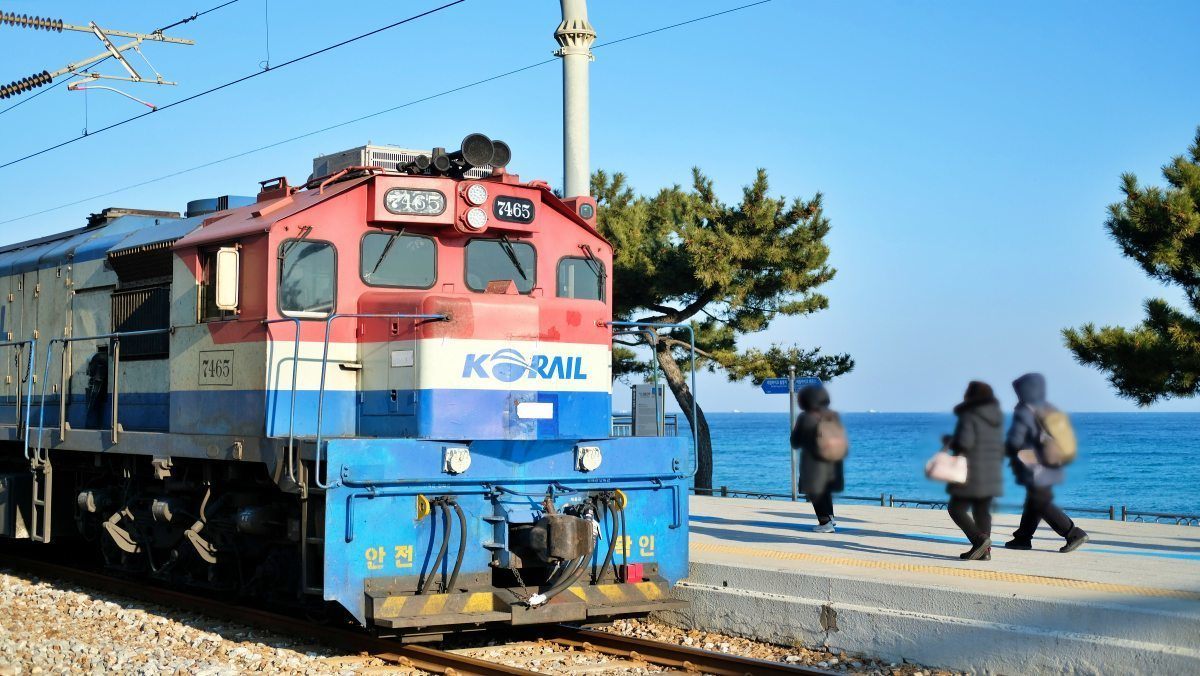
Begin your trip at Korea’s station nearest the sea
Jeongdongjin Station, tucked into Gangneung in Gangwon Province, is famous for being one of Korea’s closest stations to the shoreline. From the platform the East Sea is basically your backyard — waves blend with the clack of rails and the ocean is visible the moment you step off the train. The beauty here is that you don’t have to trek to a viewpoint; you arrive and the sea is already waiting.
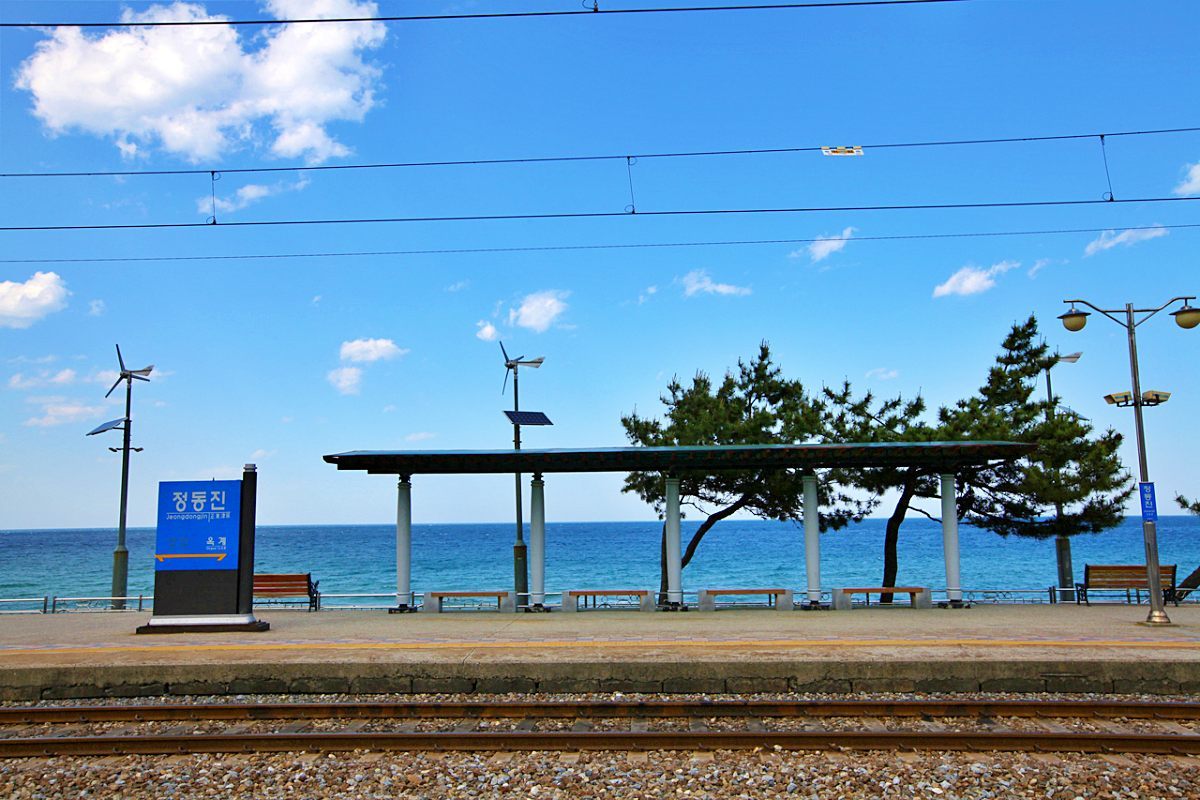
The name Jeongdongjin literally means a ferry landing east of Hanyang (historic Seoul). The station arrived in 1962, planted in a village already steeped in geographic symbolism. Today it’s a bucket-list rail stop, but it began life as a practical logistics hub on the Yeongdong Line — moving coal from nearby mines and connecting industry to local life.
During the 1970s and early ’80s, the coal boom kept people and goods flowing through Jeongdongjin. Miners’ commutes and steady shipments brought a pulse to the otherwise small fishing village. After the coal industry faded in the late ’80s and mines shut down, many locals left and the station became for a time a quiet, almost forgotten seaside stop.
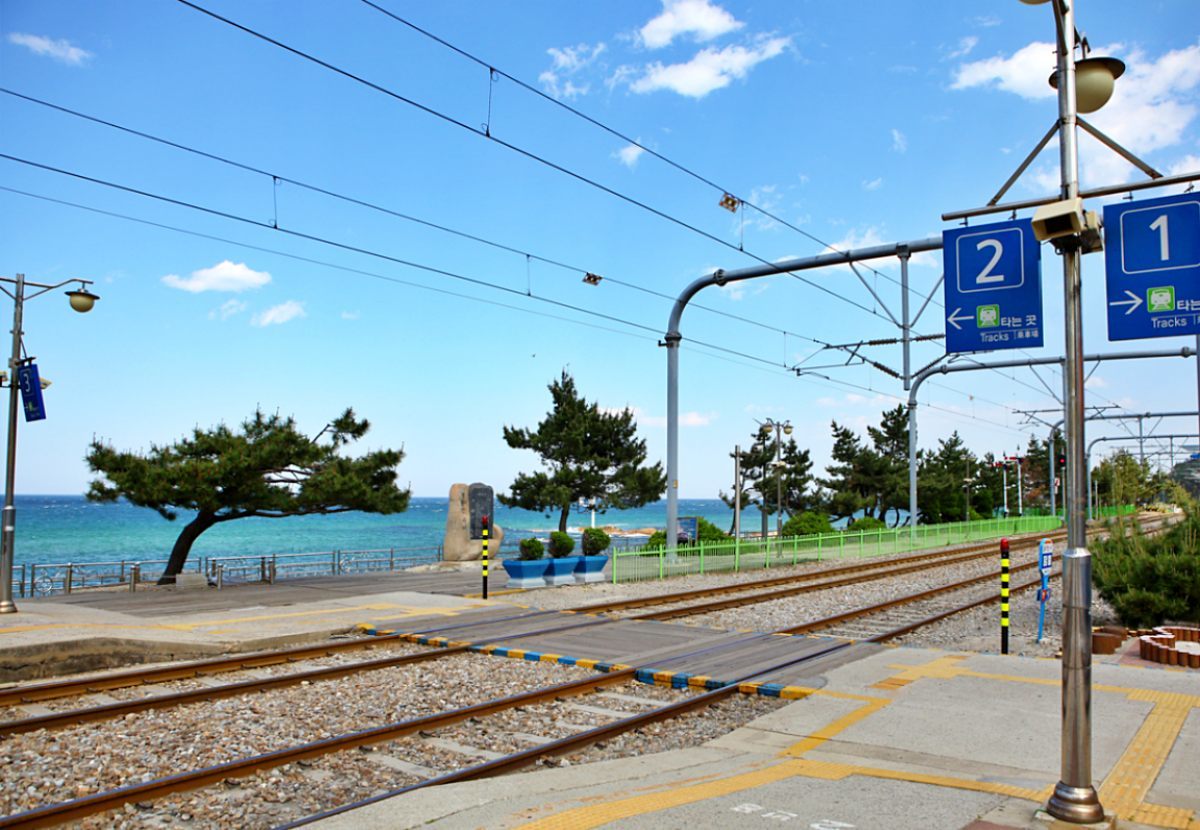
Jeongdongjin’s comeback came in the mid-1990s, fueled by pop culture. The 1995 TV drama Sandglass turned the station and its coastline into iconic scenery nationwide. The platform pine where the heroine waited became known as the Sandglass Pine — or the Ko Hyun-jung Pine — and it’s now a symbol of Jeongdongjin.
The station’s charm is simple and location-driven. The platform sits close to the sea, giving wide, open ocean views; coastal pines, a breakwater and small blue signs run along the tracks. On clear days the sky and sea meet in a razor-sharp line, and after a train passes, only waves remain. It’s one of Korea’s celebrated sunrise spots, drawing early-morning crowds. Even if you skip the train, the area around the station is perfect for a relaxed stroll.
The beach in front of the platform and Hourglass Park
Step out of Jeongdongjin Station and you’ll hit Jeongdongjin Beach right away. Think of the shore in three segments: the stretch right in front of the station, the strip by Hourglass Park, and the area around the breakwater. The station-front beach is immediate — you see the sea the second you step off the train. The Hourglass Park side is great for walking and using park facilities, while the breakwater area still carries that quiet fishing-village vibe. Even on the same beach, the mood shifts depending on where you stand.
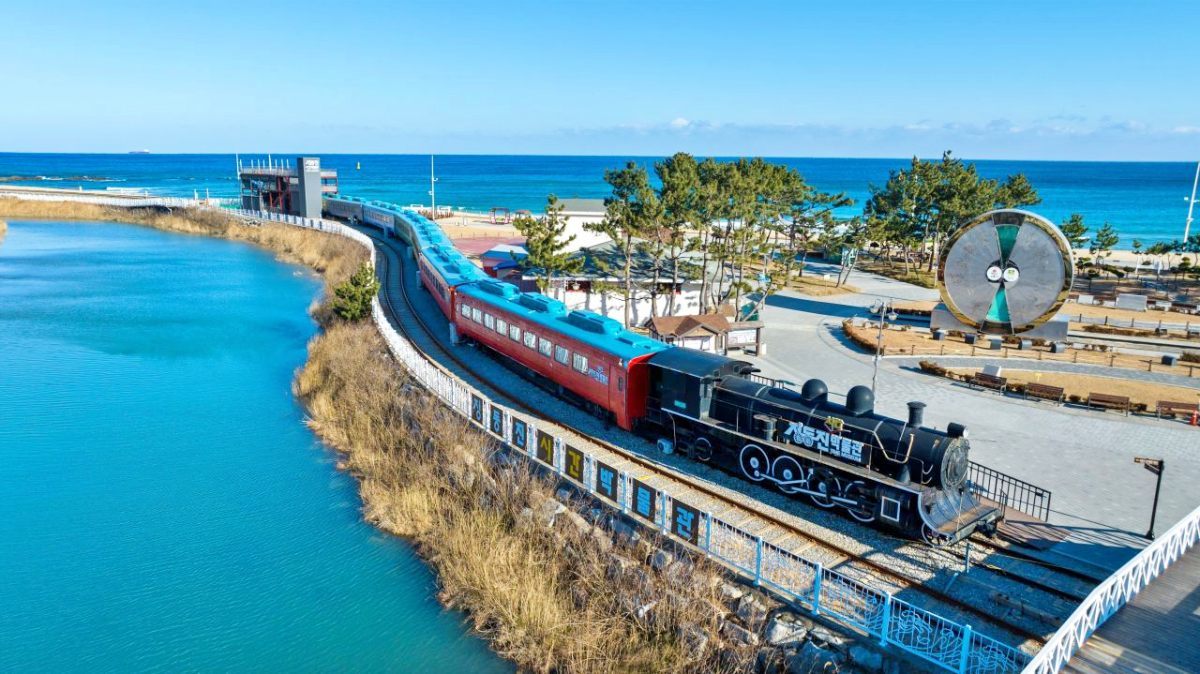
Jeongdongjin Beach is ideal for easy seaside walks. Early summer brings stronger sunlight, but before the peak crowds roll in it’s still mellow enough to take your time. Because the East Sea opens wide here, dawn views are especially popular.
Follow the coastal road from the station and you’ll arrive at Hourglass Park, created to celebrate the new millennium. A massive hourglass dominates the park — it’s 8.06 m in diameter, 3.20 m wide and weighs 40 tons, with 8 tons of sand inside. The sand takes an entire year to fall from top to bottom, and the monument anchors annual year-end and New Year events.
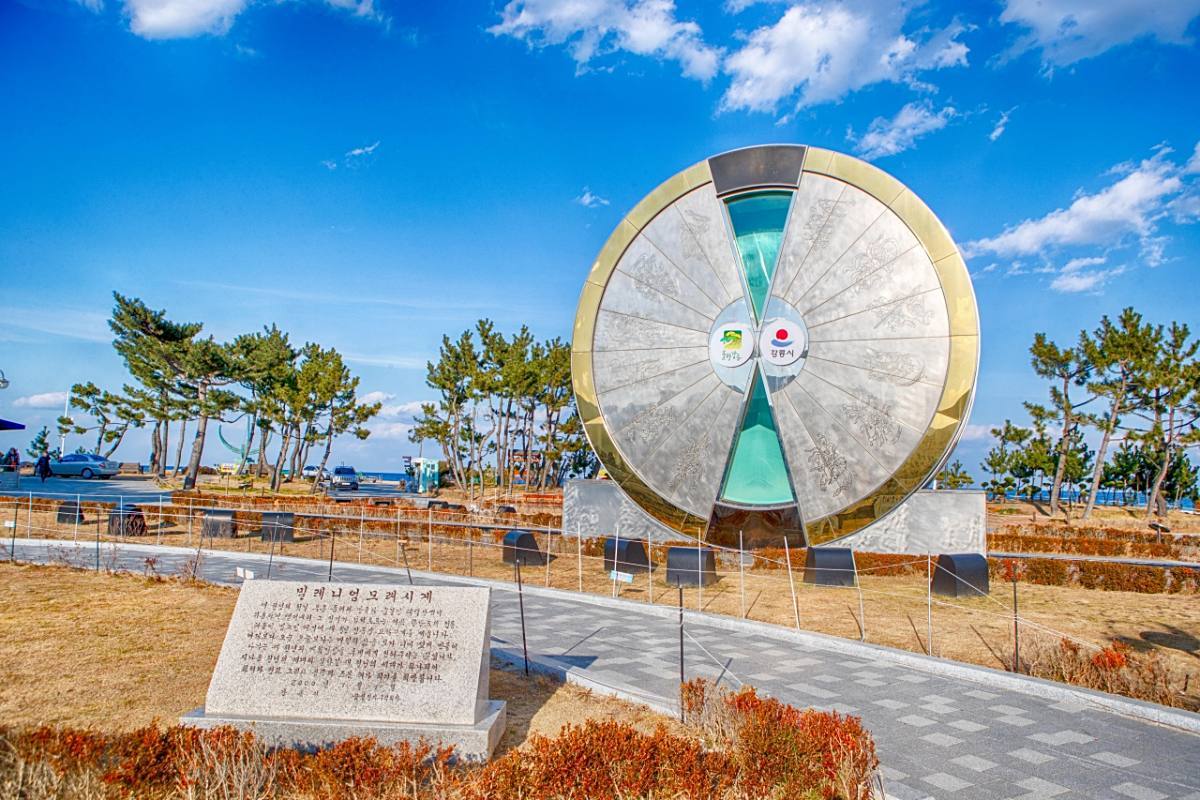
Hourglass Park captures Jeongdongjin’s theme of time. If the station suggests departures and arrivals, the hourglass makes a year visible. The park has walking paths, sculptures and seaside spots to relax, so it’s an easy follow-up after the station visit. Because the station, beach and park sit close together, you can tick off Jeongdongjin’s must-see scenes even on a short schedule.
Near the station you can also try a rail bike. The Jeongdongjin rail bike runs along tracks with coastal views — a fun, light activity popular with families and anyone who wants an interactive way to enjoy the shoreline. Hours and fees change by season and maintenance, so check official info before you go.
Coastal trails that continue from Jeongdongjin
If you want to stretch your route, add the Jeongdong–Simgok Coastal Path. This trail traces the shore between Jeongdongjin and Simgok Port and brings you close to the East Sea’s marine terraces. Dramatic cliffs, crashing waves and an endless horizon offer a different vibe from the station’s beach. Because the path hugs the sea, it can close during high winds, big waves or bad weather.
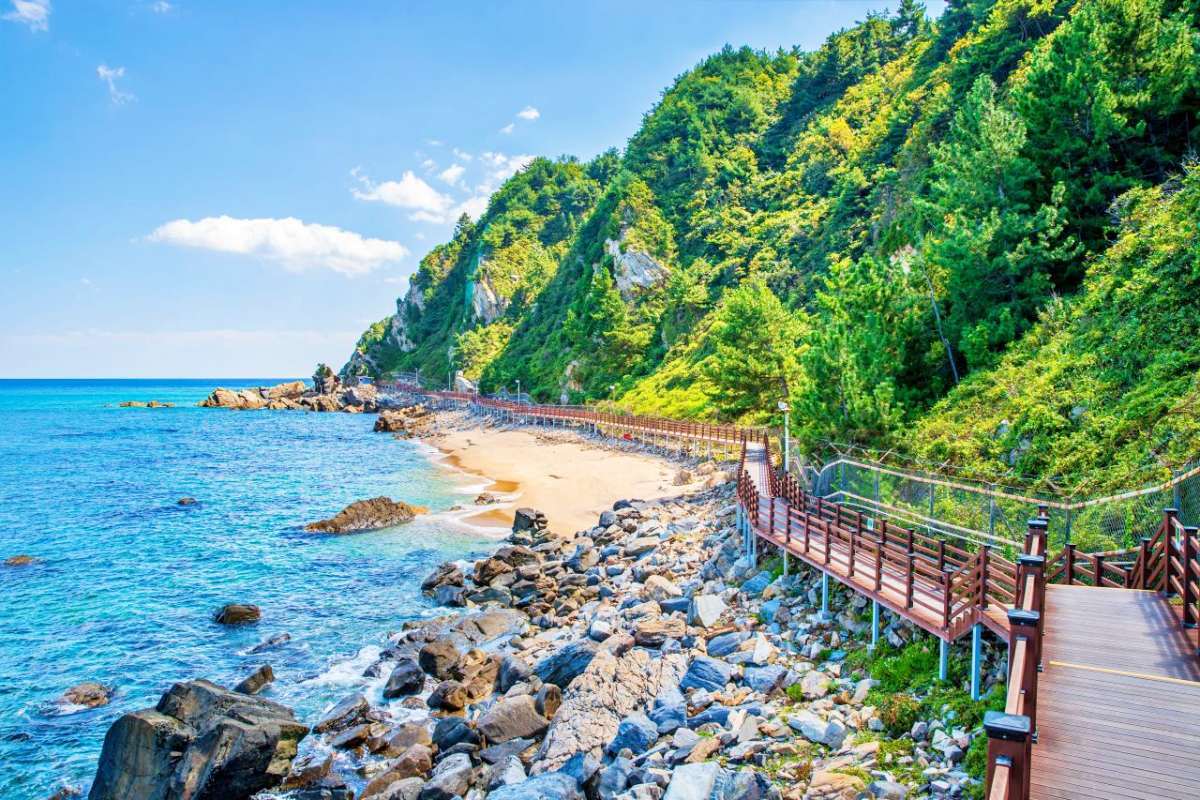
The Coastal Path follows cliffs and rocky shores. From the raised deck you can watch waves slam against the rocks up close, and many stretches offer sweeping views of the sea below. Since the trail itself is the main attraction, bring comfortable shoes.
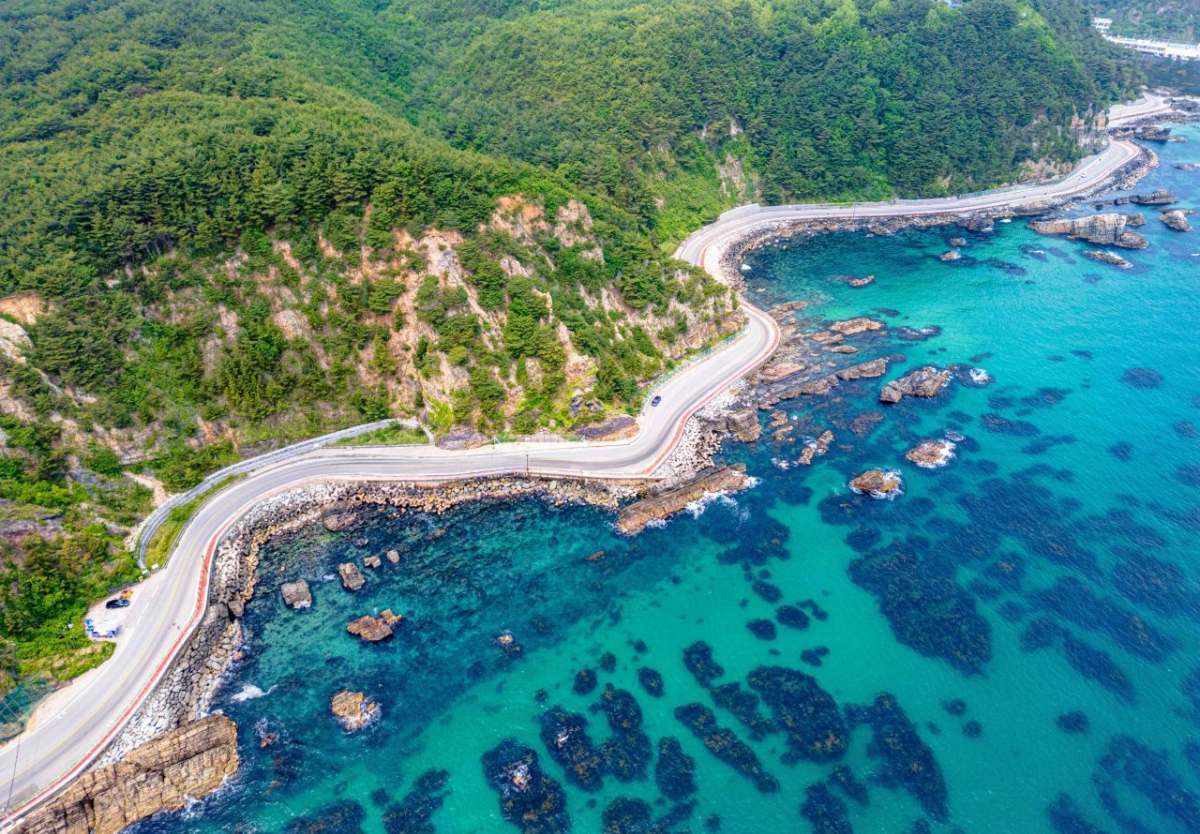
If you’re driving, include Heonhwa-ro on your route. This coastal road links Jeongdongjin and Geumjin with many stretches close to the East Sea. The road’s name ties to a local legend and it makes for a sensible driving loop connecting Jeongdongjin Station, the Coastal Path, Simgok Port and Geumjin Beach.
Sea views from higher ground
There are also spots around Jeongdongjin that give you a higher vantage point. Sun Cruise Theme Park — famous for its ship-shaped architecture and sculptural spaces — offers panoramic views of the coastline and horizon. After checking out the station and beach, head there for a broader perspective on the seascape.
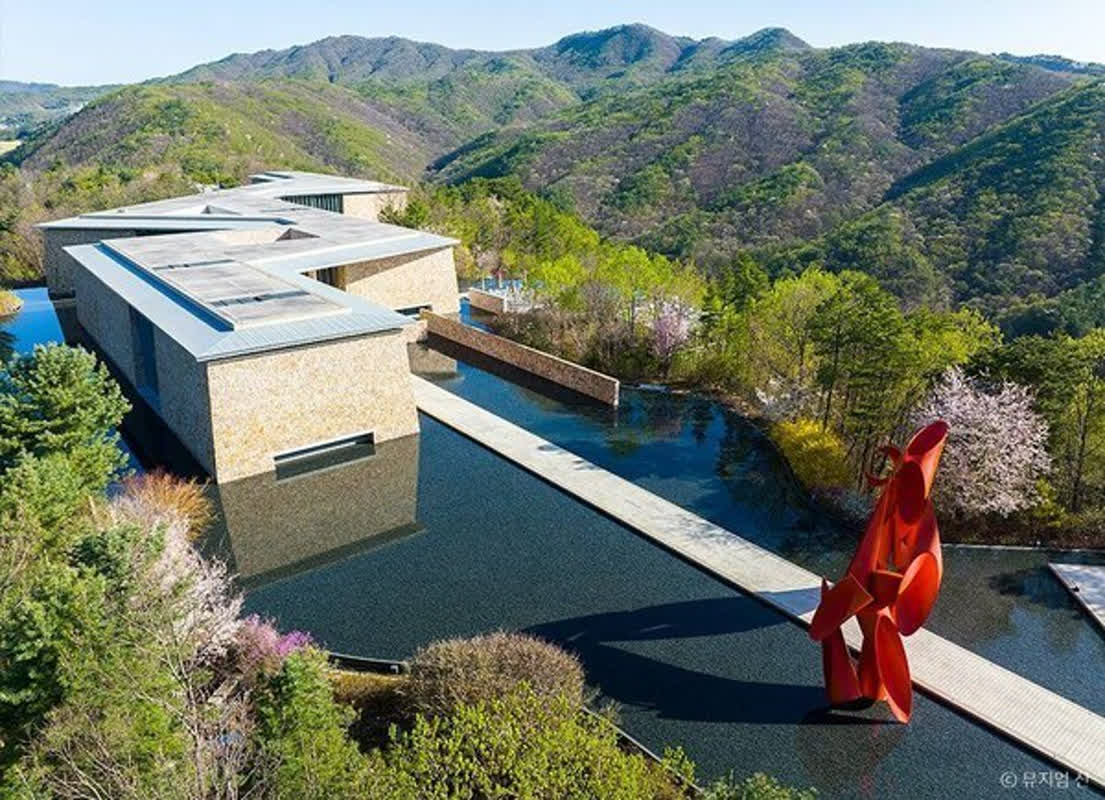
Haslla Art World is another cultural stop worth adding. This museum and outdoor sculpture park uses the southern Gangneung coastline to pair ocean views with art. It’s not right next to Jeongdongjin Station on foot, but if you drive you can combine it with Hourglass Park, the Coastal Path and Heonhwa-ro for a full-day itinerary.
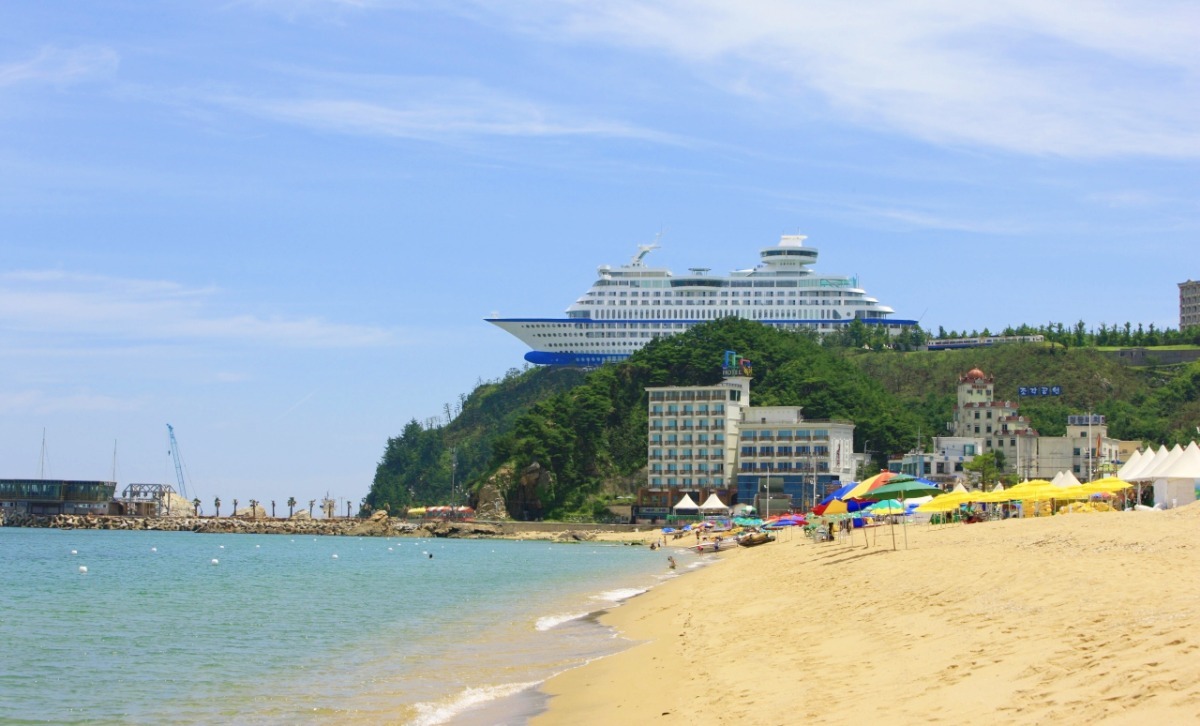
Jeongdongjin changes with your vantage point. From the station you get that intimate tracks-meet-sea scene, while the Coastal Path and Heonhwa-ro reveal the East Sea sweeping along the shoreline.
Local flavors to add to your Gangneung trip
Don’t skip Gangneung’s food scene while in Jeongdongjin. The area is known for Chodang tofu — silky, mild tofu made using seawater brine. Restaurants around the Chodang neighborhood serve sundubu (soft tofu stew) and other tofu dishes, making it an easy stop when traveling between Jeongdongjin, downtown Gangneung and the Gyeongpo area.
Near Jeongdongjin Port and the nearby shore you’ll also find sashimi, mulhoe (cold raw fish soup), grilled fish and seafood bibimbap. Given how close you are to the ocean, a seafood meal feels like the perfect complement to the day.
Gangneung Central Market is another great pit stop. Heading from Jeongdongjin into downtown, Central and Seongnam markets offer a wide range of seafood, dried goods, local snacks and specialties. After taking in the sea at Jeongdongjin Station, head toward Gangneung Station to pair coastal views with city market life.
Popping into a café adds a cozy break to your trip. Anmok Beach Coffee Street isn’t right next door, but it fits well into an itinerary that mixes city and shore visits.
Rail access expands Jeongdongjin’s reach
Since the station itself is part of the draw, rail service changes matter. The Donghae Line’s KTX-Eum now links Gangneung and Bujeon, making north–south East Coast travel easier. Trains from Gangneung stop at Jeongdongjin, Mukho, Donghae, Samcheok, Uljin, Yeongdeok and Pohang before reaching Bujeon. The line runs three trips a day in each direction — six total — and the typical travel time between Bujeon and Gangneung is about 3 hours and 50 minutes.
That connection has nudged Jeongdongjin beyond a local attraction into a handy mid-route hub for East Coast rail trips. With Busan–Ulsan, the North Gyeongsang coast and the Gangwon coast linked on one line, more coastal travel options now include Jeongdongjin. From the Seoul metro area you can combine the Gangneung KTX, conventional trains and local transit to reach the station.
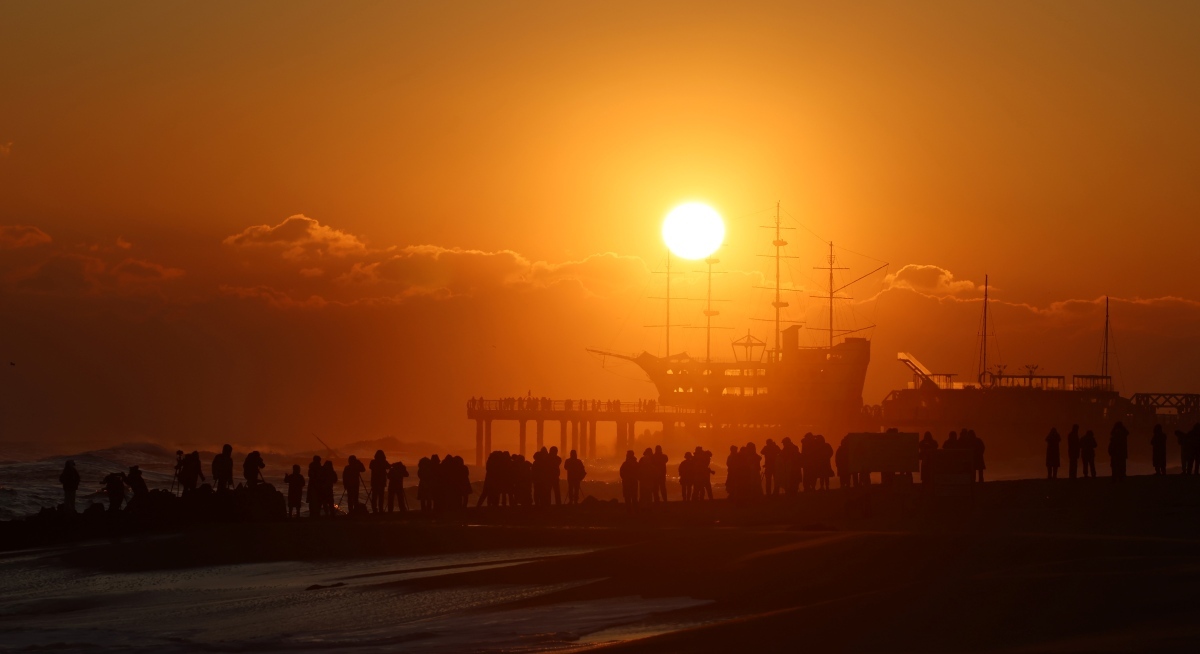
You can do Jeongdongjin as a day trip, but if you want sunrise views check first-train times and local transit. Train seats and accommodations fill up fast on weekends and holidays, so book early once your plans are set.








Most Commented