
Translation result.
If you’re trying to pick places to visit in Ghent, you’re probably thinking: Brussels feels too metropolitan, Bruges is postcard-perfect but crowded, and you want one day in Belgium that’s a little less predictable.
Ghent doesn’t shout for attention, but when you get there it quietly delivers: canals, a castle, a cathedral, winding alleys and magical night views. It has that medieval charm without Bruges-level crowds and a more relaxed vibe than Brussels. Here’s a one-day Ghent itinerary to get the best of it.
St. Bavo’s Cathedral
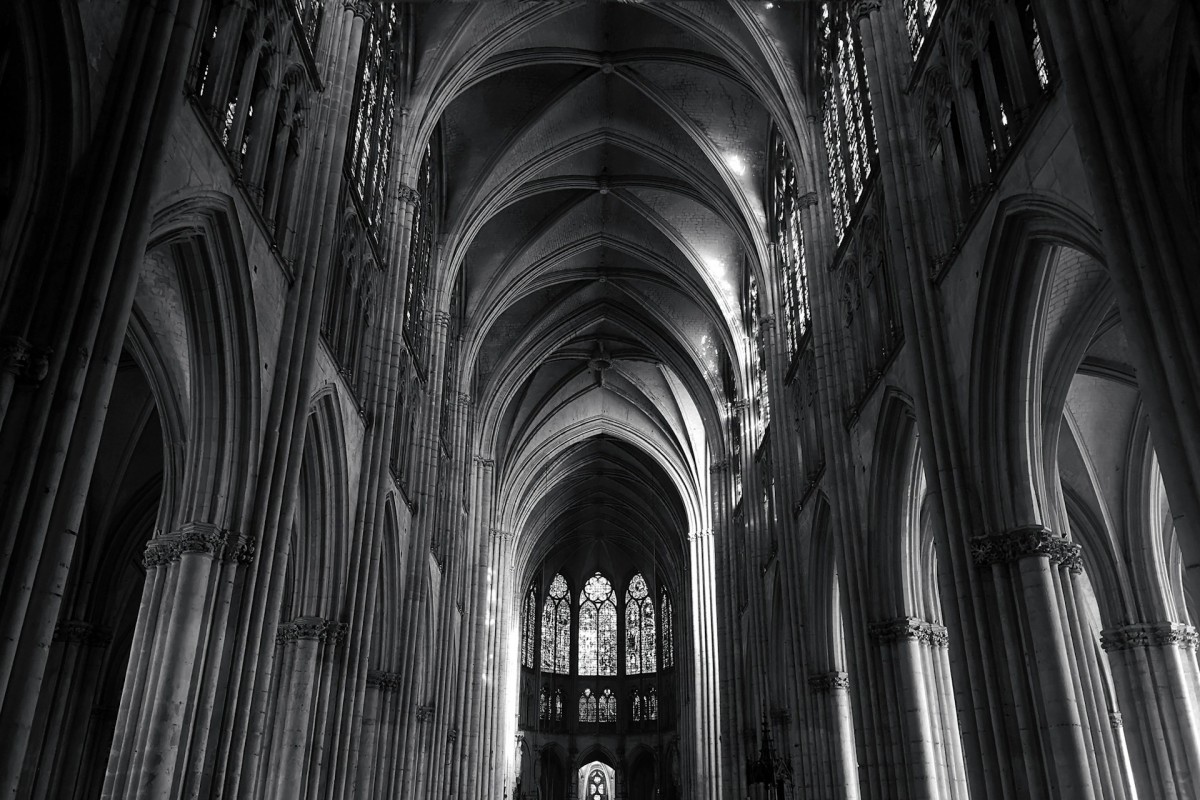
If you could see only one thing in Ghent, make it St. Bavo’s Cathedral. It’s the baptism site of Emperor Charles V, who was born in Ghent, and home to Jan van Eyck’s monumental altarpiece, The Adoration of the Mystic Lamb (the Ghent Altarpiece).
What makes this altarpiece so extraordinary? Started in the mid-1420s and completed in 1432 by the brothers Hubert and Jan van Eyck, some art historians even call it the first major oil painting — a cornerstone of European art.
Despite surviving the Reformation, wars and thefts, the work was finally restored and returned to the cathedral in 2020. The cathedral’s Gothic architecture is impressive, and the interior has plenty to admire even if you don’t catch the altarpiece.
Ghent Belfry
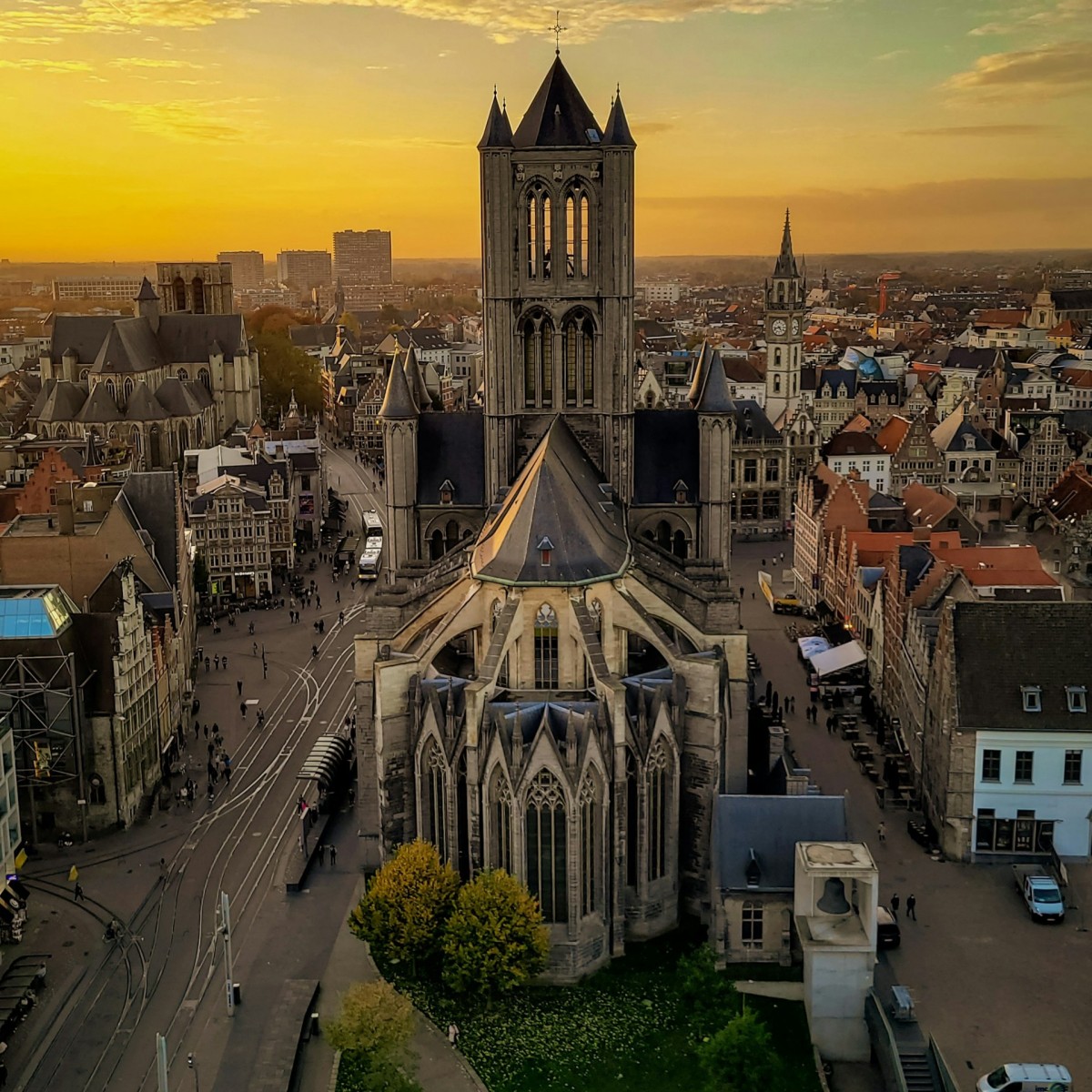
The belfry next to St. Bavo’s completes Ghent’s skyline. Built in the early 14th century for military use, the Ghent Belfry rises to 91 m (about 299 ft), making it the tallest in Belgium and a UNESCO World Heritage site.
Legend says a dragon sits at the top, guarding the city from invaders and fire. Inside you’ll find a dragon statue, bell models and exhibits on the tower’s history, and an elevator can take you up for sweeping views over the old town. Some itineraries skip the belfry, but the panorama from the top is worth the climb.
Gravensteen Castle
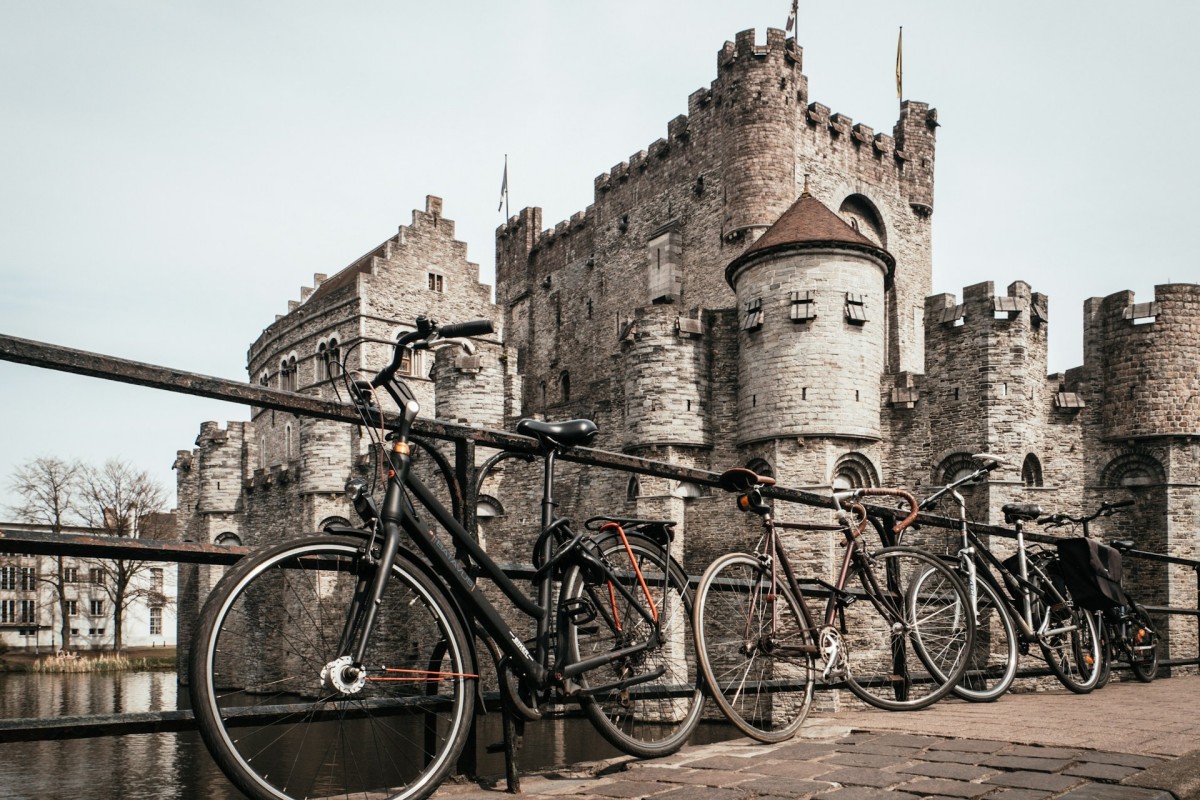
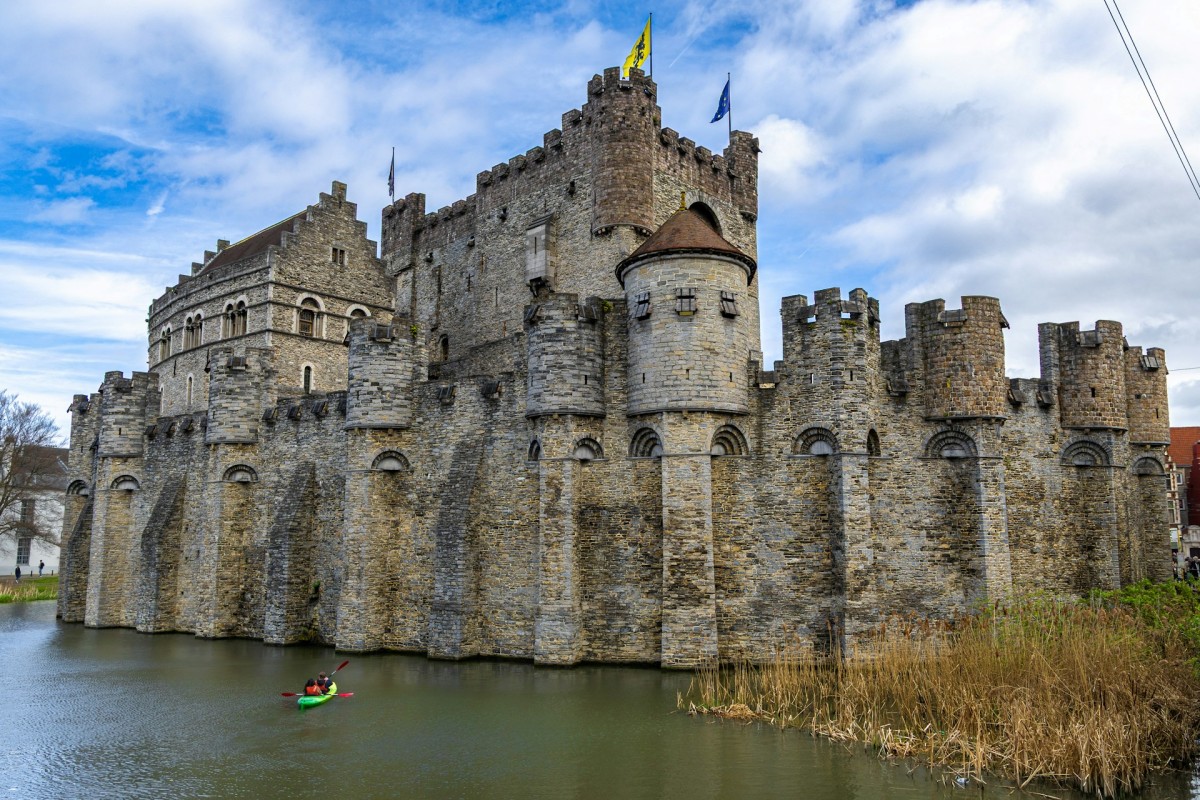
Founded around 1180 by Philip, Count of Flanders, Gravensteen — the Count’s Castle — sits solidly on the riverbank. The fortress displays medieval torture devices, giving it a slightly eerie vibe. The canal-front exterior is dramatic on its own, and the museum inside has more to see than you might expect, with medieval weapons and instruments of punishment on display.
The audio guide is unexpectedly humorous, so the tour stays lively, and the rooftop view over Ghent is excellent. Admission is about €13 (approximately $13.91), and allow around 1 hour 30 minutes to explore.
Graslei and Korenlei
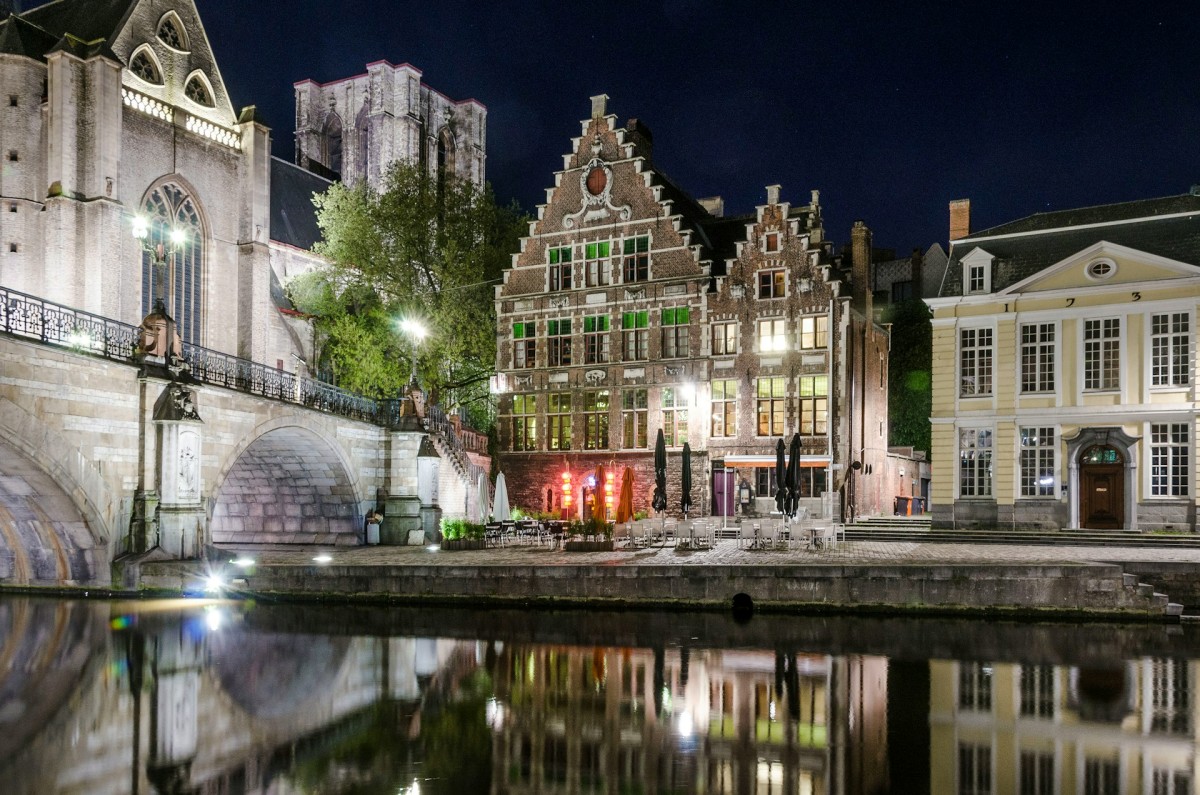
These two quay streets face each other across the canal and are one of Ghent’s most photogenic spots. Since the 11th century this area was a hub for goods arriving by water; the medieval guild houses lining the streets now host restaurants and cafes.
Flemish Renaissance, Brabantine Gothic, Baroque and Neoclassical styles sit side by side, so even a stroll feels like a mini architecture tour. By day it’s a boat-tour launch point; by night the canal turns golden and becomes perfect for sunset photos. Grab a plate of mussels and fries at dusk — that’s the taste of Ghent.
St. Michael’s Bridge and Night Views
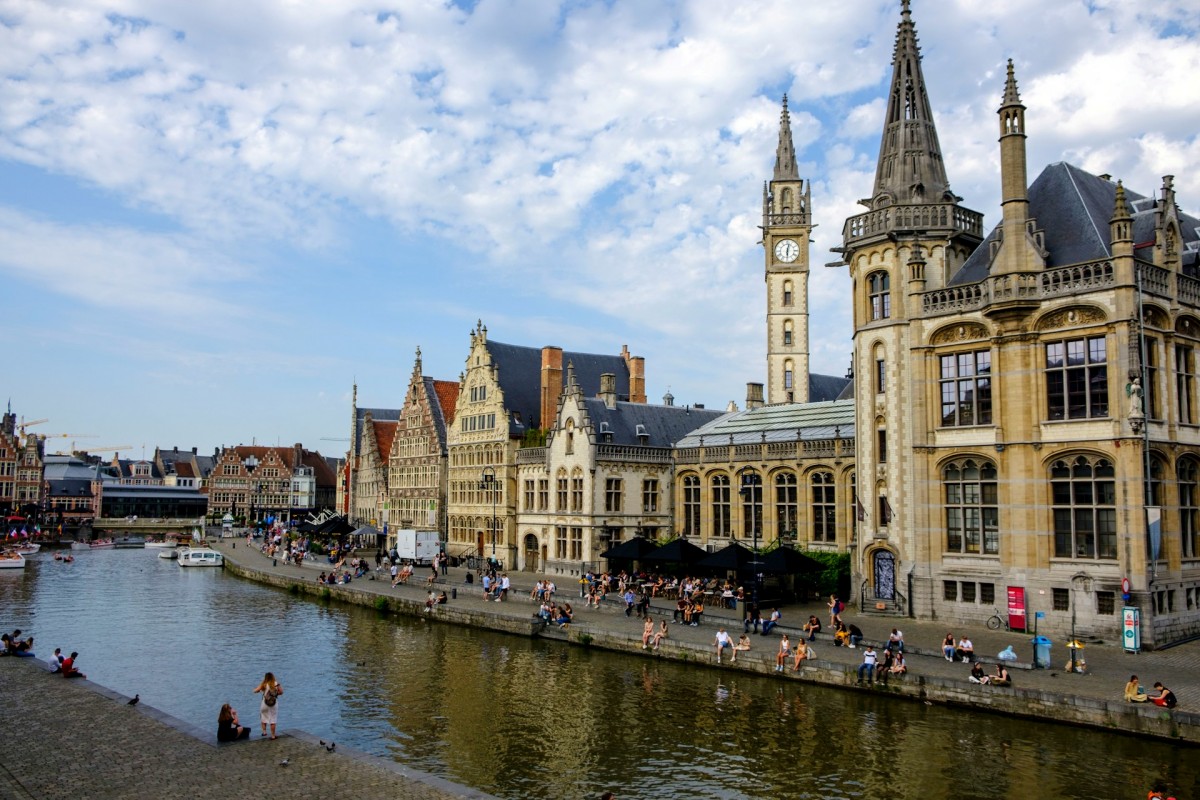
If you want to see Ghent efficiently, start at St. Bavo’s Cathedral and the belfry, then move on to St. Nicholas’ Church, Korenmarkt Square, the canals and Gravensteen Castle. Finish on St. Michael’s Bridge.
This bridge is the only spot where you can frame Ghent’s three skyline towers — St. Bavo’s, the belfry and St. Nicholas’ — in one shot. Ghent really comes alive at night; many travelers picked the city after seeing a single night photo of the canal.
For a day-trip, plan to end your day on this bridge at sunset.










Most Commented