
Translation result
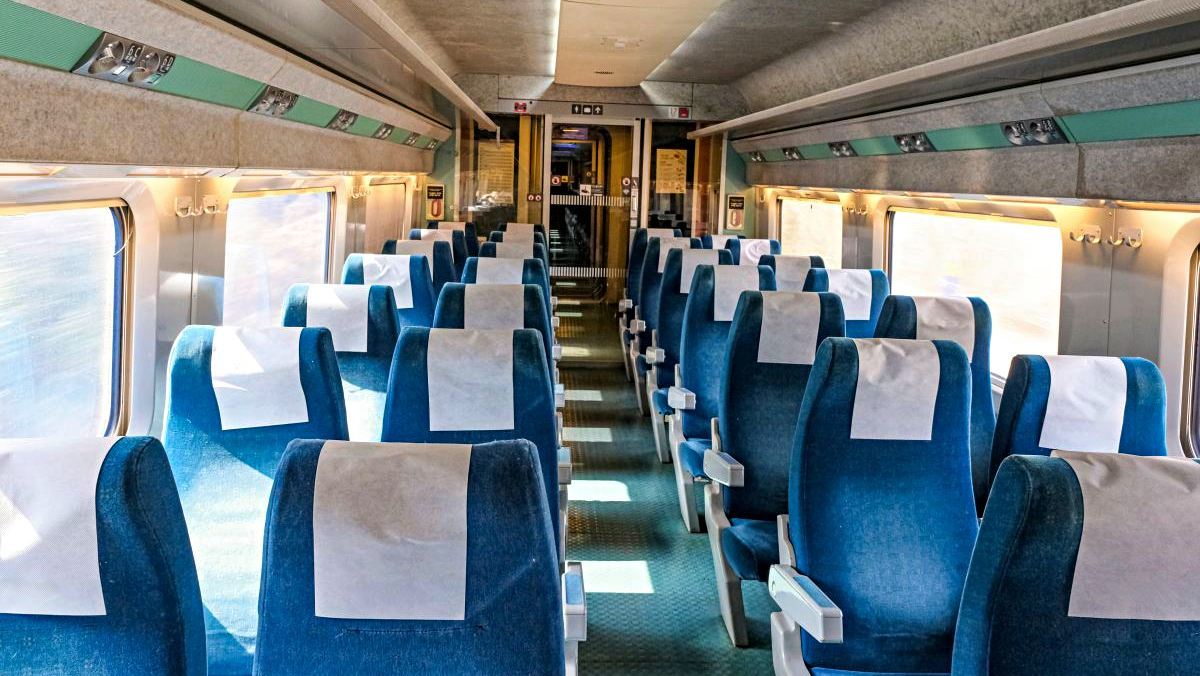
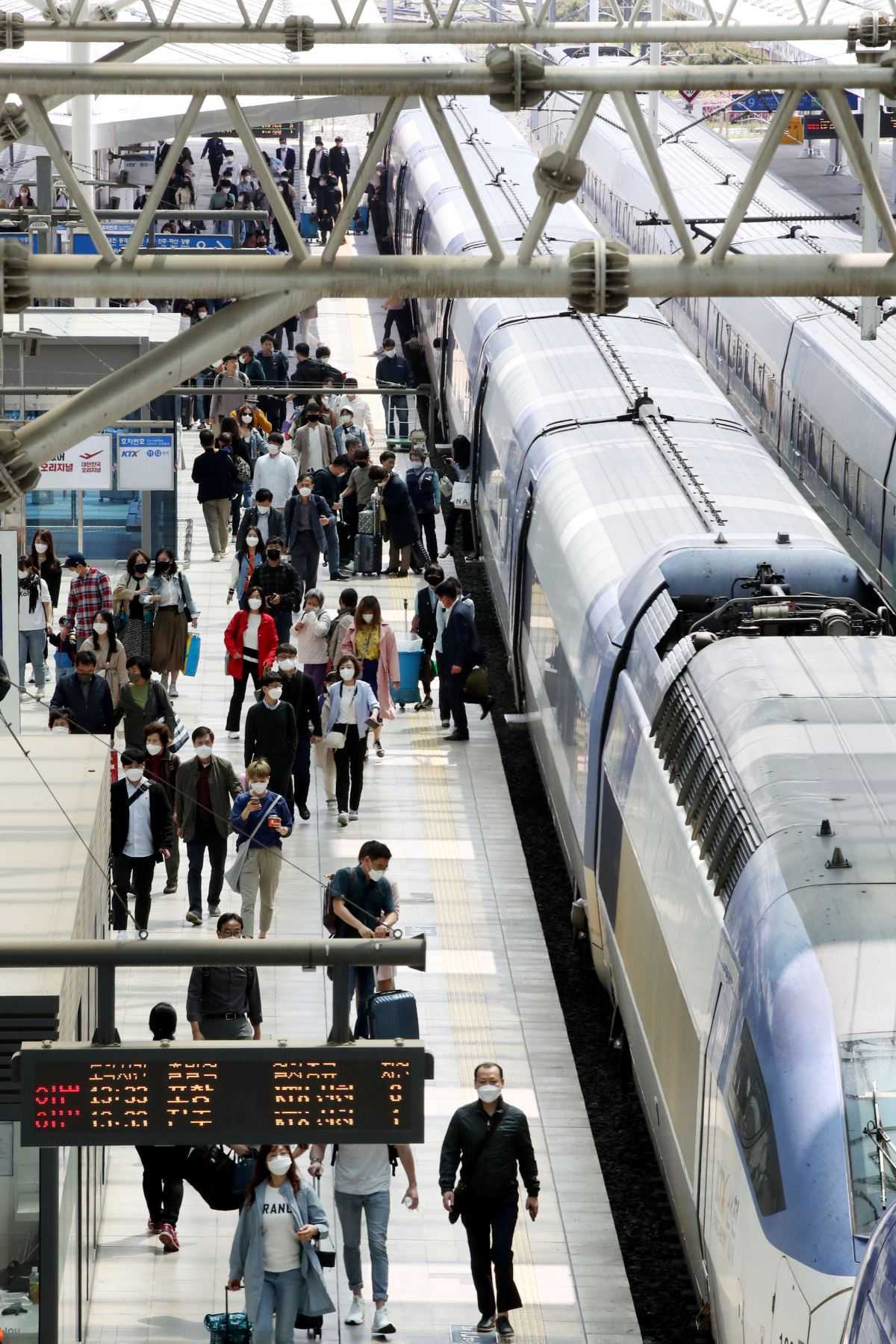
With the May Golden Week holiday just around the corner, one trend is blowing up across social media: alleged KTX “best seat” tips shared by a Korail employee. The list is full of practical hacks—from dodging glare to where the outlets hide and which cars are best for a quiet ride. If you’re planning to book KTX tickets for the holiday, these pointers are worth bookmarking.
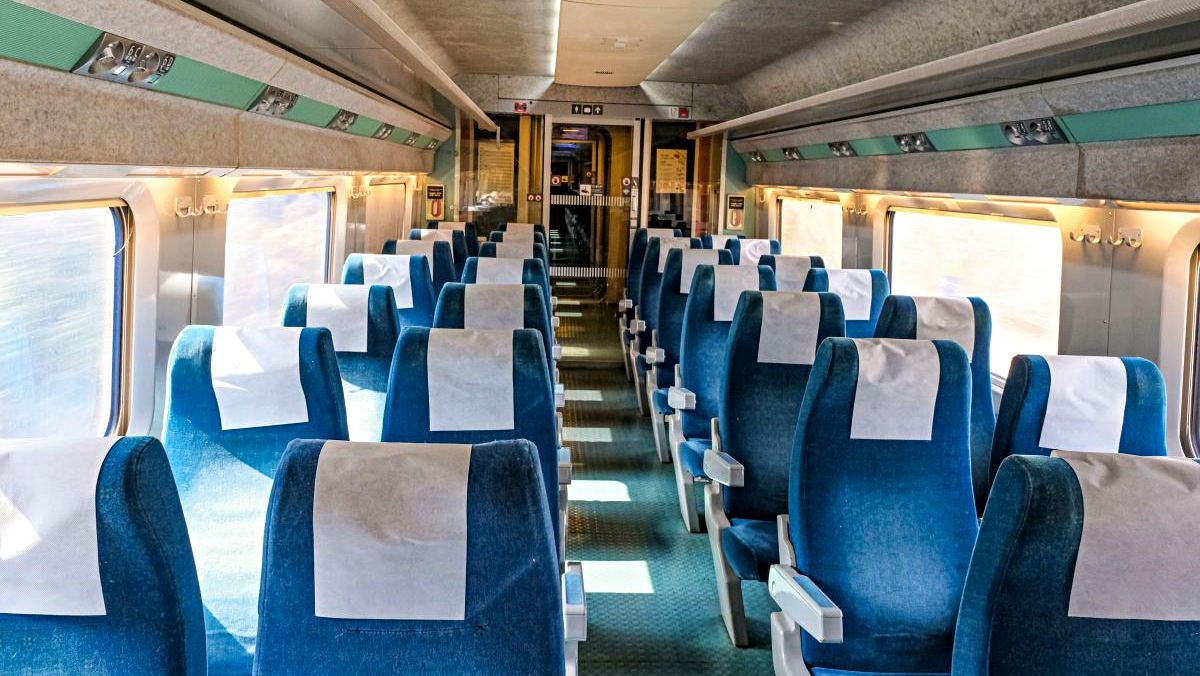
Know the sun’s direction before choosing a seat
Start with the sun. On Seoul-to-Busan trains, seats A and B get less sun in the morning; seats C and D get less sun in the afternoon. The pattern flips on trains going from Busan to Seoul. Direct sunlight can wear you out fast on a long ride, so pick your row based on when you depart.
Standard cars use a 2+2 layout: rows A and D are window seats, and rows B and C are aisle seats. First class uses a 2+1 layout, which feels roomier. First-class seats face forward on both directions, so you don’t have to put up with backward-facing seats.
Why Car 5, Seat 1A is such a hot ticket
Among regular seats, Car 5’s 1A tends to sell out first. It’s a solo seat with no neighbor beside it. Car 5 was originally fitted like a first-class car before being converted to standard, so it still offers extra space between seats. Travelers love it because you get more room without paying first-class prices.
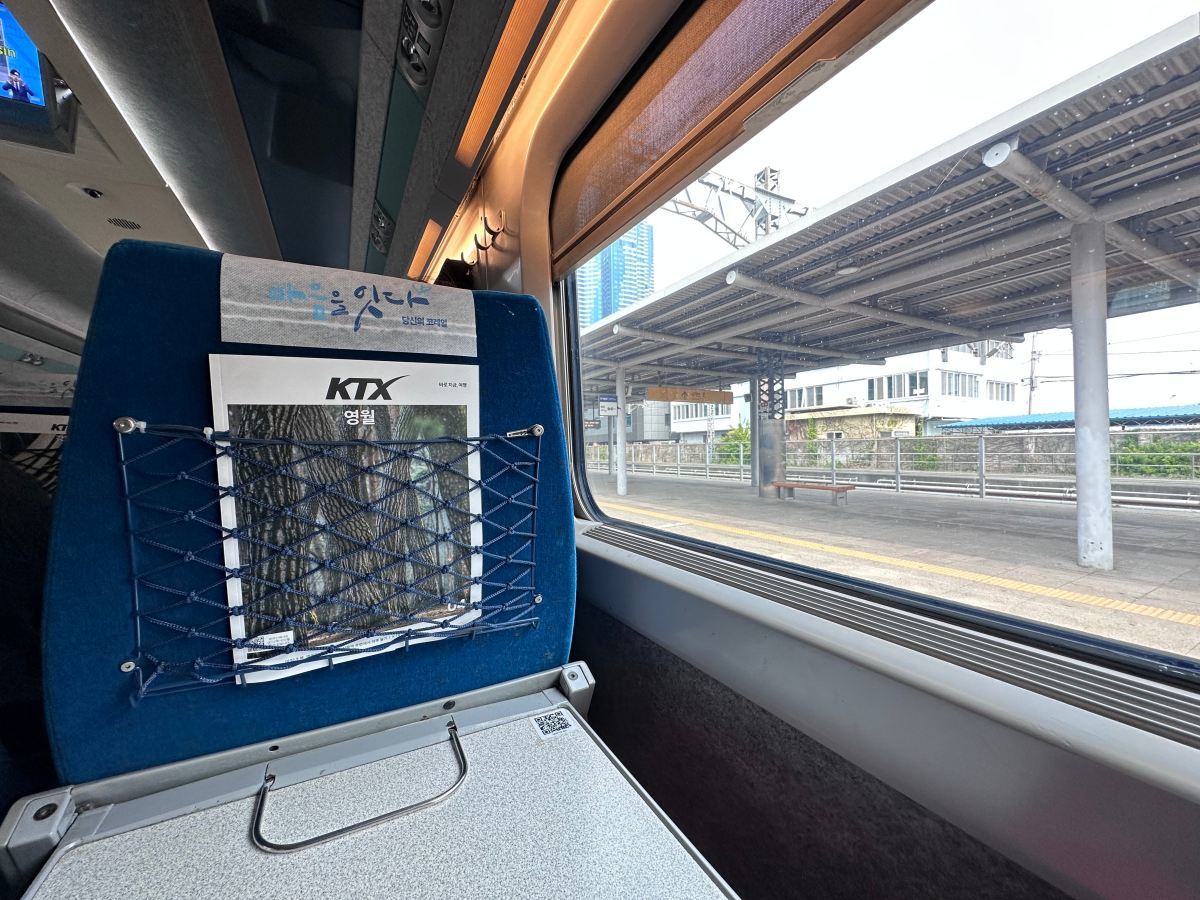
If you opt for first class, Car 2 is one of the most comfortable choices. It doesn’t include seats reserved for passengers with disabilities, so the layout feels more open. First-class travelers get water and light snacks, and the wider seat pitch makes it easier to stretch out.
Memorize the seat numbers with outlets
If you need to charge a phone or laptop on a long trip, check the seat numbers ahead of time. In standard KTX cars, outlets are on the pillars between windows at seats 1, 3, 5, 7, 9, 10, 12, and 14. In first class, outlets are at odd-numbered seats 3, 5, 7, and 9. Use these numbers when booking so you don’t end up hunting for a plug mid-journey.
Cars to avoid if you want a quiet ride
Cars 1 and 8 have sections reserved for passengers traveling with infants. Families with young children often cluster there, so these cars aren’t ideal if you crave silence. If you’re traveling with kids, though, choosing these cars makes it easier to relax without worrying about bothering others.
Check restroom locations if you’re sensitive to noise or smells. Even-numbered cars have restrooms at the front; odd-numbered cars have them at the rear. Seats near restrooms may experience door noise and occasional odors.
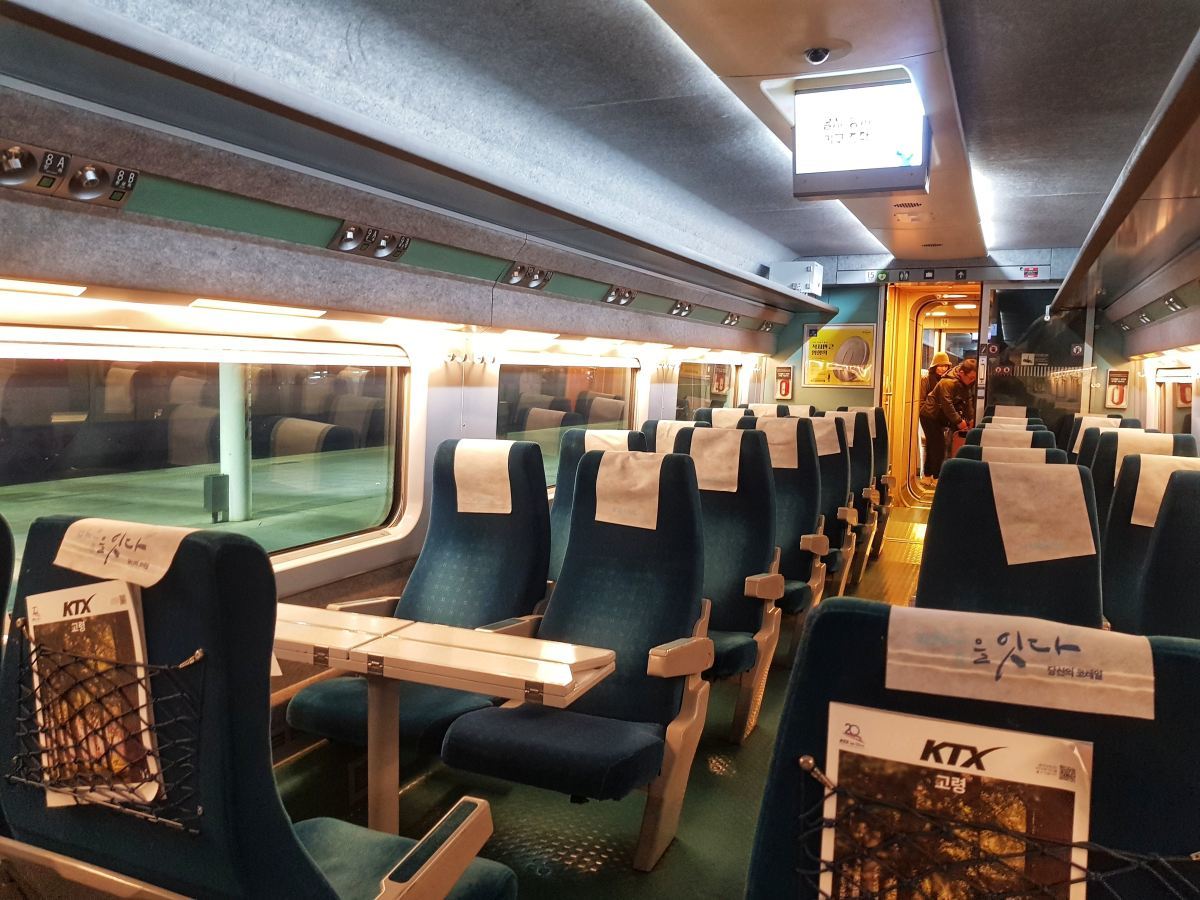
If you have lots of luggage, aim for Cars 10 and 11
Traveling with large suitcases? Cars 10 and 11 are your best bet. They’re closest to station elevators, so your boarding and exiting walk is shorter. If you want the fastest on/off, pick seats at the very front or rear of the train—but remember, seats by the doors tend to be noisier when they open and close.
KTX‑Sancheon offers more seat room than older KTX models
Seat pitch varies by train model. The KTX‑Sancheon is designed with wider seat pitch than older KTX trains, so it’s a smarter choice for bigger-bodied passengers or anyone who tires on long trips. Look for the KTX‑Sancheon label when you check train numbers while booking.
SRT costs about 10–15% less than KTX and offers wider seats
The SRT departing from Suseo Station is typically 10–15% cheaper than KTX, and its seat width is about 5.7 cm wider. Every seat includes an outlet, and all seats face forward, so you won’t have to sit backward.
When choosing an SRT seat, pick the car that matches your priorities. Car 1 sits closest to the platform at Suseo Station for quick exits. Car 8 tends to be quieter. Car 2 restricts short-distance bookings, so it usually offers a calmer, more stable ride.
Car 4 stands out for having headrests fixed to the seats, which can reduce neck fatigue on long trips. Cars 5 and 6 cluster vending machines, a nursing room, diaper-changing stations, and a women’s restroom—handy for families. SRT first class is in Car 3, with 11 rows and a simple onboard meal service.
On ITX‑Saemaeul, seats just behind the luggage rack are prime
ITX‑Saemaeul has outlets at every seat. Rows 1–3 at the front and rows 12–14 at the rear have dual outlets. Restrooms are in Cars 1, 4, and 6; vending machines are in Cars 3 and 4.
Two spots stand out as ITX sweet spots. One is the seat immediately behind the wheelchair space in Car 3—open in front and offering extra legroom. The other is the very front seat inside each compartment, where a luggage rack sits ahead so you can keep your bag in sight and enjoy a bit more space.
Car 5 operates as unreserved seating on weekdays. On the Gyeongbu and Honam lines, you can board without advance reservation, making it an economical option even during rush hours.
What are the domestic travel trends for 2026?
Booking.com analyzed platform booking data from Jan. 1 to Aug. 31 and recently released the top 10 trending domestic destinations for 2026. The list offers a clear snapshot of where domestic travel is headed this year.
Four of the top 10—Guri, Gapyeong, Pocheon, and Uijeongbu—are in Gyeonggi Province. That means roughly 40% of trending spots are within a one- to two-hour reach from Seoul. Travelers are favoring nearby escapes that cut long travel time while delivering nature and leisure.
The destinations’ profiles are telling: most highlight natural scenery—coastlines, lakes, rivers, and mountains. Standouts include Chaeseokgang and the Byeonsan Peninsula in Buan; Jangho Port and the marine cable car in Samcheok; the Sinduri sand dunes in Taean; and the Hantangang Gorges in Pocheon. Travelers increasingly prefer immersive nature experiences over urban sightseeing.
Resort-style accommodations also dominate. Properties with on-site amenities—like SonoBel Byeonsan, Sol Beach Samcheok, Hanwha Resort Sanjeong Lake Ansi, and Lotte Buyeo Resort—frequently appear among top picks. The “resort all-in-one” model, where families eat, rest, and play without leaving the property, is especially popular.
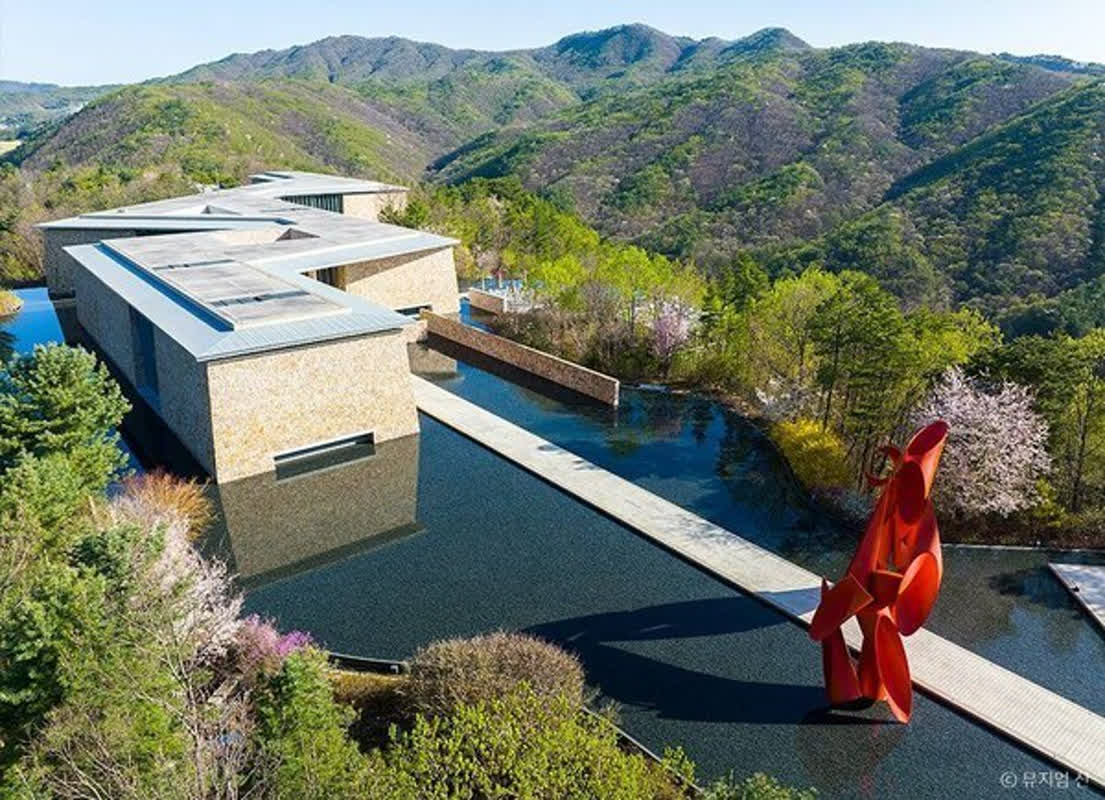
Historic and cultural destinations are holding their own. Buyeo, with Baekje heritage sites, made the top 10 thanks to the Baekje Cultural Complex and Gungnamji. Wonju has risen as a destination blending art and nature around Museum SAN, designed by Tadao Ando. Travelers are choosing places that offer experiential, not just observational, travel.









Most Commented