
Translation result

[TourKorea=Reporter Seongran Jo] As cherry-blossom travel demand shifts from Japan to Korea, interest is blooming beyond Seoul into regional cities — the K-local travel trend is gaining real momentum. Flight bookings, search traffic, and actual spending are all rising together, putting Korea on the map as a global spring destination.
The most notable change is how people travel. Korea trips are no longer about racing through famous landmarks. Visitors are staying longer in neighborhoods, trying hands-on experiences, and spending locally — a clear move toward local-centered travel. Analysts say the era of K-local travel has officially arrived.
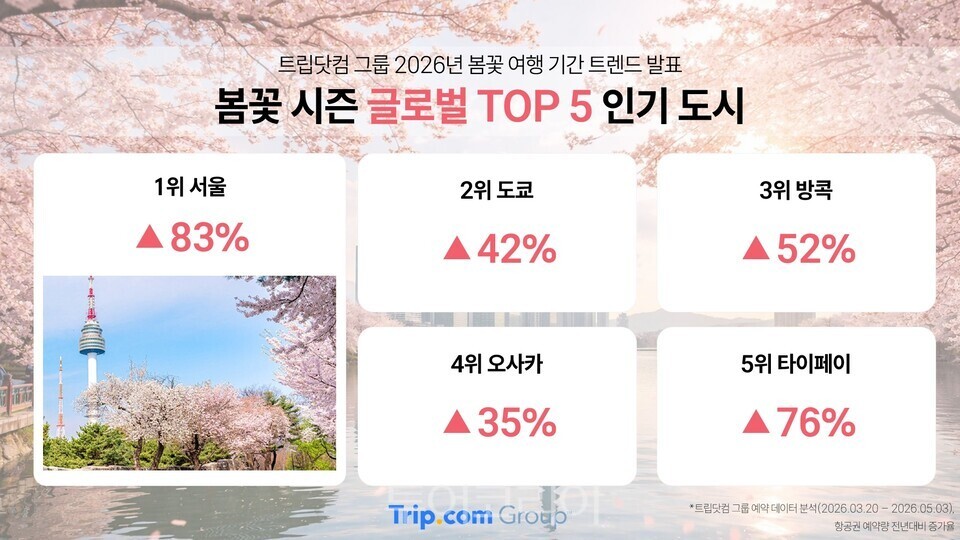
“Seoul Tops the List” … Global Demand Pours Into Korea for Cherry Blossom Season
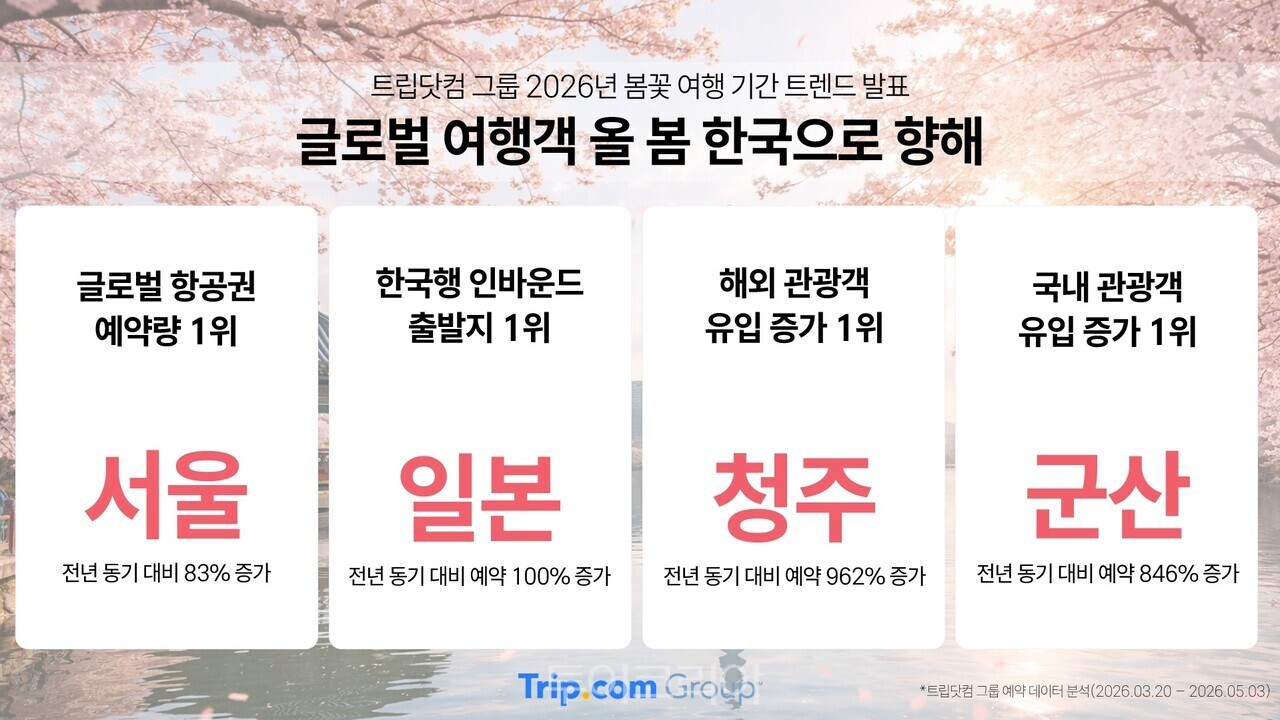
Trip.com Group analyzed booking data from March 20 to May 3 and found Seoul ranked first worldwide for flight bookings during the spring-bloom season. Bookings jumped about 83% year over year, outpacing growth in Tokyo (2nd) and Osaka (4th).
Inbound demand wasn’t confined to one market. Bookings from Japan doubled — a 100% increase — the largest jump. Thailand rose 122% and China 74%, showing strong growth across Asia. The U.S. climbed 82% and Canada surged 165%, confirming growing interest from Western travelers as well.
Changes are showing up in Europe, too. Germany sent roughly 142% more visitors to Korea last year — a striking uptick. In response, Trip.com has been highlighting cherry-blossom itineraries that link Seoul, Busan, and Jeju.
Hong Jong-min, head of Trip.com Korea, said, “Korea has firmly established itself as a global spring-bloom destination beyond Asia. The simultaneous expansion of inbound traffic through regional airports and the rise in Western travelers is a meaningful shift.”
Searches Tell the Same Story … Q1 Inbound Up 38%, Regional Airports on the Rise
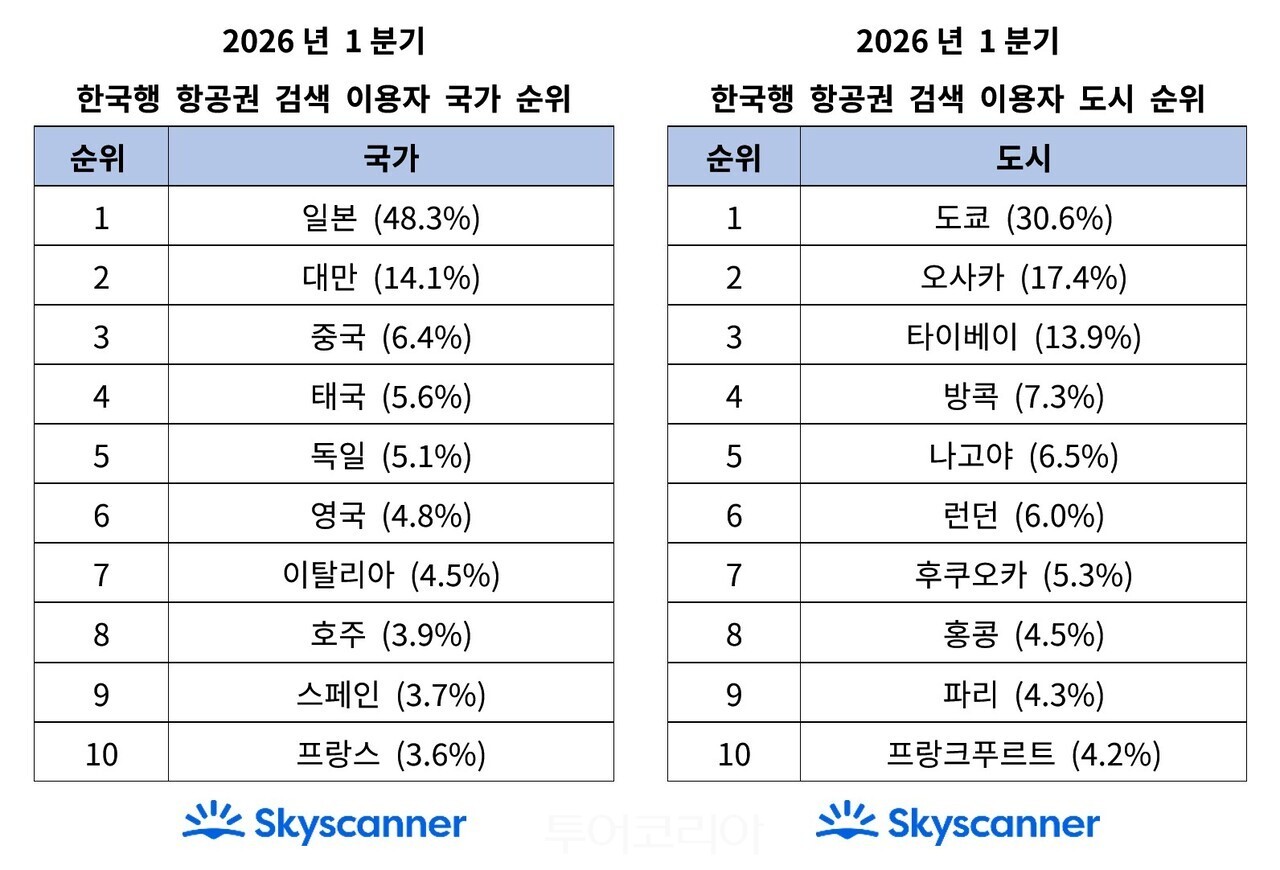
Search data, which often foreshadows travel, shows the same pattern. Skyscanner reports that flight searches for Incheon, Gimpo, and Gimhae airports rose 38% in Q1 compared with a year earlier.
The airport-level shifts are even clearer. Incheon searches grew 28.8%, while Gimpo jumped 44.1% and Gimhae climbed 66% — signaling rapidly rising interest in regional gateway airports.
Jessica Min, a travel expert at Skyscanner, said, “Foreign travelers are looking beyond Seoul for local food, culture, and hands-on experiences. Regional cities with good transport links and compelling local offerings are emerging as new hotspots.”
She added, “Demand to explore all of Korea is growing through multi-city searches, ‘nearby airport’ features, and services that combine flight and train information, making it easier to plan trips across the country.”
“Cheongju up 962% · Gunsan up 846%” … Regional Cities Explode, ‘Local Digging’ Kicks In
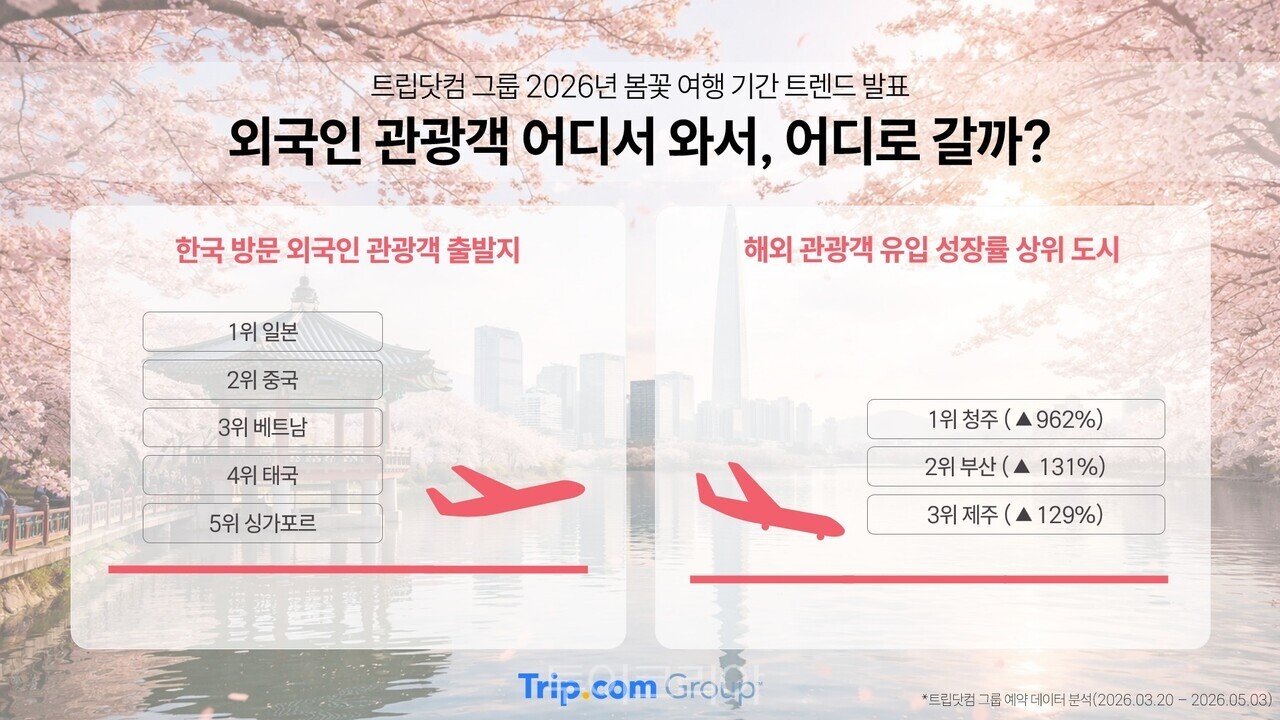
This pattern shows up in where visitors choose to go. By inbound growth rate, Cheongju surged 962%, the biggest increase, followed by Busan at 131% and Jeju at 129%.
Domestic travel figures mirror the trend. Gunsan rose 846% and Jinju climbed 370%, showing cherry-blossom demand spreading across the country.
At the same time, “local digging” — travelers digging into communities, culture, and experiences — is accelerating. In Busan, foreign tourist spending has risen sharply.
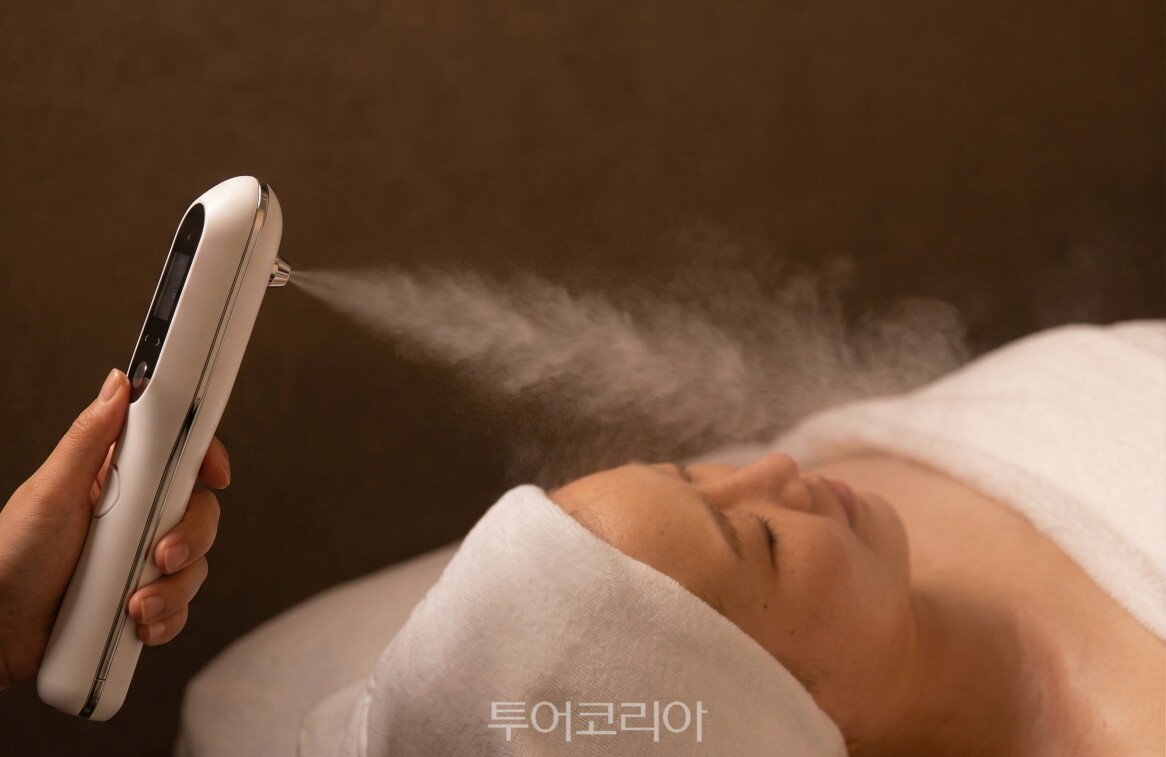
Creatrip reports that Q1 tourism transaction value in Busan jumped about 530% year over year, while the number of transactions rose 49%. Merchant partnerships roughly doubled, rapidly expanding local tourism infrastructure. Busan Tourism Organization counted about 3.64 million foreign visitors last year — the first time the city exceeded 3 million.
Busan’s shift is especially visible in spending patterns. Where tourism used to focus on transport add-ons like train and airport pickups, purchases this year moved toward beauty and medical services.
By transaction count, dermatology, hair, and beauty services ranked near the top. Dermatology visits spiked after March and drove much of the overall growth. Among Japanese tourists, traditional Korean medicine clinics also emerged as a new popular category.
Nationality-based patterns are distinct. Taiwanese tourists accounted for roughly 57% of transactions, becoming the core market. U.S. visitors tended to combine premium beauty treatments — nails and scalp clinics — with experiential offerings like yacht tours, nightscape photography, and local day trips.
Im Hyemin, CEO of Creatrip, said, “Busan is creating a new model that blends beauty- and medical-focused destination tourism with authentic local experiences. We’ll continue expanding regional tourism content to meet this more diversified demand.”














Most Commented