
Translation result
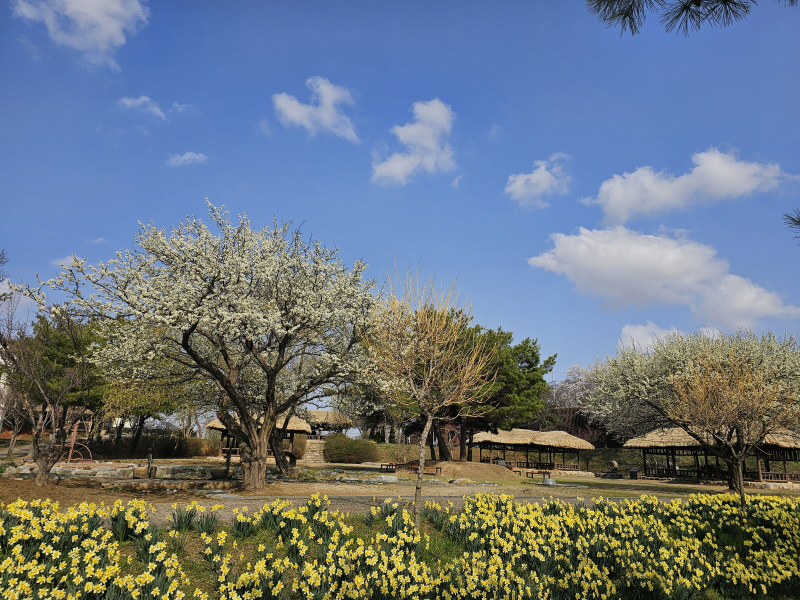
April in Dangjin feels like pure spring magic. Cherry blossoms flood Goljeongji in Myeoncheon, and the town buzzes with the Gijisi Tug-of-War—an event listed on UNESCO’s Representative List of the Intangible Cultural Heritage of Humanity. At Myeoncheon Hyanggyo, you can hear vivid stories about scholar Park Ji-won (pen name Yeonam), who once served as the county magistrate.
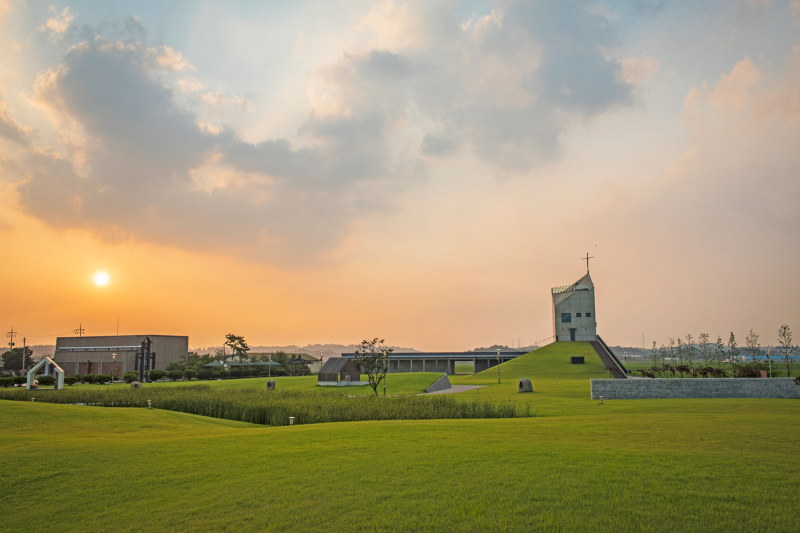
Take a short drive toward Hadeok and trace the life of Father Kim Dae-geon in Solmoe. Stop by Hadeok Reservoir, celebrated as a World Irrigation Heritage site, and wander past Hadeok Cathedral, a Gothic beauty that’s more than a century old. Nearby, the Sinri Sacred Site turns raw natural scenery into something that feels like art.
From Hadeok, head to the Sapgyoho Tourist Site to breathe in spring air and pedal scenic bike paths that instantly melt stress. When night falls, the sky lights up as drones weave dazzling patterns—more showy than the stars.
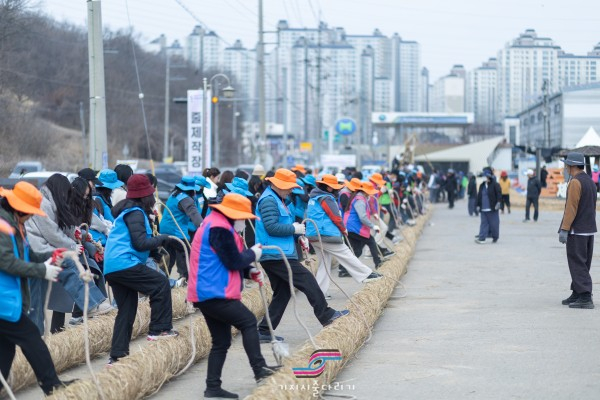
The Gijisi Tug-of-War festival runs from the 9th to the 12th around the Gijisi Tug-of-War Museum. It kicks off with the village shrine ceremony and continues with the Dragon King ritual, a village blessing, and competitions for children, locals, and national teams. Expect some downtown bus routes to be detoured or temporarily suspended during the festivities to ease traffic.
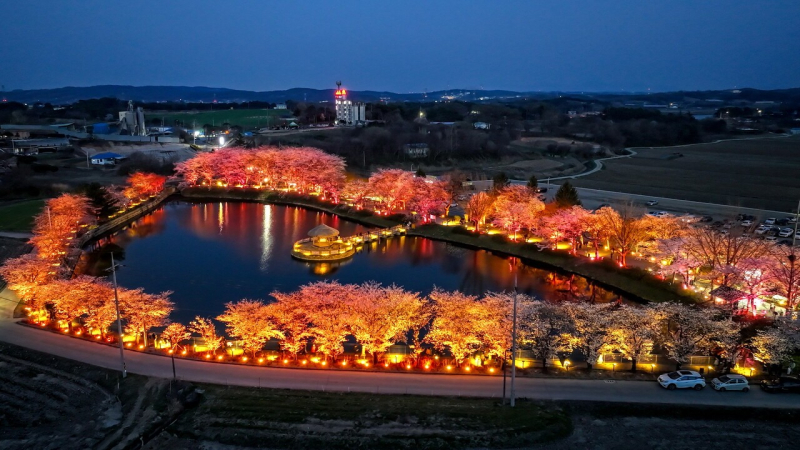
There’s even a Yeonha travel route mapped around Myeoncheon Hyanggyo and Goljeongji that retraces Yeonam’s journey, complete with a travel map you can follow. At the hyanggyo, slip into a Joseon-era scholar’s robe and spend a day as a historic student.
Hadeok Cathedral is notable for its twin bell towers on the façade. It features three arched entrances and rainbow-shaped windows. The exterior is built of red brick, while gray bricks frame the windows and define the corners of the bell towers. Diamond-shaped gray-brick decorations beneath the windows and on each face of the towers are particularly striking.
The present cathedral was rebuilt in 1929 and holds more than a century of history. During periods of persecution, it became a site of martyrdom and played a pivotal role in the origins of Korean Catholicism.
Nicknamed the “inland Jeju” for its lyrical, lush scenery, the Sinri Sacred Site was home to the largest Catholic community during the Joseon-era persecutions. It still preserves Bishop Daveluy’s residence—the only episcopal house from that era that remains in its original location and form.
Hadeok Reservoir is counted among Joseon’s three great reservoirs—alongside Yeonan Namdaeji in Hwanghae and Byeokgolje in Gimje—and is thought to have been constructed before the Goryeo dynasty. Today, the long, curved embankment used for water storage survives largely intact.










Most Commented