
Translation result.
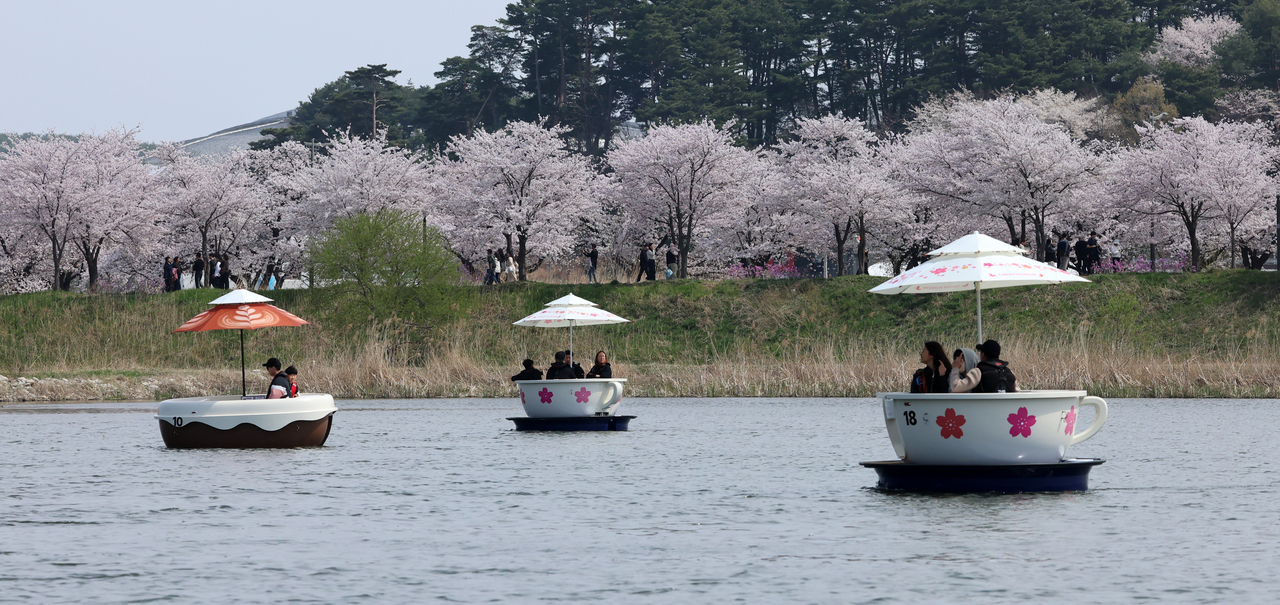
[Herald Economy=Reporter Kim Byeori] On Sunday, April 5 — Arbor Day and the first Sunday of the month — cherry blossom hotspots across the country buzzed with visitors despite overcast skies.
At major sites in Gyeongju, North Gyeongsang Province — including the Bomun Tourist Complex, Cheomseongdae, and Hwangridan-gil — tourists spent the day soaking up the blossoms at their peak.
Jeju drew big crowds as well. Around Gasi-ri, Pyoseon-myeon in Seogwipo City, where the 43rd Seogwipo Canola Flower Festival was underway, full-bloom cherry and canola fields brought heavy traffic and morning congestion. Popular spots like the entrance to Jeju National University, Golche Oreum, and Yerae-dong also filled with visitors.
In Gwangju and South Jeolla, parks and flower festivals stayed busy even after early-morning rain had knocked some petals loose. Ucheon Reservoir in Gwangju and Jungoe Park, the region’s signature cherry spot, were packed with people enjoying the spring air.
Crowds flocked not only to Mokpo’s Yudalsan spring festival in South Jeolla but also to Gurye’s Sansuyu festival site, even though that event had officially ended. Along the Seomjin River, the Gurye Seomjin River Cherry Blossom Road — a stretch lined with cherry trees — saw photographers, onlookers, and a mix of parked and stopped cars.
Even under cloudy skies, the Jeonjucheon riverbanks cutting through downtown Jeonju in North Jeolla were alive with visitors.
The Gunsan Saemangeum International Marathon added to the day’s energy, kicking off early around the Wolmyeong Sports Complex. About 12,000 runners threaded through the cherry-lined city, passing Gunsan’s modern cultural heritage sites and main attractions.
Cherry blossom destinations in Gangwon Province were equally busy. The Gangneung Gyeongpo Cherry Blossom Festival, which began the day before, drew families, couples, and groups of friends hoping to make memories beneath the trees. At the Namdaecheon Cherry Blossom Festival in Yangyang, people relaxed and admired the full blooms. In Chuncheon, spots such as Gongjicheon Riverside Park and the Buguri Cherry Blossom Road attracted crowds eager to enjoy spring despite the gray weather.
In Daejeon, locals headed to favorites like Temi Park — known as an urban cherry-island — and KAIST, where weeping cherry trees were spectacular, to snap commemorative photos. Daecheongho Obaekri-gil, Korea’s longest cherry blossom road at 26.6 km (16.53 miles), also drew many visitors. Meanwhile, the Maryangjin Port area in Seocheon, South Chungcheong Province, hosted the 24th Seocheon Camellia and Jjukkumi Festival.
Hwadam Forest, the ecological arboretum created by the LG Sangnok Foundation in Gwangju, Gyeonggi Province, welcomed families and couples who came to see cherry blossoms, sansuyu (cornelian cherry), and roughly 4,000 plant species. Near the old Gyeonggi Provincial Government building in Suwon, the cherry-lined road was filled with people admiring the blooms and taking photos.
In Busan, where the season is winding down, residents turned out for last looks at spots like Oncheoncheon, Haeundae Dalmaji-gil, the Nakdong riverside in Gangseo, Samnak Park, Hwamyung Ecological Park, and Busan Citizens Park, pausing to capture the blossoms on camera. That morning, a charity run took place on Gwangan Bridge.










Most Commented