
Translation result
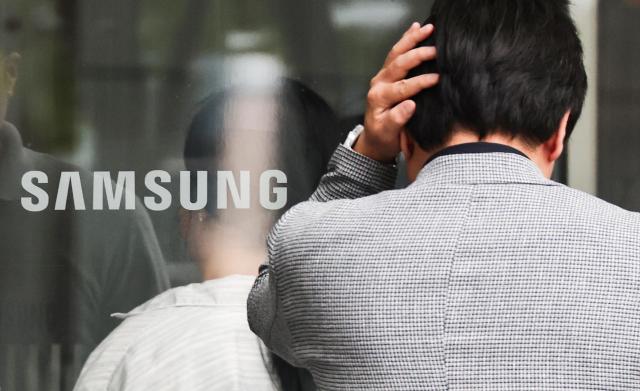
Samsung Electronics and its unions have finalized a wage agreement, but internal union divisions are intensifying. The largest union — the Samsung Group Cross-Company Labor Union’s Samsung Electronics branch — is seeing an outflow of employees from the Device Experience (DX) division, raising concerns that the union may lose its majority status.
Industry sources said that, as of 10 a.m. on the 28th, the cross-company union’s membership had fallen to the high 60,000s — roughly 69,000 — down more than 6,000 from the over 76,000 members reported during wage negotiations. The decline appears to be concentrated among DX workers who handle home appliances and mobile devices.
In April, the cross-company union secured majority-union status and legal employee-representative recognition from South Korea’s Ministry of Employment and Labor. To retain majority status, it must exceed roughly 64,500 members, about half of the company’s workforce.
If the current exodus continues, the union’s bargaining leverage could weaken ahead of next year’s process to unify bargaining channels among multiple unions.
In fact, membership in the second- and third-largest unions — the National Samsung Electronics Labor Union (JeonSamNo) and the Samsung Electronics Labor Union Donghaeng — has increased recently, rising to about 20,000 and 16,000 members, respectively. Many DX employees appear to have joined those unions in protest of a tentative deal perceived to favor compensation for the DS (Device Solutions) division.
In response, the cross-company union has begun reorganizing. Chairman Choi Seung-ho announced in a notice that future negotiations will be run on a DS–DX two-track basis. He plans to split the executive team into five DS and three DX members and to ensure DX division demands are addressed separately.
Choi said, “We know that approval rates do not necessarily reflect members’ satisfaction,” and added that he has reflected deeply on the unspoken disappointment and shortcomings among members. He publicly apologized for controversial remarks made during negotiations — including “I can’t work in DX anymore” — and said he will hold a confidence vote on his leadership on June 17.
Still, some union members have expressed concern about separating DS and DX bargaining. On the 27th, JeonSamNo issued a statement opposing the split, arguing that the issue is not the colleague next to you but a structure that encourages competition between business units.
JeonSamNo acknowledged DX members’ sense of alienation and the pay gaps between memory and non-memory roles within DS, but blamed the company’s opaque compensation system rather than the union. The union warned that DS can also face downturns and DX is subject to market shifts, and that dividing bargaining channels would weaken their ability to support one another in a crisis.
Analysts expect tensions between the DS and DX divisions to persist. As bonuses and divisional performance gaps widen, the union has begun to organize along business-unit lines, and some have even raised the possibility of separating DS and DX. While leading global chipmakers such as NVIDIA, TSMC and SK Hynix operate with semiconductor-focused, specialized structures, Samsung remains unique as an integrated electronics company that spans both semiconductors and finished products.













Most Commented