
Translation result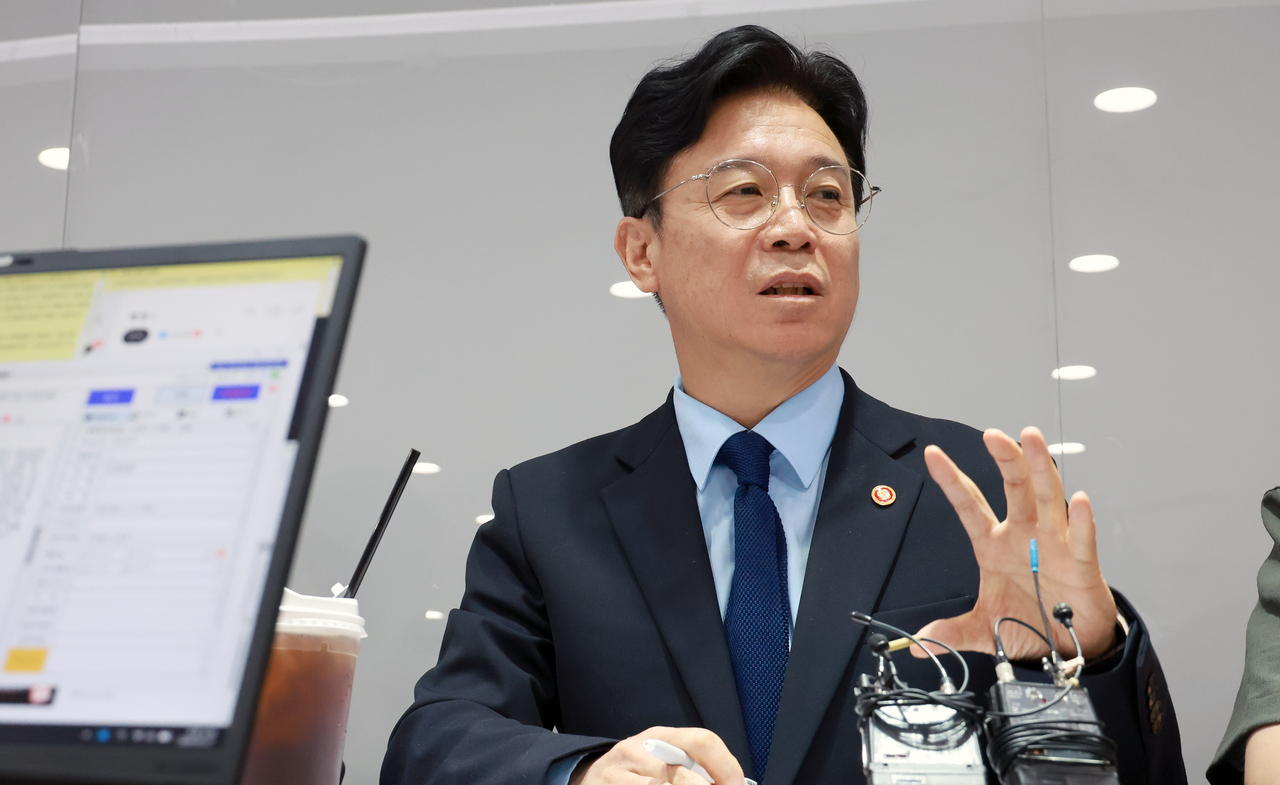 [Herald Economy=Reporter Kim Yong-hoon] Labor-management tensions over Labor Minister Kim Young-hoon’s proposal for “social sharing of excess profits” are escalating.
On June 1, the Korean Confederation of Trade Unions (KCTU) pushed back against the Korea Employers Federation (KEF) after KEF argued that demands for corporate profit distribution should be excluded from collective bargaining. The KCTU called KEF’s position “an anachronistic attempt to shut down discussions on profit sharing,” framing its statement as a public rebuttal to KEF’s special recommendation to member firms issued the previous day.
The dispute erupted after Minister Kim suggested at a May 27 press briefing and again during a May 29 interview with OhmyTV that South Korea should consider ways to socially share excess profits generated by large corporations. Citing the semiconductor industry, he argued that a broader social dialogue is needed to narrow the gap between prime contractors and their suppliers and to strengthen the competitiveness of the industrial ecosystem.
In its statement, the KCTU demanded that KEF withdraw what it described as an anachronistic recommendation to exclude profit distribution from bargaining, accusing KEF of deliberately conflating which issues count as bargaining topics with legal arguments about wage status.
The KCTU emphasized that unions are not simply demanding profit payouts but seeking a discussion about the criteria for sharing corporate gains with workers. Because performance bonuses, welfare programs, job security, training, and stock-based compensation are often determined through labor-management negotiations, the union argued that profit-sharing policies should likewise be open to bargaining.
Responding to KEF’s claim that operating-profit sharing is not wages and therefore cannot be a bargaining item, the KCTU said the question of whether performance pay constitutes wages is separate from whether labor and management can negotiate profit-sharing criteria.
The disagreement also revealed divergent readings of labor law. The KCTU argued that the Trade Union and Labor Relations Adjustment Act does not limit bargaining topics to a formal definition of wages; any matter affecting workers’ economic or social standing can be a subject of negotiation.
The two sides traded examples from abroad. The KCTU pointed to Germany’s co-determination system, France’s statutory profit-sharing, and profit-sharing practices at firms in the U.S. and Europe, arguing that it is rare to find a country that treats profit sharing itself as taboo.
On May 31, KEF circulated to member companies a “special management recommendation regarding unions’ demands for corporate profit distribution.” The advisory aimed to counter recent moves by some major-company unions to enshrine systems in collective agreements that would allocate a fixed percentage of operating profits to members.
KEF argues that demands to distribute operating profits differ fundamentally from conventional performance bonuses. While bonuses are discretionary payments determined by companies based on business conditions and results, institutionalizing a pre-set share of operating profits would, KEF says, amount to unions claiming the company’s profits themselves.
Citing a Supreme Court precedent earlier this year, KEF contends that allocating operating profits or management performance bonuses does not constitute wages. Profit-sharing, whose payment and size vary with business performance, is not direct compensation for the quantity or quality of an employee’s labor, the argument goes.
KEF also stressed that mandatory collective bargaining under labor law is limited to working conditions—wages, working hours, welfare, dismissals, employees’ status, and other treatment—and does not encompass corporate profit allocation. Because profit distribution falls outside those categories, employers have no legal obligation to negotiate on it, and strikes aimed at securing profit-sharing could be unlawful in purpose, KEF warned.
KEF further argued that corporate profits are critical management resources for investment, hiring, research and development, and strengthening financial structures. It cautioned that forcing companies in capital-intensive industries—such as semiconductors, batteries, and automobiles—to pre-allocate a portion of profits could weaken competitiveness and reduce their capacity to invest.
The debate has moved beyond a dispute over bonuses to a broader split over how to deploy windfall gains from the semiconductor boom. Labor groups and the Ministry of Employment and Labor emphasize narrowing the gap between prime contractors and suppliers and sharing gains, while industry and fiscal authorities favor using excess profits and windfall tax revenues for future industrial reinvestment.
Trade Minister Kim Jung-kwan wrote on Facebook on May 29 that “this is a critical moment to channel the profits generated by the semiconductor industry into productive reinvestment for the future,” urging strategic use of the AI boom to secure a growth engine for a major industrial leap. His message framed the semiconductor upswing as a lever for corporate investment and for strengthening advanced-industry competitiveness.
Officials in the finance camp have echoed that view. On May 30, Deputy Prime Minister and Finance Minister Koo Yoon-chul appeared on the YouTube channel Sampro TV and called for bold investment in a “second generation” of memory semiconductors as a way to deploy windfall tax revenue from the chip boom. On the same day, Budget Minister Park Hong-geun said the government should “invest aggressively in future advanced industries, while also channeling resources into social safety nets to address resulting social disparities.”
By contrast, Labor Minister Kim Young-hoon commented under Minister Kim Jung-kwan’s post, “Let’s create genuine growth together with labor through shared growth with suppliers,” signaling a different emphasis.
Separately, an emergency forum that Minister Kim had planned for the day to explore the possibility of a Korean-style social solidarity wage was postponed. Officials said the forum is likely to be held next week after the minister returns from his International Labour Organization (ILO) trip.













Most Commented