
Translation result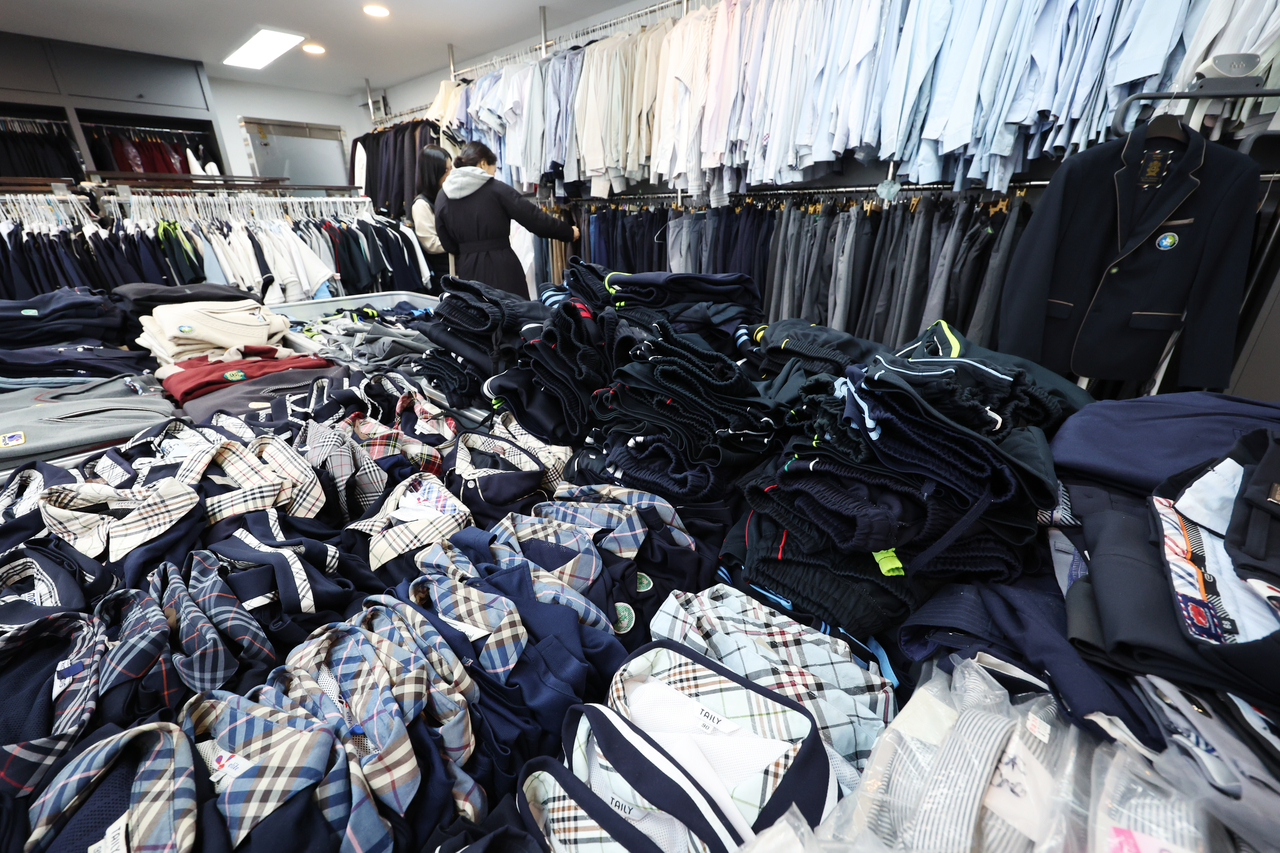 [Herald Economy = Reporter Kim Yong-jae] Four major uniform brands now control 67.8% of the national middle- and high-school uniform market, fueling renewed criticism over so-called “back-breaking” uniform prices. The average cost for a formal-style uniform is roughly 265,753 KRW (approximately $199.31), and some items can cost an additional 178,000 KRW (approximately $133.50) or more when purchased separately, revealing stark price imbalances. The government says it will increase transparency to address the market’s structural unfairness.
The Ministry of Education released the findings and next steps of a full survey on uniform costs on the 21st. Conducted from Feb. 27 to Apr. 30, the survey covered 5,687 middle and high schools nationwide and analyzed 2025 school-year uniform subsidies and per-item prices.
The survey found that 96.3% (5,236 schools) of schools that require uniforms procure them through a school-led purchasing system in which the principal oversees payment and procurement. Despite that, parents still face substantial financial burdens. The average winning bid for formal-style uniforms was 265,753 KRW (approximately $199.31), 112,876 KRW (approximately $84.66) higher than the average for more casual, comfort-focused uniforms, which stood at 152,877 KRW (approximately $114.66).
The survey also identified steep markups on single items that parents frequently need to replace as children grow. For example, the minimum recorded price for a formal winter shirt was 10,000 KRW (approximately $7.50), while the maximum reached 178,000 KRW (approximately $133.50), indicating wide discrepancies between schools and regions. Winter uniform pants ranged from 20,000 KRW (approximately $15.00) to 99,000 KRW (approximately $74.25).
A Ministry official said these findings point to “unreasonable price differences by item, with higher prices set for products parents are likely to buy repeatedly.”
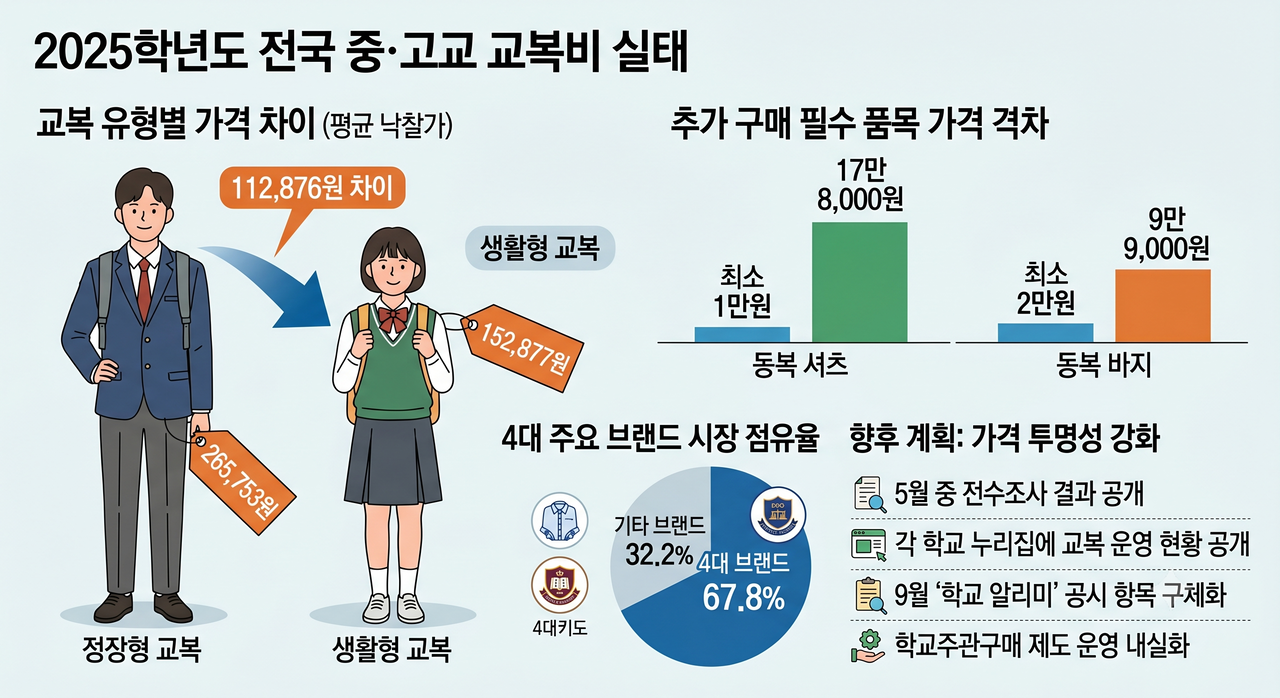 The persistence of high-priced uniforms is rooted in market concentration among large brands. The survey found that four major brands won 67.8% of contracts (3,687 schools). With the market dominated by a few large firms, competitive pressure has not delivered meaningful price reductions.
To correct this imbalance and improve parents’ access to information, the government will substantially expand public disclosures. Until now, officials published only procurement methods and winning bid prices. Going forward, they will also disclose uniform types, per-student subsidy amounts, and lists of winning vendors to increase transparency in uniform purchasing and management.
The Ministry of Education plans to publish the full survey results on the ministry and provincial education office websites in May and will revise mandatory disclosure items on the “School Information” portal beginning in September.









Most Commented