
Samsung Union Declines to Join Two Major Confederations
Independent Line Strengthens Pragmatism
Push for Higher Performance Pay Sparks Broader Solidarity
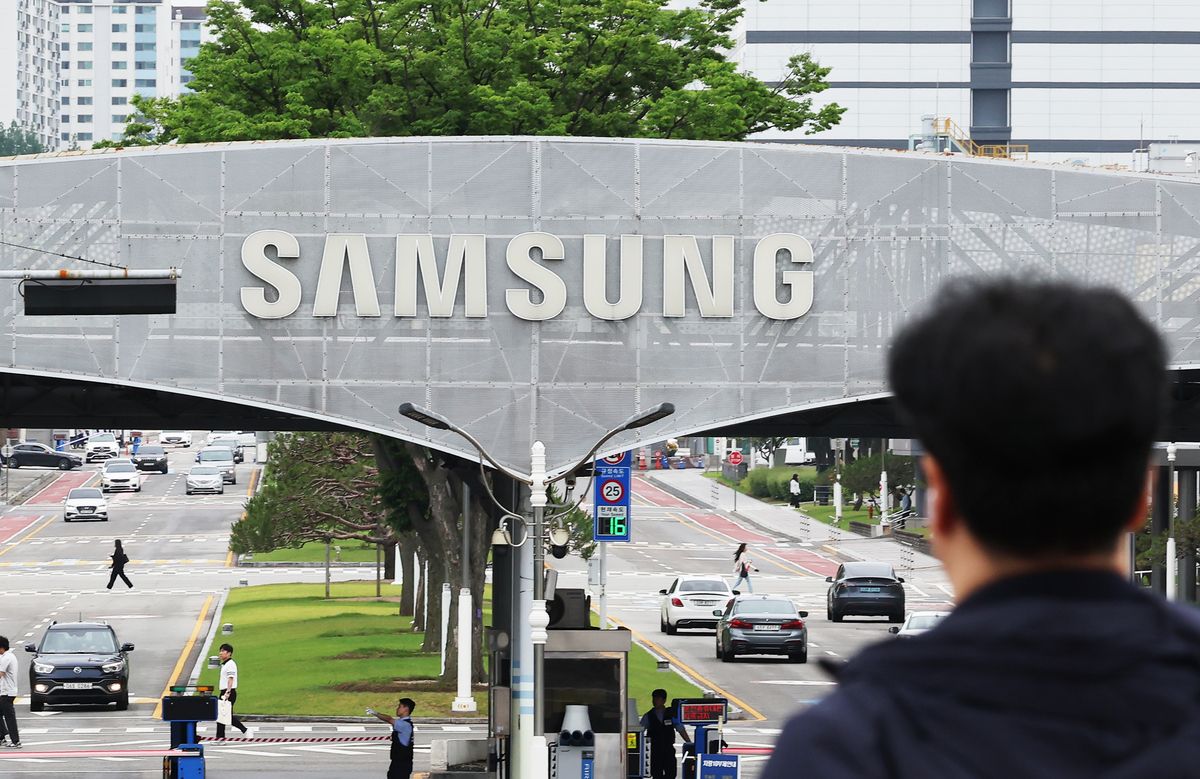 Samsung Electronics’ union has decided not to join either of South Korea’s two largest labor confederations and will remain independent, a move that analysts say could prompt large-company unions to realign around company- and group-level interests. As more major-company unions press for higher performance bonuses, pragmatic self-interest — prioritizing members’ immediate benefits over solidarity with more vulnerable workers — appears to be gaining ground.
According to labor sources on the 29th, the Samsung union adopted an internal policy to retain its current company-by-company structure and to avoid joining the Federation of Korean Trade Unions (FKTU) or the Korean Confederation of Trade Unions (KCTU). The union plans to recruit members from additional Samsung affiliates to broaden its ranks and ultimately aims to represent the interests of all Samsung Group employees. Other big-company unions are also expanding their coordinated efforts around demands for larger performance pay.
Observers inside and outside the labor movement say the trend recalls the late 1980s, when group-based unions reappeared. The emergence of the Hyundai Group Workers’ Union and the Daewoo Group Labor Council between 1988 and 1990 was a defining episode of that era. Those organizations united affiliate unions to leverage strong collective action and to try to overcome the limits of company-level bargaining. But they had notable shortcomings: critics argue they prioritized wage and condition gains for regular employees at large firms while widening disparities with small-business and nonregular workers. After that period, the labor movement reorganized around the two-confederation structure of the FKTU and the KCTU, which emphasized protecting vulnerable workers and building broader social solidarity across industries and regions.
Samsung’s independent course differs from the two-confederation model. Unlike subcontractor unions, major-company unions often have the leverage to bargain directly with employers without depending on higher-level organizations for mobilization. The entrenched company-by-company bargaining system also makes an independent approach feasible. For example, although the Hyundai Motor union is affiliated with the KCTU’s metalworkers’ federation, observers note it has not simply been dictated to by its parent organization.
Labor experts warn that if this trend continues, the two-confederation-centered labor movement could fragment into autonomous big-company unions, potentially widening the divide between regular employees at large firms and subcontracted or nonregular workers. Kim Yoo-sun, director of the Korea Labor & Society Institute, expressed concern: “The Samsung union has shifted our labor movement’s socially oriented trajectory toward the market.”












Most Commented