
Translation result
by Cynthia Miller-Idriss│Translated by In-seok Jo│Dongasia
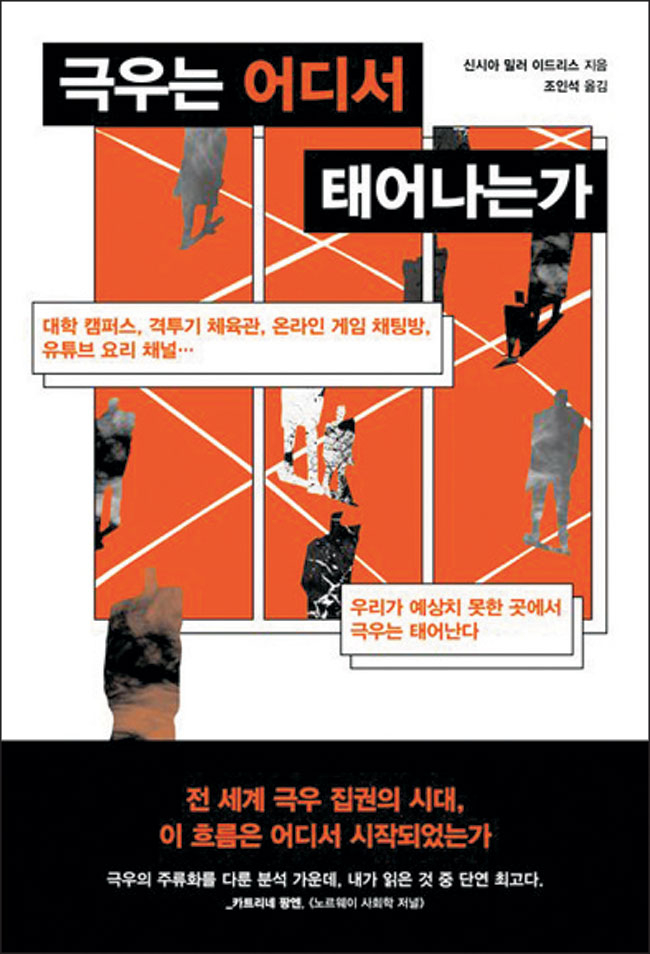 Cooking channels on YouTube, fashion labels, college campuses, online games, MMA gyms — these everyday places may seem harmless, but they can be where people first encounter extremist messages. Where the Far Right Is Born examines the specific “places and moments” that allow contemporary far-right extremism to seep into daily life.
The author emphasizes places because modern far-right extremism is no longer confined to fixed, organized movements. Rather, it operates through “flows of people moving through the peripheries and niche spaces of far-right scenes.” With the rise of YouTube and other social platforms, people can connect to communities without realizing they are joining a political movement. Even without explicit ideological agreement, cultural experiences or a sense of belonging can pull them into the far-right world.
The author points first to a vegan-recipe cooking show on YouTube as a contemporary stage for the far right. A program run by a neo-Nazi extremist group called “Balaclava Kuhe” (바라클라바 퀴헤) embedded far-right terminology, historical references, slogans and symbols throughout its content. Fashion operates similarly: the author reports that more than a dozen brands in Europe and North America have sold high-end tops that subtly incorporate far-right symbols and messages on the chest and back.
The most dangerous gateways are online platforms that guide teenagers and young adults toward extremist content. Even on Roblox — a children’s gaming platform used by more than 100 million people worldwide — researchers have found material that glorifies the Holocaust.
Recommendation algorithms — YouTube’s suggested videos, X’s follow suggestions and Facebook’s friend recommendations — make it easier to connect to the far-right sphere. Lately, that connection has been softened with humor and memes, packaging the far right as an attractive, countercultural rebuke to the mainstream.
The author argues that if far-right extremism takes root in everyday life, the remedies must also be found in everyday settings. Because encounters with the far right now occur in so many diverse places, government-led law enforcement and surveillance have clear limits. She calls for integrating prevention efforts into public education to raise societal awareness. 404 pages, 20,000 KRW (about $15).












Most Commented