Quick access to main page (top) Direct access to main contents Quick access to main page (bottom)

AI Could Slash 30% of China’s Workforce, Government Warns

Daniel Kim Views  

Translation result.

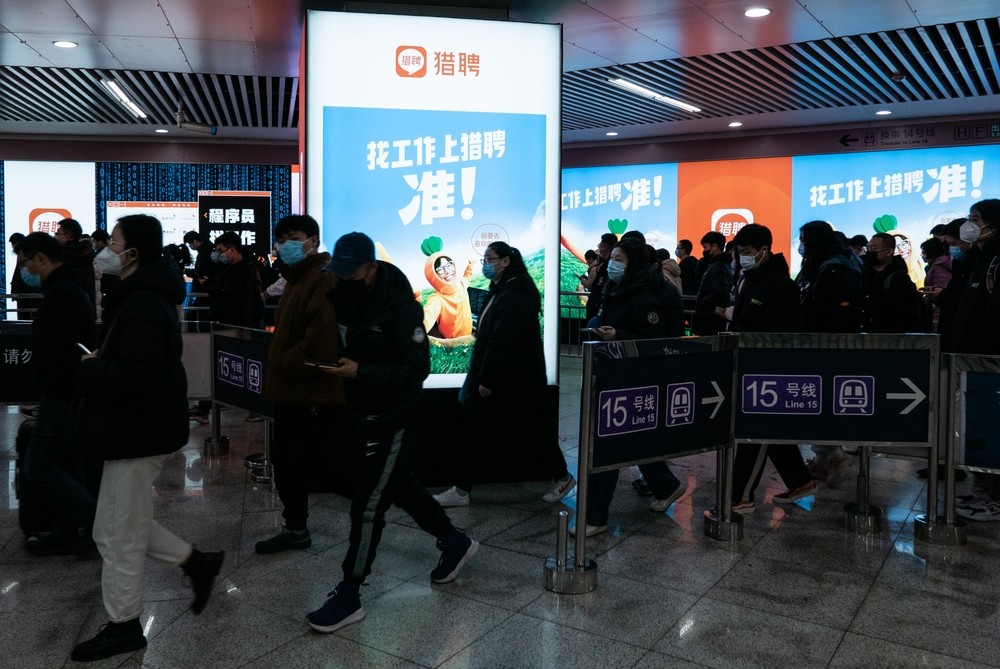
(Photo=Shutterstock)

The Chinese government has warned companies to refrain from layoffs justified by AI, saying it fears the technology’s spread could trigger large-scale job losses.

On the 27th (local time), The Wall Street Journal reported that Vice Premier He Lifeng was alarmed after a survey he commissioned last summer of major employers—including large tech companies, banks and automakers—about AI’s impact on the labor market.

Some firms said AI could create new jobs, but they also warned that once the technology is fully deployed it could eliminate more than 30% of existing staff.

Since late last year, the Chinese government has ordered tech firms—particularly those with a high share of young workers—not to carry out large-scale layoffs during AI adoption.

At the same time, Beijing has pushed the AI+ strategy to encourage AI in productivity-boosting sectors such as manufacturing and logistics, while expressing concern about the social fallout in areas where office jobs are most at risk of automation.

China’s urban youth unemployment rate for people ages 16–24 reached 16% in April. With millions of college graduates competing for a limited number of white-collar positions, AI could add fresh pressure to an already tight job market.

Kyle Chan, a researcher at the Brookings Institution, said China is trying to strike a balance between social stability and productivity gains, and that AI is a transformative technology forcing the government to make difficult choices.

Authorities have also stepped up scrutiny of corporate restructuring. Firms already require regulator approval for mass layoffs, but officials are increasingly asking companies to show that cuts were not driven by AI-driven automation.

Court rulings and labor disputes have sent warning signals to employers. In Hangzhou, a court found that dismissing a human manager after introducing AI amounted to unfair dismissal and ordered the company to pay compensation.

Arbitration in a similar Beijing case also led to compensation. The Beijing municipal government said that AI cannot justify dismissals and urged companies to provide retraining and job-transition opportunities for affected employees.

To address the AI transition, the Chinese government is expanding vocational training. In April, a senior official said Beijing will offer free AI training for skilled workers this year and implement training programs for university graduates.

But industry officials say hiring cuts tied to AI are already occurring. HR representatives at some Chinese tech firms acknowledged they are reducing headcounts in areas where AI can handle repetitive tasks and reallocating staff to human-centered roles such as customer service and complex decision-making.

Concerns are growing that the entry-level job market is shrinking rapidly. The founder of a software startup in Guangzhou said he developed and now uses AI agents to perform market research and schedule management.

“After just a few weeks of training, AI can effectively replace interns or employees with less than two years’ experience,” he said. “I’m really worried about the younger generation.”

Reporter Chan Park cpark@aitimes.com

 
Daniel Kim
content@tenbizt.com

Comments0

300

Comments0

[Social] Latest Stories

  • Starbucks Korea CEO Fired Over Controversial ‘Tank Day’ Promotion
    Starbucks Korea CEO Fired Over Controversial 'Tank Day' Promotion
  • 25,000 Robots vs. Human Workers: The High-Stakes Battle at Hyundai
    25,000 Robots vs. Human Workers: The High-Stakes Battle at Hyundai
  • Hotel Hygiene Scandal: Cleaner Caught Using Guest Towels to Wipe Toilets
    Hotel Hygiene Scandal: Cleaner Caught Using Guest Towels to Wipe Toilets
  • South Korea’s Tech Giant Kakao Faces First Major Strike in 20 Years
    South Korea's Tech Giant Kakao Faces First Major Strike in 20 Years
  • South Korea’s Aging Crisis: How One Leader Is Redefining ‘Well-Dying’
    South Korea’s Aging Crisis: How One Leader Is Redefining 'Well-Dying'
  • Stop Calling Them ‘Hey You’: South Korea’s New Push for Worker Respect
    Stop Calling Them 'Hey You': South Korea's New Push for Worker Respect

Weekly Best Articles

  • Choi Dong-seok’s Family Bond: How a Simple Engraving Reveals Deep Love for His Children
  • Kwak Sun-hee’s Stunning Wedding Photos: A Celebration of Love and Courage
  • Is ‘I Am a Natural Person’ Just a Big Lie? Comedian Yoon-taek Reveals Shocking Secrets!
  • Health Scare: Why Fans Are Worried About Go Ji Yong’s Dramatic Weight Loss
  • Discover the Winter Gongju Chestnut Festival: A Taste of Korea at H-Mart in the USA!
  • 2026 Spring Wildfire Prevention: How Gyeryong City is Cutting Response Time to 30 Minutes!

You May Also Like

  • 1
    Ukraine’s EU Bid Surges as Hungary Drops Opposition Amid Russian Attacks

    Politics 

    Ukraine’s EU Bid Surges as Hungary Drops Opposition Amid Russian Attacks
  • 2
    Trump Backs Colombia's 'El Tigre' — What It Means for U.S. Relations

    Politics 

    Trump Backs Colombia’s ‘El Tigre’ — What It Means for U.S. Relations
  • 3
    Trump Backs Colombia's Far-Right Outsider—What's at Stake?

    Politics 

    Trump Backs Colombia’s Far-Right Outsider—What’s at Stake?
  • 4
    12.5% Tariff Hit: South Korea Faces New U.S. Trade Penalties

    Politics 

    12.5% Tariff Hit: South Korea Faces New U.S. Trade Penalties
  • 5
    12.5% Tariff Alert: Why the U.S. Is Targeting South Korean Imports

    Politics 

    12.5% Tariff Alert: Why the U.S. Is Targeting South Korean Imports

Popular Now

  • 1
    Marta Kostyuk Makes History at French Open Amid Ukraine Crisis

    Politics 

  • 2
    37 Years in Exile: The Tiananmen Leader Who Just Wants to Go Home

    Politics 

  • 3
    South Korea's Cheongju Airport Faces Crisis as Passenger Numbers Explode

    Politics 

  • 4
    Nuclear Submarine Race: South Korea's High-Stakes Bid for U.S. Fuel

    Politics 

  • 5
    France Finally Admits Complicity in the 1994 Rwandan Genocide

    Politics 

Weekly Best Articles

  • Choi Dong-seok’s Family Bond: How a Simple Engraving Reveals Deep Love for His Children
  • Kwak Sun-hee’s Stunning Wedding Photos: A Celebration of Love and Courage
  • Is ‘I Am a Natural Person’ Just a Big Lie? Comedian Yoon-taek Reveals Shocking Secrets!
  • Health Scare: Why Fans Are Worried About Go Ji Yong’s Dramatic Weight Loss
  • Discover the Winter Gongju Chestnut Festival: A Taste of Korea at H-Mart in the USA!
  • 2026 Spring Wildfire Prevention: How Gyeryong City is Cutting Response Time to 30 Minutes!

Must-Reads

  • 1
    Ukraine’s EU Bid Surges as Hungary Drops Opposition Amid Russian Attacks

    Politics 

    Ukraine’s EU Bid Surges as Hungary Drops Opposition Amid Russian Attacks
  • 2
    Trump Backs Colombia's 'El Tigre' — What It Means for U.S. Relations

    Politics 

    Trump Backs Colombia’s ‘El Tigre’ — What It Means for U.S. Relations
  • 3
    Trump Backs Colombia's Far-Right Outsider—What's at Stake?

    Politics 

    Trump Backs Colombia’s Far-Right Outsider—What’s at Stake?
  • 4
    12.5% Tariff Hit: South Korea Faces New U.S. Trade Penalties

    Politics 

    12.5% Tariff Hit: South Korea Faces New U.S. Trade Penalties
  • 5
    12.5% Tariff Alert: Why the U.S. Is Targeting South Korean Imports

    Politics 

    12.5% Tariff Alert: Why the U.S. Is Targeting South Korean Imports

Popular Now

  • 1
    Marta Kostyuk Makes History at French Open Amid Ukraine Crisis

    Politics 

  • 2
    37 Years in Exile: The Tiananmen Leader Who Just Wants to Go Home

    Politics 

  • 3
    South Korea's Cheongju Airport Faces Crisis as Passenger Numbers Explode

    Politics 

  • 4
    Nuclear Submarine Race: South Korea's High-Stakes Bid for U.S. Fuel

    Politics 

  • 5
    France Finally Admits Complicity in the 1994 Rwandan Genocide

    Politics 

Share it on...