
[iNews24 reporter Seol Jae-yun] Unions representing in-house and external subcontractors and affiliated suppliers of Hyundai Motor and Hyundai Glovis are demanding negotiations with the principal contractors under the revised Trade Union Act—commonly called the “Yellow Envelope Act”—and the dispute has intensified.
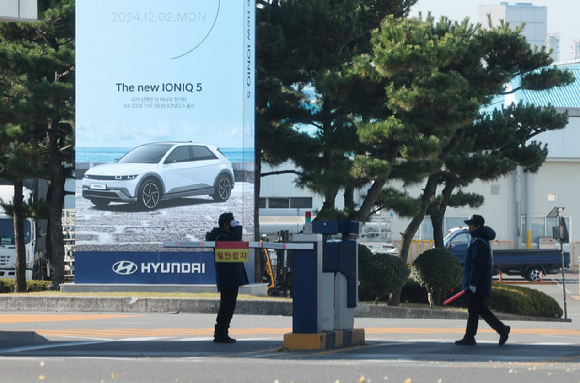
Industry sources said on May 27 that the unions plan to hold a “Rally to Condemn Hyundai for Refusing Principal-Contractor Negotiations” at Hyundai Motor’s Ulsan headquarters on May 28.
The demand is grounded in an amended Trade Union Act that took effect in March. The revision broadens the legal definition of “employer” to include principal contractors that exercise substantial and specific control over workers’ terms and conditions.
The unions say that, under the new law, Hyundai Motor and Hyundai Glovis—as the principal contractors—should come to the bargaining table as the de facto employers of subcontracted workers.
So far, 10 branches representing 1,675 members have asked Hyundai Motor for principal-contractor negotiations: 4 in-house subcontractor branches at Hyundai stores and plants; 3 branches of Hyundai Green Food (cafeteria staff); the Hyundai Motor security branch; and 2 branches of the auto sales coalition.
After management ignored 4 separate bargaining requests, the unions filed a petition for remedial action with the Korea Labor Relations Commission on April 29, alleging failure to post the required notice. The commission held an initial hearing on May 20 and has scheduled a second hearing for June 1.
3 Hyundai Glovis branches responsible for logistics—in Gwangju, Jeonju and Ulsan (1,292 members)—also demanded negotiations but remain at an impasse. The union said Hyundai Glovis sent a written refusal to negotiate on April 22 and did not participate through the third bargaining session on May 22.
The unions argue that Hyundai Glovis exerts substantial control over subcontracted workers’ employment and working conditions, and that Hyundai Motor, in turn, effectively controls Hyundai Glovis. For that reason, they say both companies have a legal duty to negotiate.
A union official said the last 20 years have seen in-house and external subcontracting and outsourcing become entrenched, leaving lead contractors effectively determining the working conditions of indirectly employed workers. In line with the amendment’s intent, the official said, Hyundai Motor and Hyundai Glovis should respond to the bargaining requests.
By contrast, Hyundai Motor Group and other business organizations contend that legal questions remain about whether a principal contractor that does not have a direct employment contract with subcontractor workers should be treated as an “employer” under labor law.
Accordingly, the Korea Labor Relations Commission’s ruling on the unions’ petition and any subsequent legal disputes are likely to become pivotal moments for principal–subcontractor negotiations across the auto industry.











Most Commented