
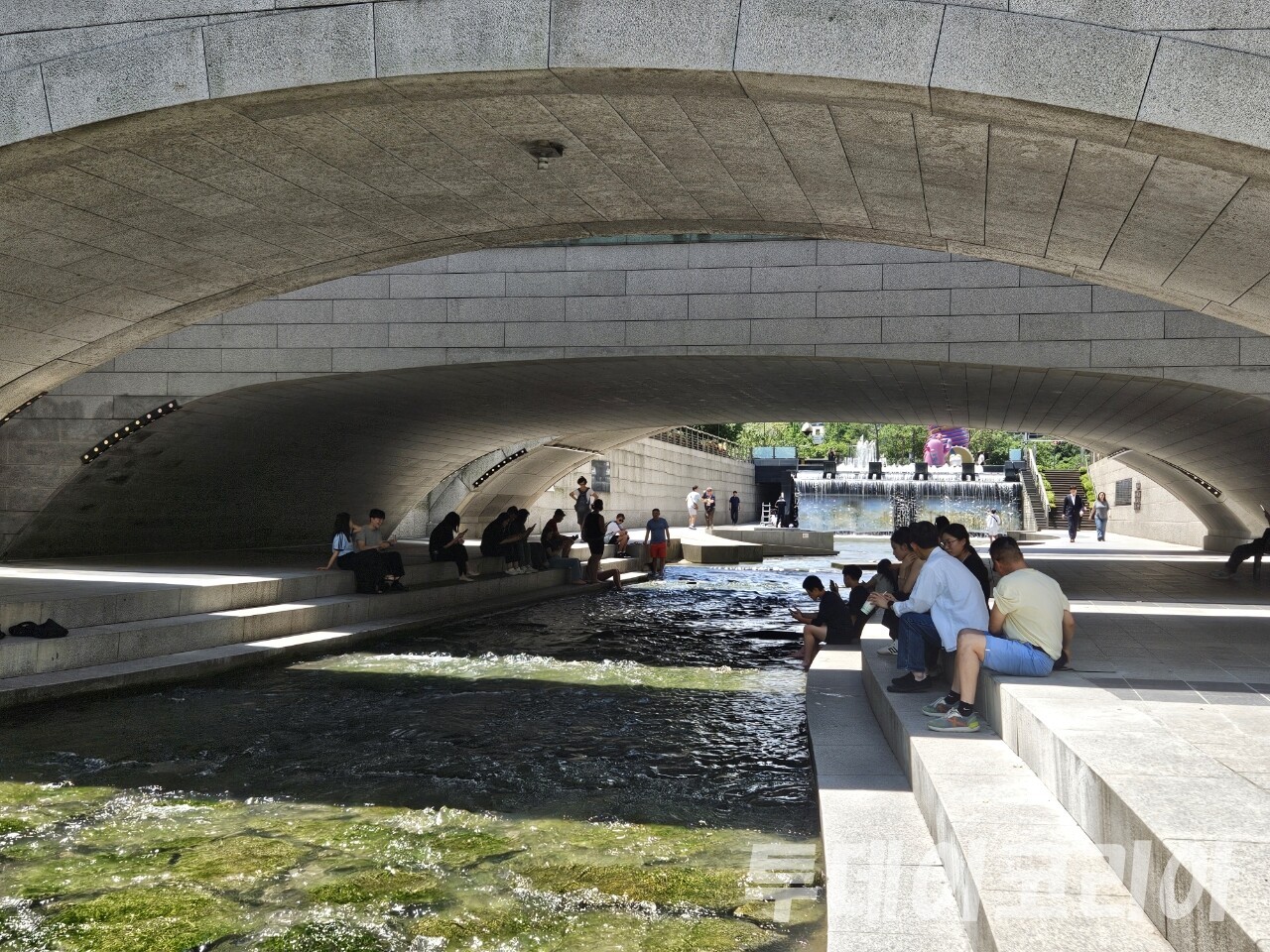
Today Korea — Reporter Kim Si-on | With summer approaching, South Korea is accelerating preparations to cope with heatwaves. Forecasts that this summer may be hotter than average have prompted local governments to expand cooling centers, step up protections for vulnerable populations, and deploy measures to reduce urban heat.
Summarizing Today Korea’s reporting on the 26th, the Ministry of Employment and Labor will conduct targeted inspections from the 1st through the 12th of next month at 1,000 high-risk worksites in construction, shipbuilding and logistics to verify compliance with the Five Basic Heatwave Safety Rules.
The Five Basic Heatwave Safety Rules require employers to provide cool drinking water, install cooling equipment, ensure adequate rest breaks, issue cooling supplies, and establish a 119 emergency reporting system to prevent heat-related illnesses.
The ministry plans to increase effectiveness by carrying out unannounced inspections between 2 p.m. and 5 p.m., when heat-related illnesses most frequently occur. Inspectors will also check adherence to recommended work-stoppage guidelines tied to the heat index (perceived temperature). When the heat index reaches 33°C (91.4°F), employers should provide at least a 20-minute break every two hours; at 35°C (95°F) or higher, a 15-minute break every hour is recommended; and when it exceeds 38°C (100.4°F), authorities advise suspending outdoor work except for emergency operations.
After the concentrated inspection period ends, oversight will switch to routine supervision on the 15th of next month, with strict enforcement for legal violations, including referrals for prosecution where warranted.
Labor Minister Kim Young-hoon urged employers to implement stage-by-stage recommendations immediately—such as adjusting work hours and suspending outdoor operations—when heatwave warnings are issued to protect workers’ lives and health.
Municipalities are also enhancing programs to protect at-risk residents and cool urban areas.
Seoul’s Gangnam District will operate 91 cooling centers and designate three hotels as emergency shelters for seniors living alone and low-income elderly residents. Visiting nurses will check on isolated seniors and people with chronic conditions, and the city will provide fans and cooling mats to low-income households. To reduce downtown temperatures, Gangnam will expand shade canopies, cooling fog systems and the use of sprinkler trucks.
Busan will manage heat-illness cases in real time through a mobile command center and an emergency-room heat-illness surveillance system, and will activate its disaster and safety headquarters immediately when heatwave warnings are issued. Officials will regularly check on roughly 32,000 vulnerable seniors and operate about 1,500 cooling centers and smart shade installations.
Jeonju, in North Jeolla Province, will use care support workers to check the health of about 5,900 elderly people living alone daily and will open 369 senior centers as cooling shelters. The city will also adjust outdoor work hours for participants in senior employment programs to minimize midday heat exposure.
In a phone interview with Today Korea, Ye Sang-uk, a professor in the Department of Climate and Energy Systems Engineering at Ewha Womans University, said forecasts indicate temperatures this summer (June–August) are likely to be higher than normal. The Korea Meteorological Administration estimates about a 90% chance that temperatures from June through August will be similar to or above average.
He noted that sea surface temperatures in the northern Indian Ocean and the North Pacific—both influential on Korea’s summer climate—remain above normal, and their remote atmospheric correlations are expected to affect Korea’s summer atmospheric circulation.
He added that Arctic sea ice is melting at record levels this year, which could directly and indirectly influence Korea’s summer temperatures and precipitation. That increased variability in summer temperature and rainfall calls for heightened vigilance from authorities and the public alike.













Most Commented