
Translation result

[Sankyung Today = Reporter Park Tae-jin]
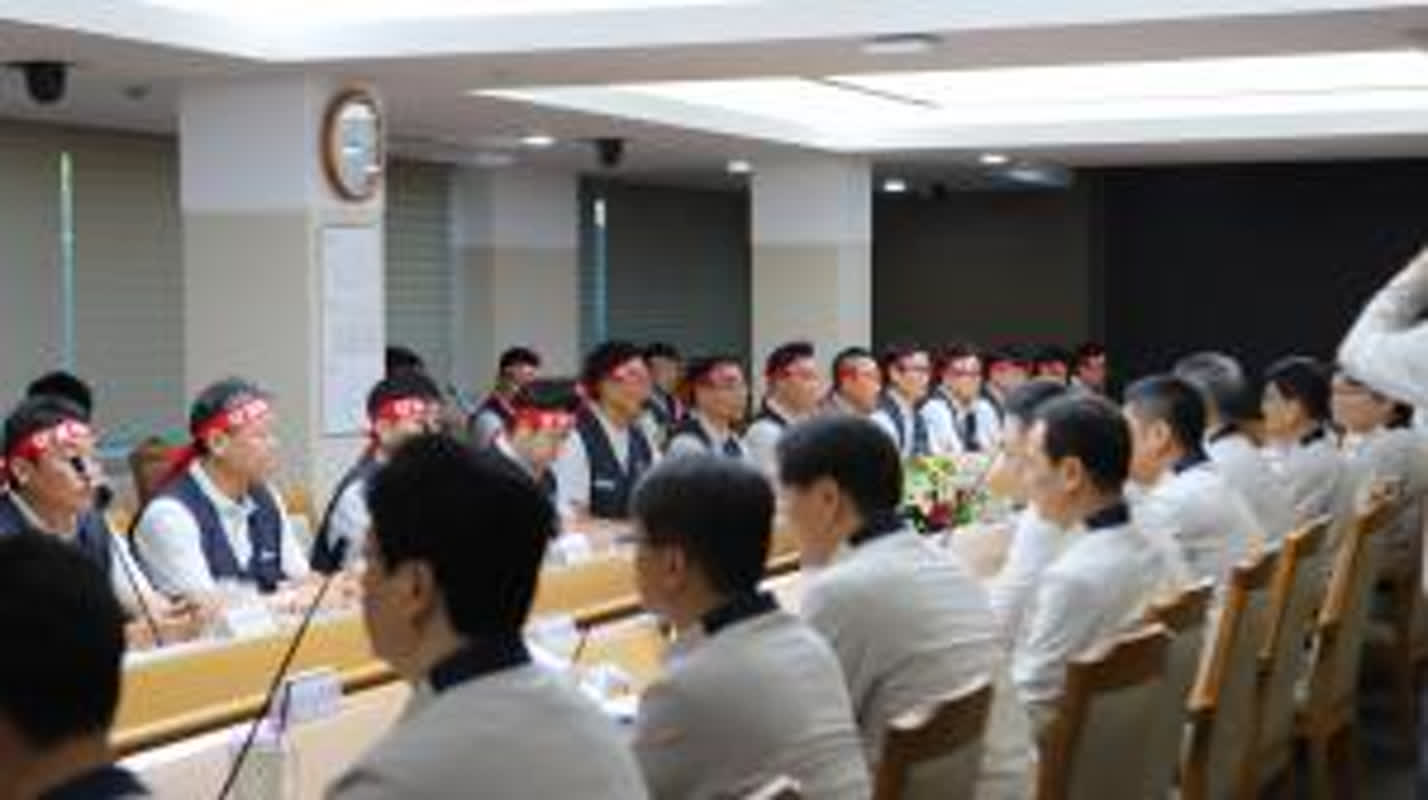
Samsung Electronics’ management and union reconvened at the Central Labor Relations Commission’s mediation table three days before the scheduled strike.
With stark disagreements over reforming the bonus system still unresolved, this round is widely viewed as the last substantive opportunity to avert the strike.
The Central Labor Relations Commission said the second post-adjustment meeting between Samsung Electronics’ management and the union ran from 10:00 a.m. to 7:00 p.m. on the 18th and will resume on the 19th during the same hours.
If discussions extend, the sessions could run later into the evening.
The first post-adjustment talks, held from the 11th to the 12th, also failed to produce an agreement and did not conclude until the early morning of the 13th.
In the second round, the core disputes remain the bonus-calculation criteria, payment caps, and transparency of the system.
The union is demanding clear disclosure of how bonus pools are calculated, the abolition of payment caps, and formalized, institutional guarantees.
Company representatives say any changes must account for overall business conditions, divisional performance, and volatility in the global semiconductor market.
During the morning session, both sides largely reiterated their basic positions.
Park Soo-geun, chair of the Central Labor Relations Commission, told reporters during the lunch break, “We’ve only heard the basic positions so far,” and added, “They will present proposals this afternoon.” He described the tone as “there is dialogue,” but cautioned, “We’ll have to see. I don’t know at this point.”
Chair Park is serving as mediator in the second post-adjustment round. Asked about his stance, he said, “They must not strike,” stressing the need for a negotiated agreement between labor and management.
Samsung and the union held preparatory meetings over the weekend, but the gap over bonus reform remains wide. As the union’s planned strike date approaches, the negotiation outcome could heighten uncertainty across production sites and the semiconductor supply chain.
The government is closely monitoring the situation. Officials have even raised the possibility of invoking emergency mediation to protect critical industries and exports if a strike materializes. Labor groups oppose that move, arguing it would undermine autonomous collective bargaining.
Business leaders warn the talks could mark a turning point for performance-pay structures and labor-management relations at one of the country’s flagship manufacturers, not simply a narrow wage dispute.
Observers also caution that, with expectations of a semiconductor-sector recovery rising, a prolonged labor dispute could weigh on corporate competitiveness and investor confidence.













Most Commented