
Translation result.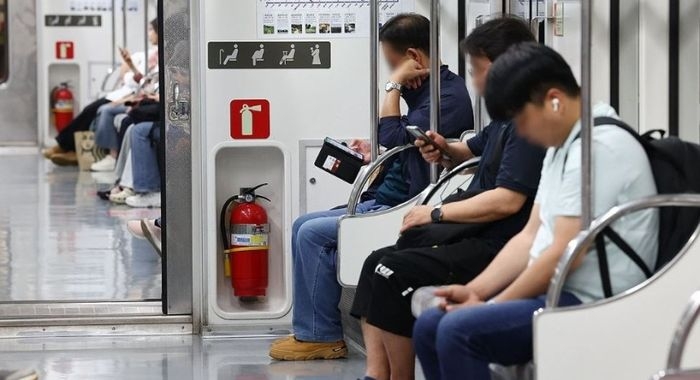
AI temperature-control system to be piloted on Line 4
“There are so many people — can’t you switch to maximum cooling?”, “It’s too cold — please turn the A/C down.”
In Seoul’s subway system during summer, passengers in the same car frequently file opposite complaints about heating and cooling at the same time. Of roughly 1.01 million total complaints Seoul Metro received last year, about 790,000 — or 78.4% — concerned heating and cooling. Most of those reported feeling overheated.
Seoul Metro plans to step up public guidance and outreach to address the seasonal surge in heating-and-cooling complaints. The agency says clearer explanations of how its systems operate will reduce passenger discomfort and improve its ability to respond to urgent cases.
According to Seoul Metro on the 22nd, heating-and-cooling complaints over the past five years have concentrated between May and September. With climate change lengthening heat waves and warm nights, such complaints have been increasing.
The agency explained that train heating and cooling are automatically controlled under Environment Ministry standards, not adjusted at the discretion of train crews. Under those standards, summer cabin temperatures are set between 24–27°C (75–81°F) and winter temperatures between 18–21°C (64–70°F). That limits the crew’s ability to intensify cooling for an individual car.
During peak commuting hours, crowding drives a spike in “it’s hot” complaints, while some passengers on the same trains simultaneously report that the A/C is too strong.
Seoul Metro’s hourly analysis of last year’s complaints shows concentrations during the morning commute (7–9 a.m.) and evening commute (6–8 p.m.). “It’s hot” reports accounted for roughly 72.8% of those cases — about 540,000 — and were heavily concentrated in peak hours.
To reduce complaints, the agency will expand informational stickers, post notices in the Ttota app, and produce short-form videos. Cooling-and-heating stickers already used on Lines 2 and 8 will be extended to Line 6.
The Ttota app will also display a warning at the top of the complaint screen noting that a surge in heating-and-cooling reports can hinder responses to emergencies such as medical incidents or crimes. Because more than 70% of complaints arrive through the app, Seoul Metro expects these measures to cut reporting volume.
Starting the last week of May, Seoul Metro will pilot an AI-driven cabin temperature-control system on one new Line 4 trainset, with plans to expand it to 25 new Line 4 trainsets thereafter. Trains dispatched from depots during peak hours will have air-conditioning and ventilation systems kept running, and the agency will continue efforts to improve cooling performance.
Seoul Metro recommends that passengers who feel hot sit near the car ends, which tend to be cooler than the center. Passengers who feel cold are advised to use the mild-cooling cars, which operate about 1°C higher than standard cars. On Lines 1, 3 and 4 those are the 4th and 7th cars; on Lines 5–7 the 4th and 5th cars; on Line 8 the 3rd and 4th cars. Line 2 does not operate separate mild-cooling cars because of high congestion.
Ma Hae-geun, head of operations at Seoul Metro, said, “Train heating and cooling are automatically controlled under Environment Ministry standards. Because crew members cannot arbitrarily adjust the air conditioning, we ask passengers for their understanding and cooperation so we can prioritize urgent incidents such as medical emergencies and crimes.”









Most Commented