
Translation result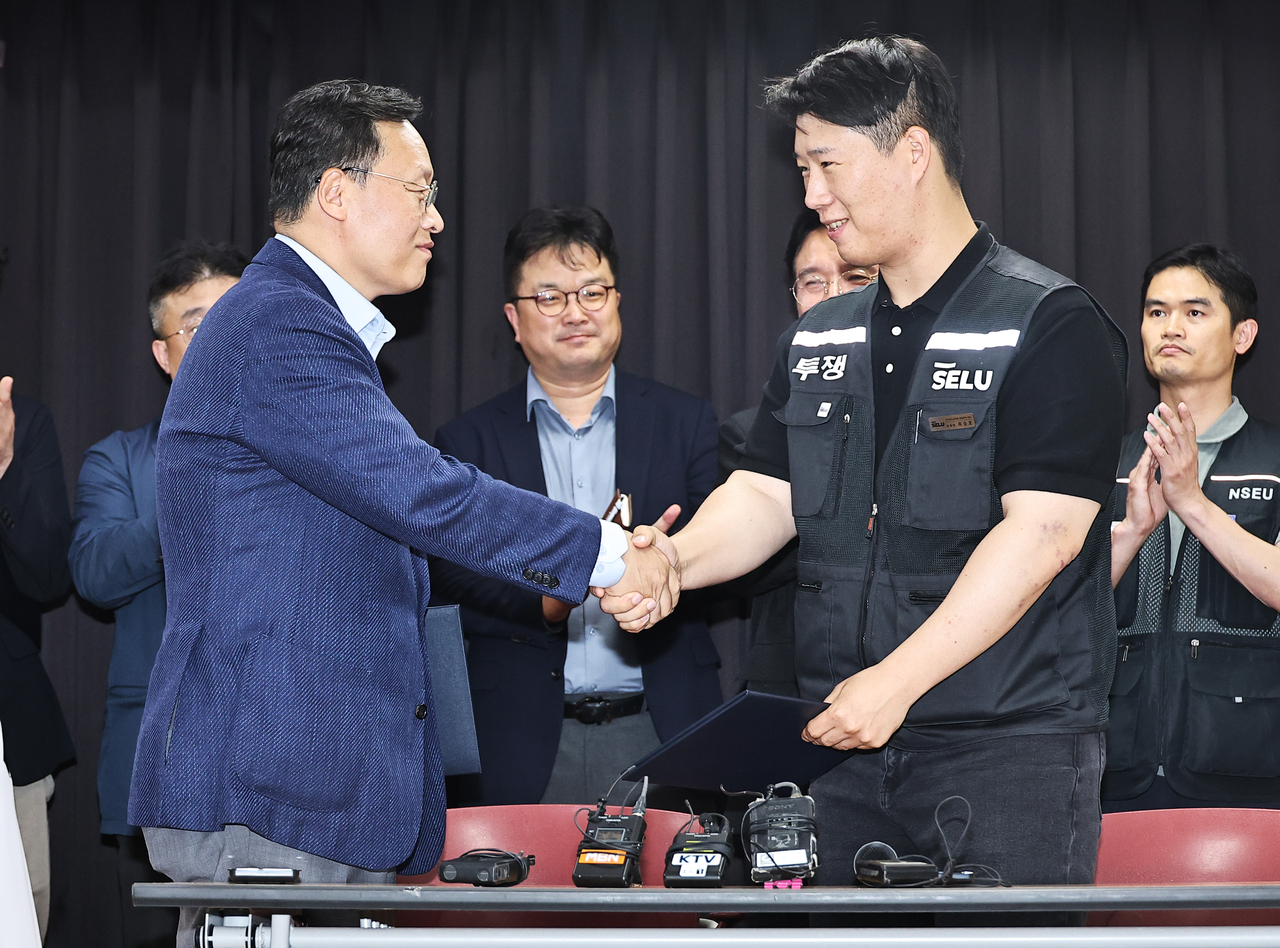 [Herald Economy=Reporter Jeon Sae-nal] Samsung Electronics’ management and its union reached a tentative agreement on wages and performance pay for 2026 after a looming general strike. The country’s two major labor federations argued that the gains must not remain confined to the prime contractor and called for profit-sharing with subcontractors and a stronger corporate commitment to social responsibility.
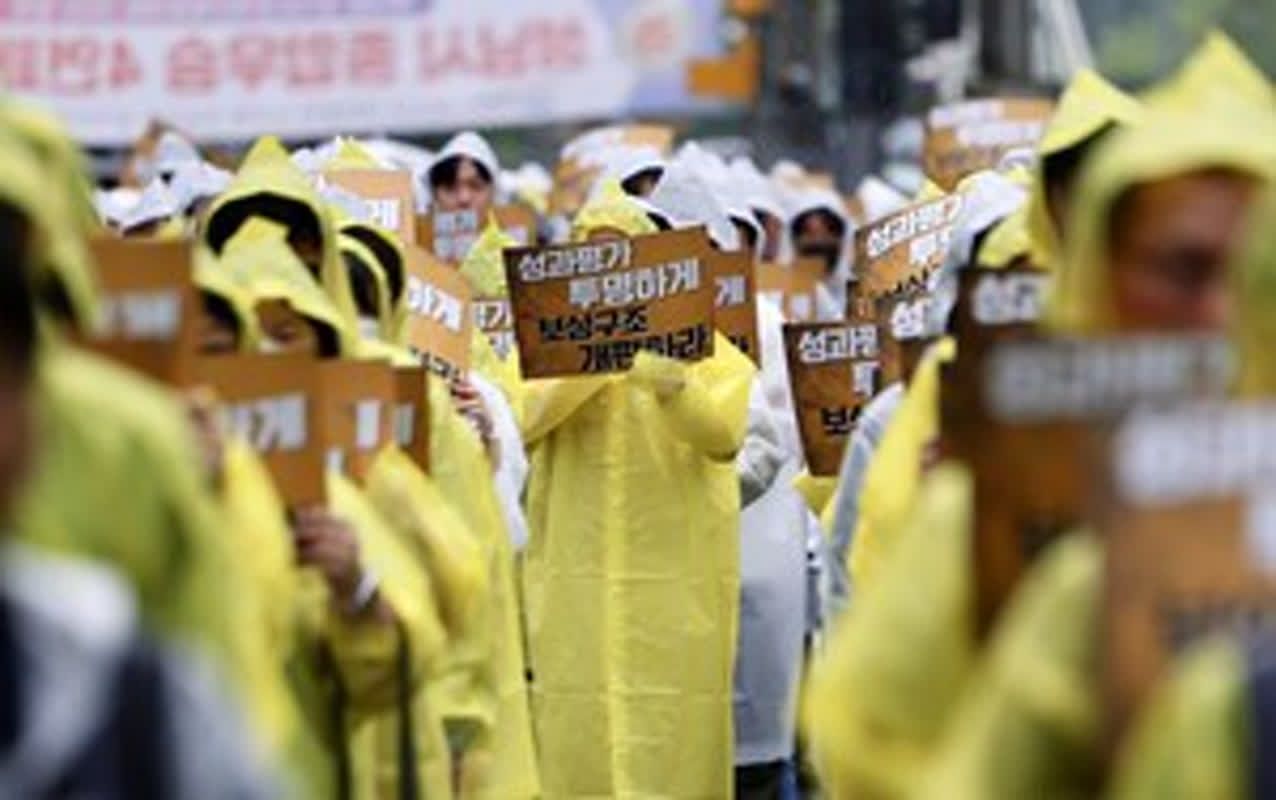
On May 21, the Korean Confederation of Trade Unions (KCTU) issued a statement saying, “Today’s Samsung union is the result of battles fought at great personal risk by victims of semiconductor industrial accidents and by temporary workers at Samsung Electronics Service.” The federation urged recognition that the sacrifices that cracked decades of Samsung’s no-union management made today’s agreement possible.
It added that the Samsung union has an obligation to remember this historical debt and to carry forward the spirit of those struggles.
The KCTU argued Samsung’s global success is not the sole preserve of the company’s permanent employees. Rather, it said, those achievements reflect collective labor — including subcontracted and supplier temporary workers who endured dangerous and difficult conditions — combined with local community infrastructure.
The federation insisted that the gains cannot be monopolized and demanded that the settlement’s benefits translate into better treatment for subcontract workers and reinvestment in their communities.
The KCTU also raised broader concerns about technological change and excess profits in the AI era, arguing that AI is a shared human asset and that profits derived from it should be used to support workers and communities facing technological unemployment and labor transitions. The union said the agreement leaves open the question of how excess profits should be distributed socially.
It urged the Samsung Electronics union to extend its reach beyond the workplace and build solidarity across the labor movement, relinquishing any privileged status as the union of a leading corporation and taking a leading role in improving rights for unorganized and vulnerable workers.
 The Federation of Korean Trade Unions (FKTU) also released a statement urging that corporate gains not remain solely with the prime contractor. It emphasized that Samsung Electronics’ growth and output were produced by the efforts of countless partner firms and workers.
The FKTU called for concrete reforms across the industry ecosystem so partner-company workers receive a fair share of the benefits. It urged improvements to supplier pricing structures, mechanisms to share technological and production gains, and stronger cooperative arrangements.
The federation also warned that companies like Samsung have grown with government support — including tax incentives, R&D subsidies, and infrastructure investment — and therefore must shoulder corresponding social responsibilities. It said corporations should actively pursue employment stability, better working conditions, and fair distribution of gains as forms of social return.
The FKTU urged the government to proactively devise fair distribution measures so the massive productivity and profits from technological innovation do not concentrate among a few. To address employment shifts from automation and the spread of humanoid technologies, it recommended institutionalizing employment impact assessments, strengthening social safety nets, and establishing fair tax and social-return systems, and called for active public debate on this broader social transition.
Samsung Electronics’ management and its union signed the tentative 2026 wage agreement on the night of May 20 at the Gyeonggi Employment and Labor Office in Suwon, Gyeonggi Province, a day before the planned general strike.











Most Commented