
Translation result.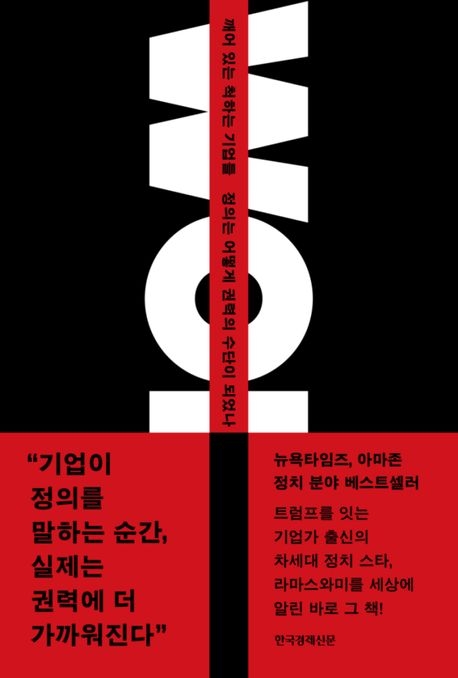 ▶Companies Pretending to Be Woke (Vivek Ramaswamy; trans. Kim Tae-hoon; Korea Economic Daily)= “Woke” denotes an awareness of social justice around race, gender and sexual orientation—a phenomenon that has recently reshaped American public life. The author, a first-generation Indian immigrant who became an entrepreneur and politician, charges that woke culture is often used by elites to divide the public and entrench their privileges. He contends that corporations publicly signal concern about racism, climate change and other social issues not from genuine conviction but to curry favor and obscure monopolistic power and close ties with regulators. By feigning progressive commitments, companies secure advantages such as deregulation and tax breaks. He warns that allowing unelected corporate actors to set and enforce social-value standards is corrosive to democratic governance.
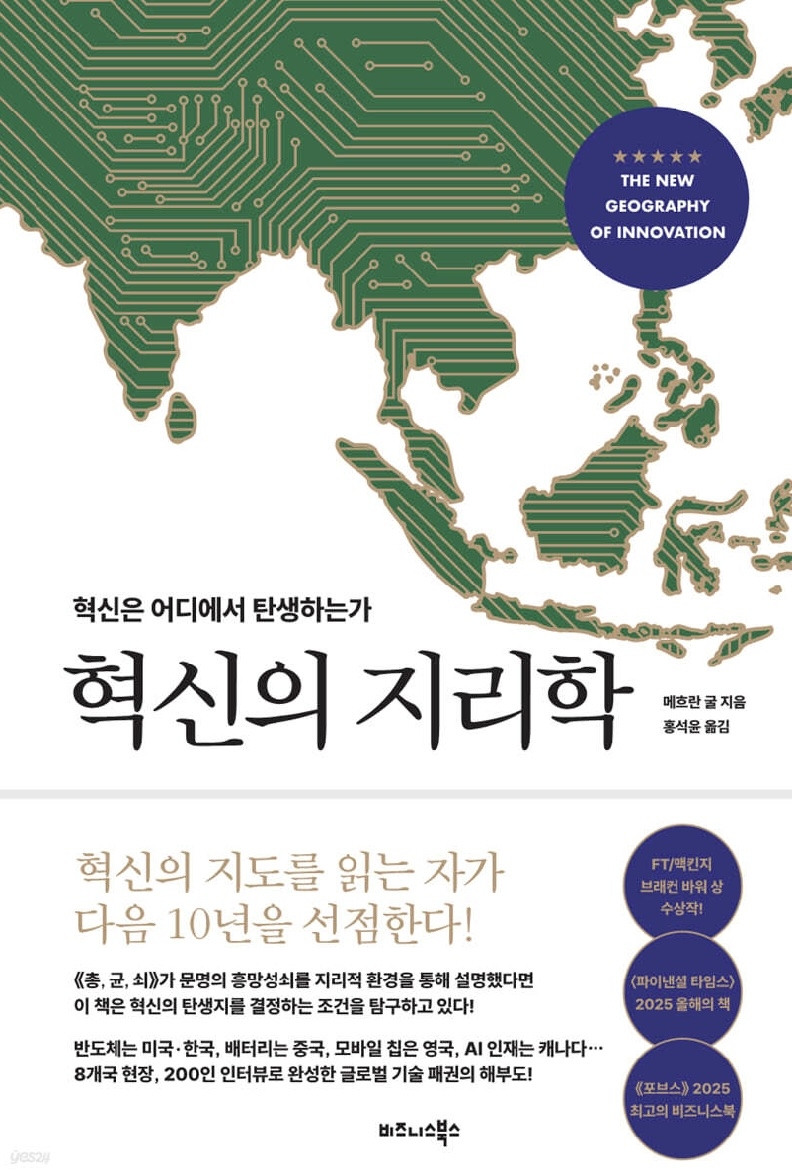 ▶The Geography of Innovation (Mehran Gul; trans. Hong Seok-yoon; BusinessBooks)= For decades, the dominant narrative of global innovation has centered on Silicon Valley. Business thinker Mehran Gul challenges that story in The Geography of Innovation, rejecting the notion that China merely scales what Silicon Valley invents while the rest remain spectators. Based on reporting from eight countries across three continents and meetings with the next wave of unicorns, Gul outlines how the next-generation global economy may take shape. He argues that the United States still possesses the world’s most powerful innovation ecosystem—concentrated with capital and talent—and that China has moved beyond imitation into original creation. Gul highlights Korea, now entering innovation’s second act, alongside the U.K., Singapore, Switzerland, Germany and Canada, each for distinct strengths: the U.K. as Europe’s largest hub, Singapore for its openness, Switzerland for its trust-based institutions, Germany for a dense network of small firms, and Canada for talent-friendly immigration policies. In the Korean edition’s foreword he calls Korea a technology leader pursuing a “super-gap,” asserting that any map of where innovation truly originates cannot omit Korea.
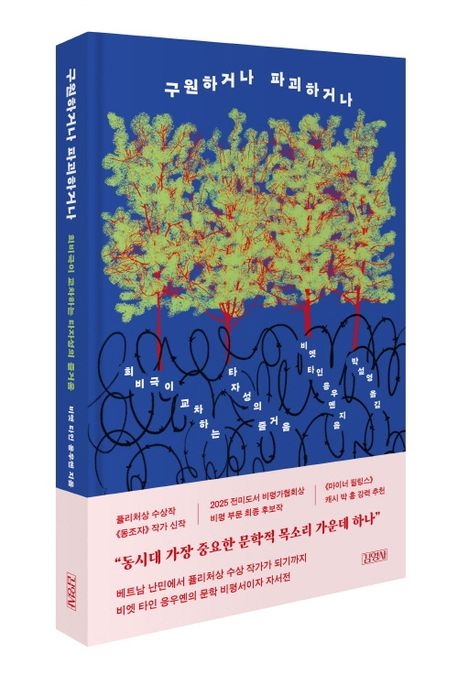 ▶To Save or to Destroy (Viet Thanh Nguyen; trans. Park Seol-young; Kim Young-sa)= The Pulitzer Prize–winning author examines a central question that runs through his work and life: what does it mean to write from the position of the other? As a Vietnamese American who never fully belonged to either side and who carries the identity of both refugee and child of refugees, Nguyen probes alterity, ethics, solidarity and the writer’s responsibility. He argues that a writer’s duty goes beyond speaking for another’s pain; it includes asking who is being silenced, why they are silenced, and which forces erase entire communities of voices. For him, writing must confront fear and tragedy without turning away, transform them into something that can still hold beauty, and open paths to reach strangers. Rather than a limited solidarity that protects only those who resemble us or belong to our communities, he advocates an expansive solidarity that defends the lives of those excluded and attacked within the imperial order of the United States.











Most Commented