
Union and management trade blame after talks collapse
DS unit splits between memory and non-memory teams
Government treads carefully on labor ahead of local elections
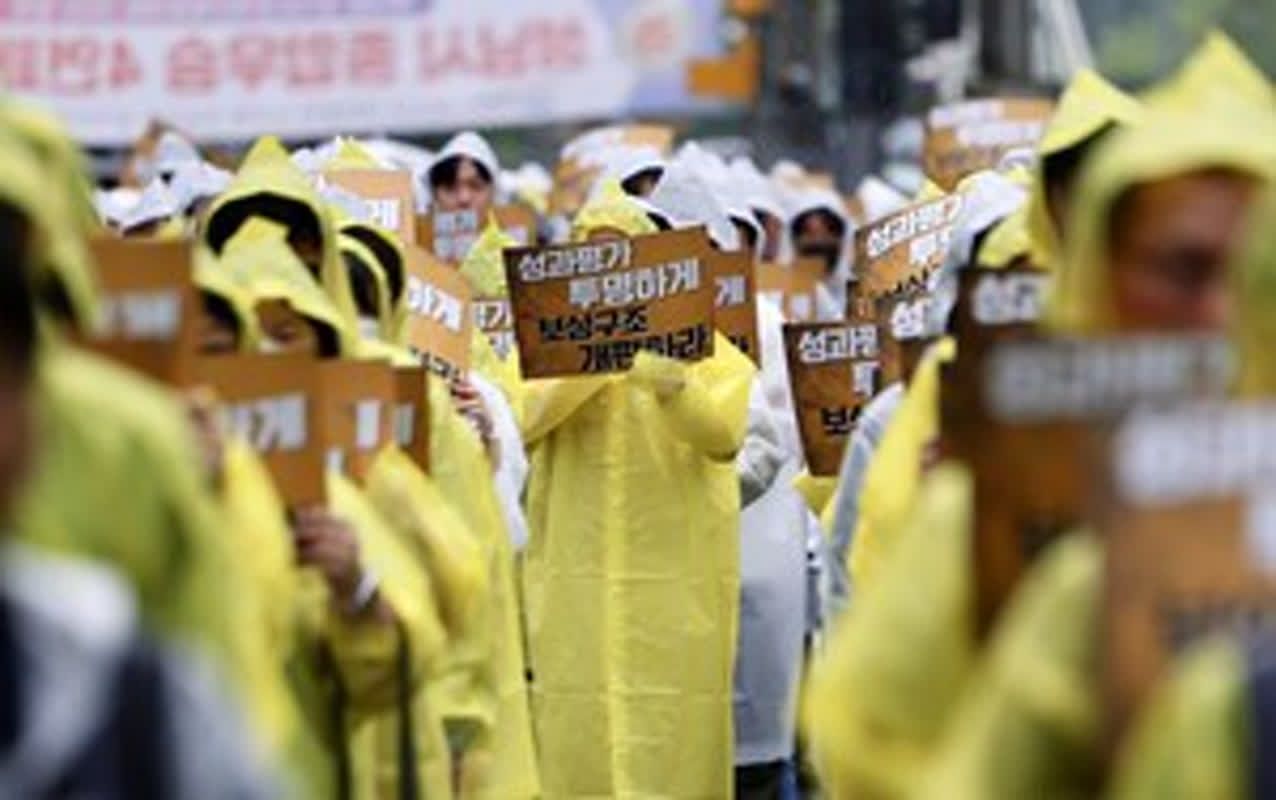
[Asia Times=Park Yo-don] Samsung Electronics and its union continued last-minute talks up to the day before a scheduled general strike but failed to reach agreement. The union said it will go ahead with the strike on the 21st as planned.

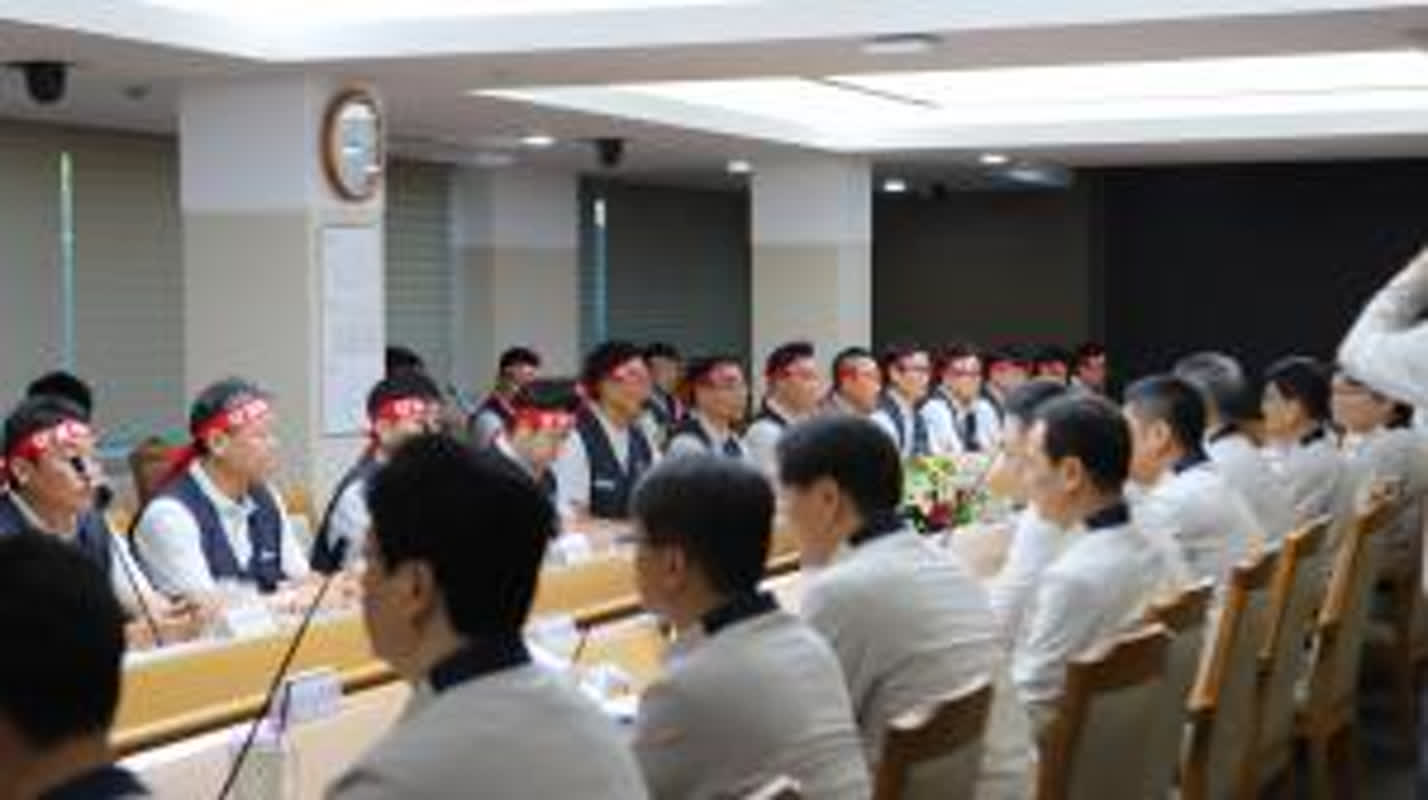
Industry sources say the Central Labor Relations Commission’s post-mediation session on the 20th ended without agreement after management declined to take a firm position despite the union’s acceptance of the commission’s proposal. Immediately after the talks collapsed, both sides blamed each other and launched a fierce public dispute.
Union chair Choi Seung-ho issued a statement saying management “kept repeating that it had not made a decision” and ultimately failed to announce a position. He expressed deep regret that the post-mediation process ended because of delayed decisions by management, and repeatedly emphasized that the union had “agreed” to the commission’s proposal.
Management, by contrast, blamed the union for the breakdown, arguing that accepting the union’s excessive demands would undermine the company’s core management principles. Management said the union continued to press for compensation for loss-making business units at levels the company believed would be difficult for society to accept, even after the company agreed to most of the proposed size and structure of performance bonuses.
The dispute has even sparked friction between employee groups. Most members of the cross-company union belong to the semiconductor (DS) unit, but DX (mobile and home appliances) and the Samsung Electronics Workers’ Union (Donghaeng Union) also supported the planned strike. However, when negotiations focused on the DS unit and excluded DX, complaints surged and many members resigned.
The conflict intensified after Choi posted a lengthy message to the union’s Telegram channel on the 19th following the first day of talks at the Central Labor Relations Commission. He wrote, “When this wraps up, let’s consider splitting the union,” adding, “Honestly, DX is unbearable.”
Internal tensions have also spread within DS between the memory and non-memory business units. The union has demanded that the bonus pool be allocated on a “70% to divisions, 30% to business units” basis. Under that formula, 70% of DS’s total bonus pool would be distributed without separating business units, narrowing the compensation gap between profitable and loss-making units. That structure would reduce the bonus disparity between the profitable memory unit and a loss-making non-memory unit even if the latter remained unprofitable.
Management opposed the proposal, saying it would violate merit-based pay principles because employees in loss-making units could receive annual bonuses on the order of “several hundred million KRW (approximately $75,000–$675,000).” Such payouts, management argued, would undermine performance-based personnel standards.
When it became clear that compensation criteria for loss-making units were central to the impasse, some memory-unit employees protested, saying, “Losses keep piling up, yet they want the same bonuses as memory.”
The ball has now moved to the government. If the government invokes emergency mediation authority, the union must suspend strike activity immediately and may not resume it for 30 days. But officials have not adopted a unified position.
On the 17th, Prime Minister Kim Min-seok warned in a public address that authorities would consider “all possible measures, including emergency mediation,” if the strike threatened serious damage to the national economy. President Lee Jae-myung also hinted at invoking emergency mediation during a cabinet meeting on the 20th, warning that companies have many stakeholders and that none should cross a line unilaterally. Still, the Ministry of Employment and Labor has taken a cautious stance, saying it is premature to consider emergency mediation in the Samsung case.
Political calculations appear to be driving that caution. With local elections approaching next month, officials likely hesitate to play the emergency-mediation card and risk provoking fierce labor backlash. Even while seeking to avert massive economic losses, authorities are concerned a hard-line move could hurt the ruling Democratic Party.
The prolonged dispute has dealt a serious blow to Samsung’s corporate image and public trust. After years of dealing with owner-related risks tied to Chairman Lee Jae-yong, Samsung now faces a new uncertainty from “union risk.” Some observers say management’s complacent and clumsy handling helped escalate the conflict — it is rare for a labor dispute to deteriorate to the point of potential presidential intervention, even at companies like Hyundai Motor, which face annual bargaining battles.
The union plans to proceed with the general strike on the 21st as announced, but both sides say they will keep lines of communication open.
Lee Doh-hyung, director of the Hongik Institute for Political Economy, said the parties have shown an unrefined approach, with nearly everything discussed in negotiations shared in real time with the public. He urged resolution through dialogue and compromise and warned against escalating the dispute to extremes. He also recommended that the government consider emergency mediation if necessary to prevent serious damage to the national economy.
Separately from the Central Labor Relations Commission’s post-mediation, additional negotiations under Labor Minister Kim Young-hoon began at 4 p.m. today, raising the possibility of a last-minute, dramatic agreement.
The Ministry of Employment and Labor said this bargaining is a direct negotiation between the parties, not a post-mediation by the Central Labor Relations Commission, and that the minister will play a supporting role.










Most Commented