
How 6-Hour Grocery Trips Highlight the Crisis of Food Deserts in South Korea’s Declining Rural Areas
Daniel Kim Views
You can read South Korea’s future through its cities. Some face extinction, while others are straining under overcrowding. Industries wobble, caregiving falls short, and development often clashes with daily life. For the June 3 local elections, SisaWeek launched a series called “Dopamine (Reading South Korea’s Future Through Its Cities)” to examine two trends: cities that are disappearing and cities that are emerging. We analyze the challenges these cities face today and the pledges candidates running in the local elections are making, looking for the country’s future “dopamine” in the everyday life of its cities. [Editor’s note]
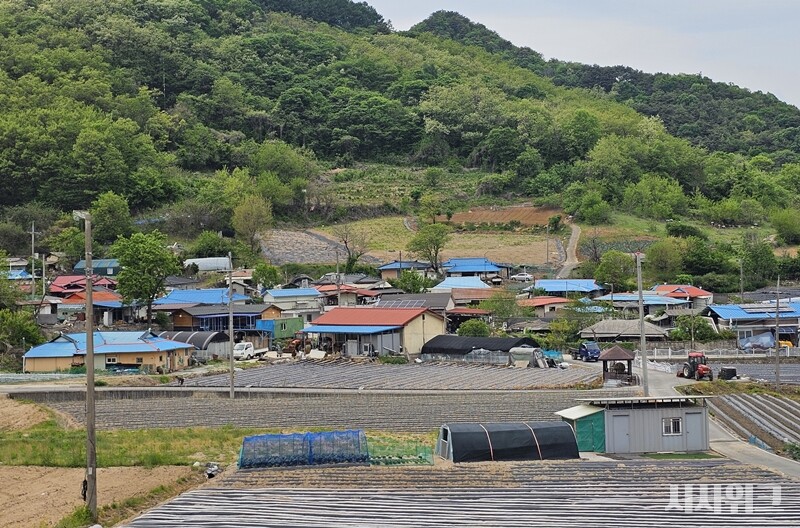
SisaWeek | Danyang—Reporter Jeon Du-seong The population decline in many local areas sets off a vicious cycle of daily inconvenience. As people leave, communities become “food deserts” with no nearby fresh-food outlets, and inadequate transportation infrastructure only deepens the problem.
In one village in Danyang County, North Chungcheong Province—an area experiencing population loss—residents sometimes needed as much as 6 hours to buy groceries using public transportation. Even more troubling, these conditions can jeopardize residents’ health: food deserts lead to nutritional imbalances, and poor transport links limit access to medical care.
◇ 6 depopulating areas also face retail declines and transport shortfalls
“Depopulating areas” denotes cities and counties designated by presidential decree as at risk of local extinction due to population decline, using criteria such as birth rates, the share of residents aged 65 and over, the share under 14, or the working-age population (Special Act on Decentralization and Regional Balanced Development, Article 2).
The Ministry of the Interior and Safety has identified 89 such cities and counties: 3 in Busan, 3 in Daegu, 2 in Incheon, 2 in Gyeonggi, 12 in Gangwon, 6 in North Chungcheong, 9 in South Chungcheong, 10 in North Jeolla, 16 in South Jeolla, 15 in North Gyeongsang, and 11 in South Gyeongsang. In some of these places, declines in retail businesses coincide with weakened transportation infrastructure, producing tangible hardships for residents.
According to the Korean Statistical Information Service (KOSIS), retail businesses have shrunk in 8 depopulating areas: Dong-gu and Seo-gu in Busan; Danyang County in North Chungcheong; Jangsu County in North Jeolla; Gurye County in South Jeolla; Bonghwa County and Yeongdeok County in North Gyeongsang; and Hapcheon County in South Gyeongsang. Among these, 6 areas—Danyang, Jangsu, Gurye, Bonghwa, Yeongdeok, and Hapcheon—also face transportation gaps. In some administrative villages within these counties, no local (town or village) bus service operates at all.
In the 2020 Agricultural and Fisheries Census, Danyang County reported that buses served 145 of its 150 administrative villages—meaning 5 villages had no town-bus service. In Jangsu and Gurye, buses served 199 of 214 and 140 of 155 administrative villages, respectively.
Bonghwa and Yeongdeok operated town buses in only 137 of 157 and 188 of 204 administrative villages, respectively. Hapcheon had no town-bus service in 49 administrative villages—only 326 of its 375 villages were served. Except for Gurye, the other 5 areas had more villages with fewer than 10 daily town-bus runs than villages with 10 or more runs.
◇ In Duhang-ri, grocery shopping can take 6 hours
The daily-inconvenience problem is stark in one Danyang village. With no nearby supermarket or convenience store and limited public transit, residents sometimes spend nearly 6 hours to buy groceries.
In rural Korea, a food desert is defined as a place with no fresh-food outlet within 16 km of a residence. Duhang-ri qualifies: it is roughly 21 km from Danyang Nonghyup Hanaro Mart in Dojeon-ri, Danyang-eup—the town locals call “downtown.”
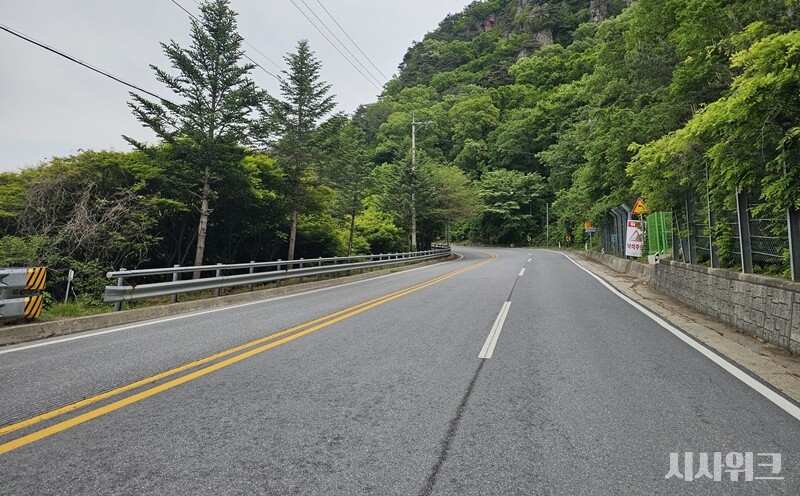
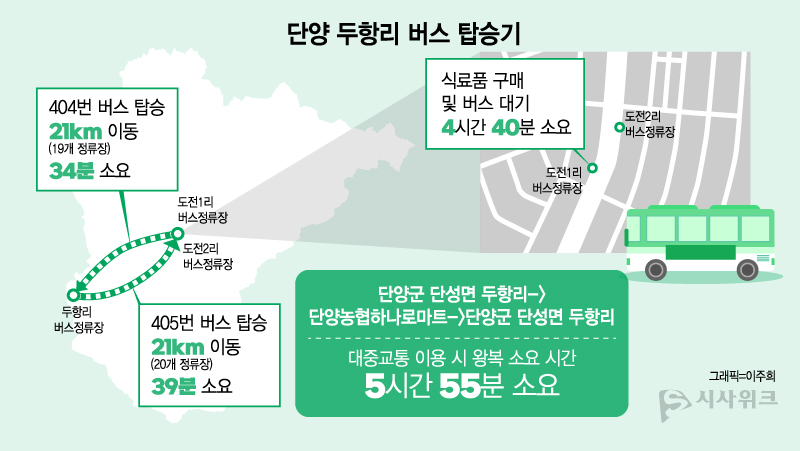
On the morning of the 12th, the reporter boarded bus No. 405 at the Duhang-ri stop at 9:13 a.m. and arrived at the Dojeon 2-ri stop opposite the mart at 9:52 a.m., about 40 minutes later.
Shopping for tofu and other groceries took roughly 10 minutes. The longer delay was waiting for the return bus to Duhang-ri. Only 4 buses serve Duhang-ri each day, so after boarding a morning bus, residents often must wait about 4 hours and 20 minutes at the same stop for the next return service.
At 2:34 p.m., the reporter took bus No. 404 from the Dojeon 1-ri stop and arrived in Duhang-ri about 40 minutes later, at 3:08 p.m. Including wait times, the round trip to buy groceries by public transit took 5 hours and 55 minutes.
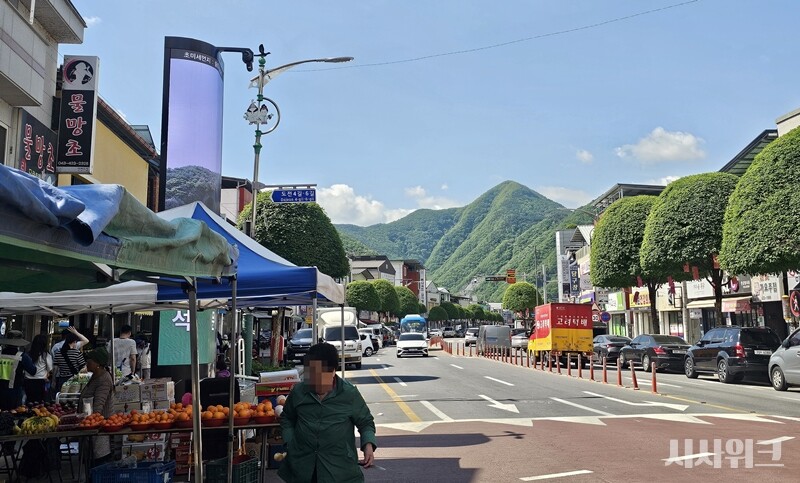
Because of this, Duhang-ri residents often rely on neighbors’ cars to reach town markets. But the problem is wider than Duhang-ri—many residents across Danyang complain that markets are scarce nearby.
An 80-year-old woman in Dangdong-ri, Daegang-myeon, said, “There used to be two shops in our village, but they’re gone now. It’s very inconvenient. I wish someone would open a store here.” Another resident blamed the small population for higher prices. A 77-year-old woman in Yangdang-ri, Danseong-myeon, said, “There aren’t many people here, so prices are high. That’s why I buy cucumbers and young radish in Seoul and bring them back.”
The larger worry is public health. Persistent food deserts can cause nutritional deficiencies and imbalances that weaken immunity and raise disease vulnerability—while weak medical infrastructure leaves residents with limited access to care.
An 84-year-old woman in Duhang-ri said, “You have to take a bus by yourself to go to the hospital. Danyang doesn’t have a large hospital. Jecheon Myungji Hospital in North Chungcheong functions as the general hospital. Otherwise, you have to go to Wonju in Gangwon Province.”
As this vicious cycle repeats in depopulating areas, we will analyze what candidates running in this year’s June 3 local elections—and past local-election candidates—have pledged to address these problems in the next installment (emphasizing transport-focused and outreach-style pledges).













Most Commented