
Translation result
Union holds to strike plan despite executives’ full mobilization to Pyeongtaek
Labor Minister Kim Young-hoon meets the union today and plans to meet Samsung executives tomorrow
From DX injunctions to shareholder damage claims, the dispute has moved beyond pay to supply-chain risk
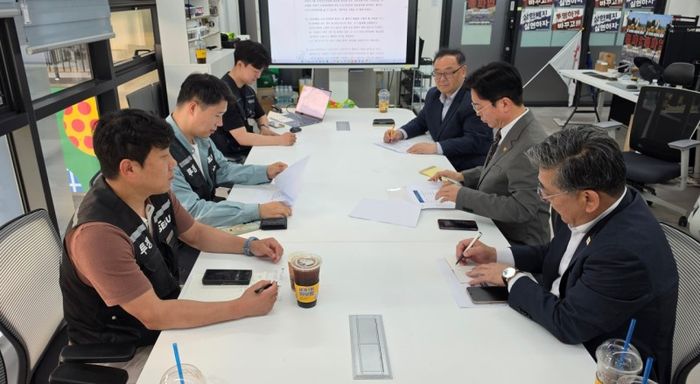
Fault lines around a planned company-wide Samsung strike have widened into what increasingly looks like an all-out confrontation. The union has reiterated it will only resume talks after June 7 and remains committed to pressing ahead with the strike. Management has deployed official letters, public apologies and on-site meetings in a last effort to avert it. The government has also raised its mediation effort: the labor minister visited the Pyeongtaek union office in person and is scheduled to meet Samsung executives tomorrow.
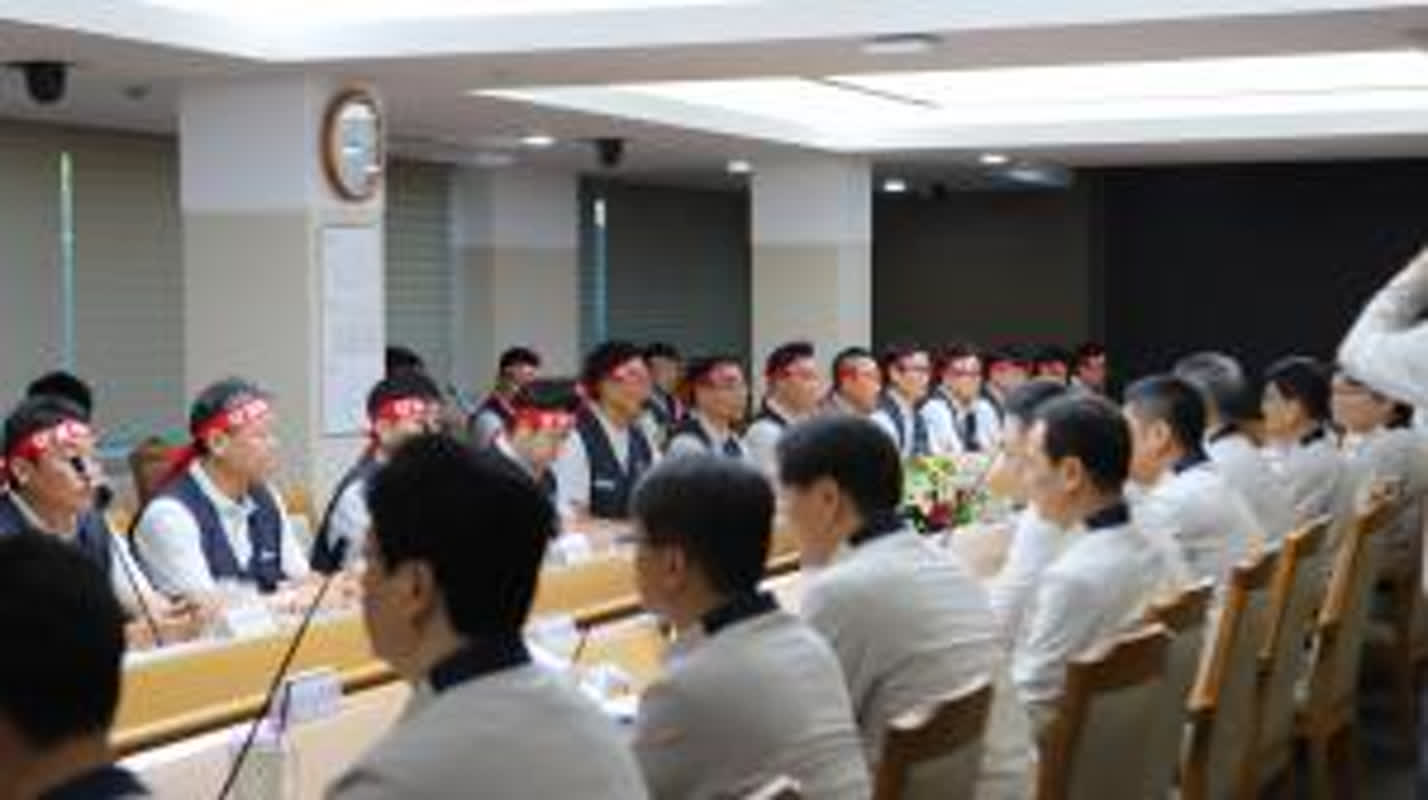
Industry sources say senior leaders from Samsung Electronics’ Device Solutions (DS) division visited the Pyeongtaek campus on the 15th to meet Choi Seung-ho, chair of the Cross-Company Union’s Samsung branch, and other union executives. The delegation included Jeon Young-hyun, head of DS (vice chairman); Kim Yong-gwan, president in charge of DS management strategy; Han Jin-man, president and head of the foundry business; and CTO Song Jae-hyuk.
With only six days until the planned June 21 strike, DS executives went to Pyeongtaek themselves. When the union refused management’s written request to reopen talks—insisting negotiations would begin only after June 7—company officials reportedly became deeply alarmed.
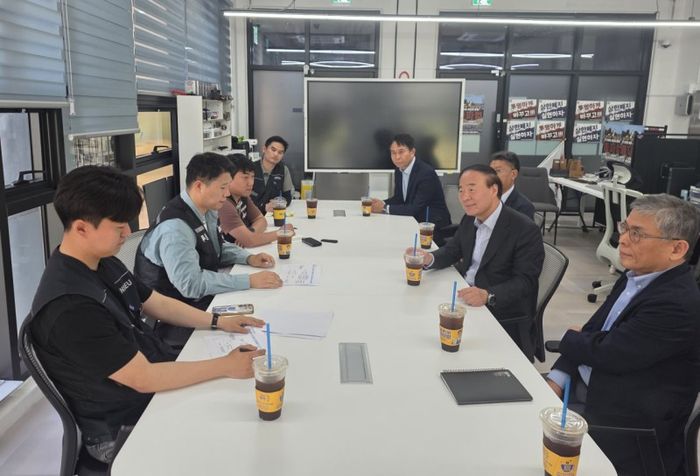
Executives mobilize en masse… We can’t let semiconductor production stop
Earlier that morning, Samsung sent the union an official letter proposing an unconditional meeting to talk. The company offered to retain the existing OPI (excess profit performance bonus) system while exploring an uncapped special compensation plan as a possible compromise. Executives also issued a public apology, saying they regretted causing concern among the public, the government and shareholders.
Executives emphasized that semiconductor manufacturing is a continuous, 24/7 process and must not be interrupted. They warned that failing to meet customer commitments would erode crucial trust. Although framed as an appeal to the public, industry insiders interpreted the message as a direct warning that a strike would cause production disruption and harm customer confidence.
Jeon Young-hyun reportedly told executives at a recent management briefing that the current market upswing represents the last “golden window” to restore fundamental competitiveness. That language signals the company sees the dispute as more than a wage fight: it frames the conflict as a threat to HBM and foundry competitiveness and to global customer trust.
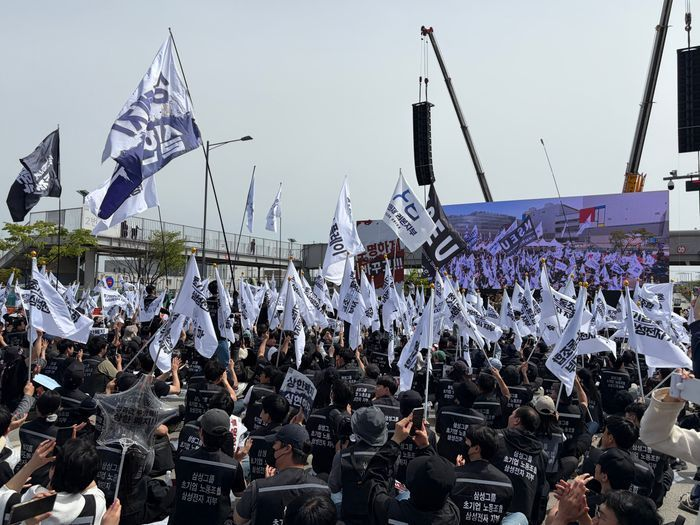
We’ll strike first and negotiate after June… Union holds firm
The union has not softened its demands. It insists on fixing 15% of DS division operating profit as the bonus pool, removing the OPI cap and institutionalizing the system. The union has maintained a hard line, even releasing transcripts from post-adjustment talks at the Central Labor Relations Commission.
The released transcript quotes Chair Choi saying, “We won’t talk to the company unless the 15% cap comes off.” It also records him criticizing the company’s chief negotiator, Vice President Kim Hyung-ro, accusing him of not understanding semiconductors and of distorting performance figures. At his meeting with Labor Minister Kim Young-hoon, the union reportedly demanded the company replace its lead negotiator and demonstrate a substantive shift in position.
Labor minister visits Pyeongtaek… Government steps up mediation
The government’s involvement has escalated rapidly. Labor Minister Kim Young-hoon visited the union office on the Pyeongtaek campus and met union leaders—a rare direct intervention by a labor minister. Kim is also expected to meet Samsung Electronics management on the 16th.
Observers say the government has moved beyond general calls for dialogue to on-the-ground mediation. Trade Minister Kim Jung-kwan publicly warned the day before that invoking emergency adjustment powers would be unavoidable if a strike occurred, and the presidential office has been monitoring developments closely.
DX injunctions and shareholder damage claims… Conflict expands beyond labor issues
The dispute has quickly spilled into legal and social arenas. Samsung has filed for an injunction to prohibit unlawful strike actions. Members of the DX (Device eXperience) division are reportedly preparing a separate injunction against the Cross-Company Union, complaining that the union’s demands focus primarily on DS. Within DX, there are complaints that only DS-centered demands are being advanced.
Shareholder groups have also stepped up pressure. The Korea Shareholder Movement Center warned that the union’s blanket demand to allocate 15% of operating profit could amount to an illegal dividend and breach capital maintenance rules, and said it would consider claims for damages and breach-of-duty if the strike proceeds. Analysts note that the dispute has shifted from a pure wage negotiation to a debate over supply chains, the national economy and shareholder rights. The industry is especially viewing the situation through the lens of AI semiconductor supply-chain risk.
Semiconductor manufacturing is a continuous process; when a production line stops, short-term recovery is difficult. Wafer processes must run 24/7, and even a single-line disruption can disrupt customer delivery schedules and damage trust. Those realities have intensified supply-chain concerns and broadened worries both inside and outside the company.
Injunction hearing on the 20th could be the strike's biggest variable
The key variables going forward are whether Labor Ministry coordination will restart negotiations and the court’s ruling on the injunction banning unlawful strike actions, scheduled for the 20th. If the court issues restrictions related to production facilities or safety equipment, the form and intensity of any strike could change significantly.
Government insiders continue to discuss the prospect of invoking emergency adjustment powers. But that measure would ban strike activity for 30 days and carry heavy political costs. Given the current administration’s pro-labor posture, directly intervening to halt a major semiconductor strike could be politically sensitive.
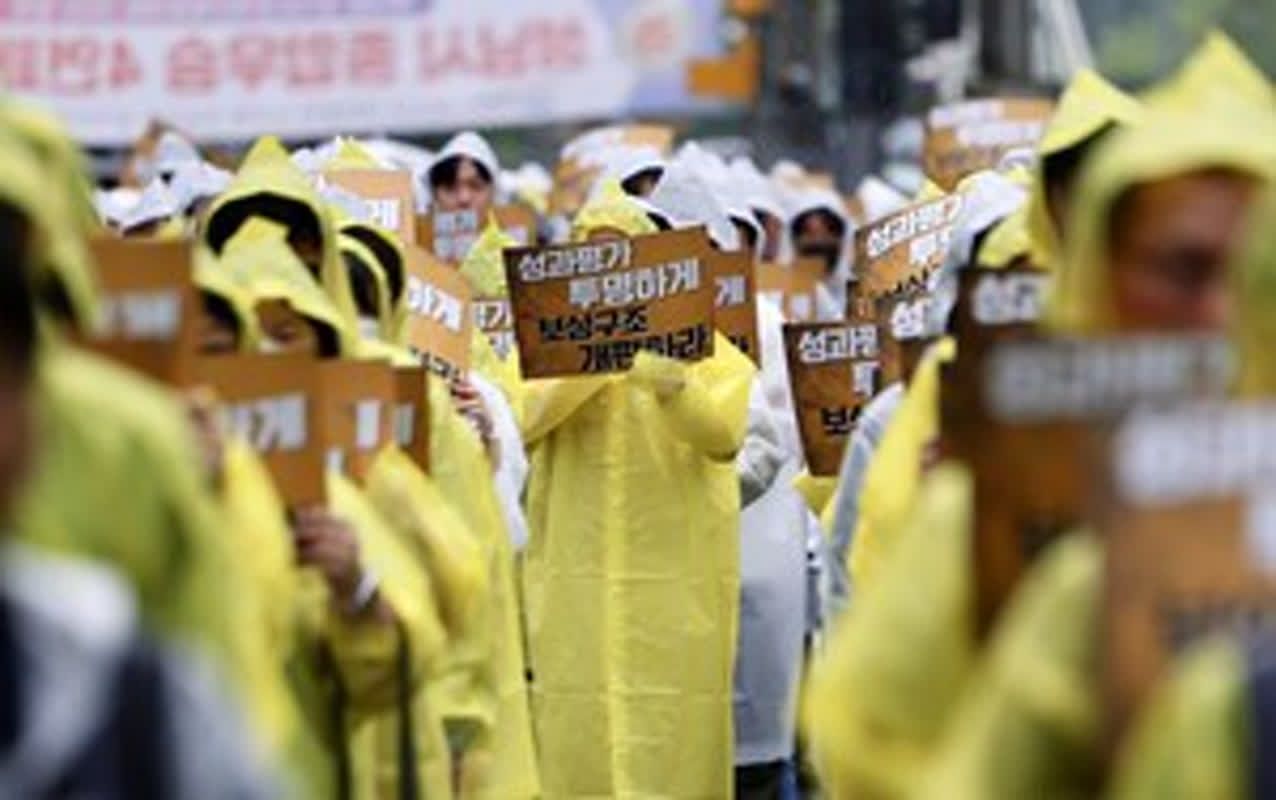
Industry observers suspect the government will prioritize last-minute mediation and compromise over invoking emergency powers. The union has scheduled an 18-day strike from June 21 through July 7. Given current momentum, sources say the default expectation is that the union will follow through, leaving government mediation and the court’s decision as the decisive factors.
© Dailian Co. Unauthorized reproduction and redistribution prohibited
- ‘Hyundai union demanded 30% of net profit as bonuses’… Chung Eui-sun answered with ‘national development’ [Interview]
- Even 40 trillion KRW (approximately 30 billion USD) isn’t enough… Will the Samsung union insist on permanent bonuses?
- Metalworkers’ union: If authorities invoke emergency adjustment powers over a Samsung strike, we’ll fight
- Samsung Electronics and SK Hynix close sharply down… Financial authorities issue a warning to retail investors
- KOSPI falls after hitting 8,000… market gives back the 7,500 level amid foreign and institutional selling [Market]










Most Commented