
Samsung Electronics Strike Countdown: Will Government Intervention Save the Economy?
Daniel Kim Views
Translation result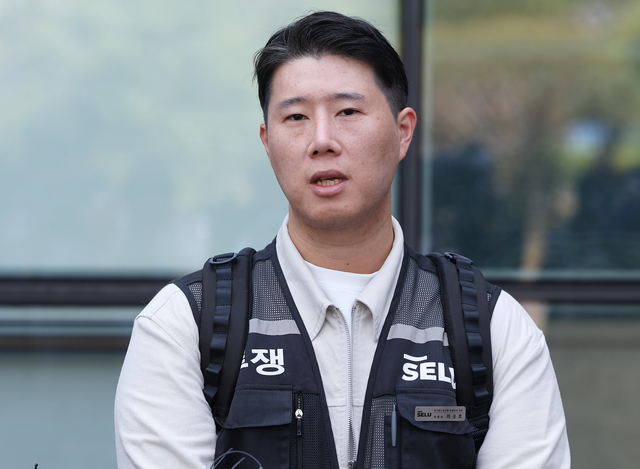 With a week to go before a planned general strike by Samsung Electronics’ union, sharp divisions over whether the government should invoke emergency mediation authority have heightened tensions among business leaders, academics and labor groups.
Industry sources said on May 14 that Choi Seung-ho, chair of the Samsung Electronics branch of the cross-company union, strongly rejected a post-mediation settlement the Central Labor Relations Commission recently proposed, calling it \”nonsense.\” The commission floated an unprecedented offer to award a special bonus equal to 12% of operating profit if the semiconductor (DS) division became the industry’s top performer, but Choi refused even to submit that plan to a membership vote. He remains firm in demanding a 15% share of operating profit, the removal of the performance-bonus cap and formal institutionalization of the system.
As the planned strike date of May 21 nears, academics and business leaders have urged the government to intervene to prevent harm to the national economy. Park Ji-soon, a professor at Korea University’s Law School, recommended invoking emergency mediation authority, saying a Samsung Electronics general strike would have a massive impact on the national economy.
Emergency mediation allows the minister of employment and labor to intervene when industrial action risks seriously harming the national economy; if invoked, it bars strikes for 30 days.
The Korean Confederation of Trade Unions (KCTU) issued an immediate rebuttal, saying, \”We strongly oppose any attempt to shrink workers’ constitutional rights on the basis of economic logic.\” The KCTU argued that emergency mediation should remain an exceptional, last-resort measure reserved for situations that pose a serious risk to life and safety. It warned that limiting collective action solely because an industry is large would set a dangerous precedent that could erode labor rights across the nation’s strategic industries.
The KCTU also placed responsibility on Samsung’s management, saying the company long pursued a no-union policy, failed to guarantee meaningful bargaining structures and treated workplace relations as a matter of control and oversight. \”Before talking about semiconductor competitiveness, the rights and dignity of the workers who sustain the industry must be secured,\” the union said, urging the government to uphold the principle of autonomous labor-management negotiations.
The Ministry of Employment and Labor said it will do its best to facilitate talks to avert a strike, but deepening rifts between labor and management and the unions’ strong opposition have raised concerns that the Samsung dispute could escalate into a broader confrontation between the government and the labor movement.











Most Commented