
Samsung Electronics Faces Potential Strike: Will Labor Negotiations End in Agreement?
Daniel Kim Views
Translation result
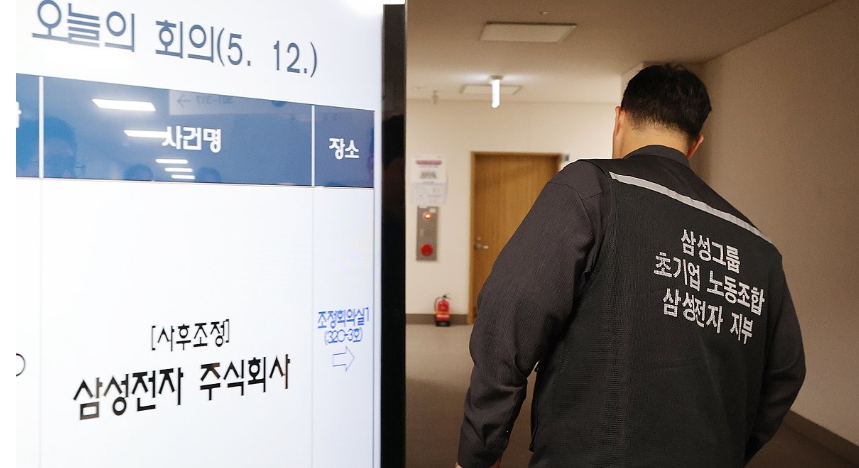
Samsung Electronics and its union are engaged in final negotiations over formalizing performance bonuses. After bilateral talks failed to produce common ground, the Central Labor Relations Commission (CLRC) has stepped in to craft a proposal, and a companywide strike—the second in Samsung’s history—remains a possibility.
On the 12th, industry sources said Samsung and the union resumed last-ditch talks during the second post-adjustment wage negotiation session at the CLRC in the Government Complex Sejong. The meeting, which began at 10:00 a.m., ran well past 11:00 p.m., stretching for more than 13 hours.
The parties entered the post-adjustment procedure under government mediation on the 11th. The first session, held the previous day, lasted about 11 hours and 30 minutes—from 10:00 a.m. to 9:30 p.m.—but ended without an agreement.
Negotiators remain deadlocked over the size of the bonus pool and whether payment criteria should be codified in writing.
The Trans-Enterprise Union’s Samsung Electronics branch, Samsung’s largest union, is demanding that 15% of operating profit be allocated to the bonus pool and that any payout cap be removed. The union also wants those payment criteria written into the collective bargaining agreement to institutionalize the system.
If allocating 15% of operating profit proves infeasible, the union has proposed expanding the OPI stock-compensation program to allow stock-based rewards in lieu of cash bonuses.
Choi Seung-ho, head of the Trans-Enterprise Union’s Samsung Electronics branch, said in negotiations, “The company still insists on a 10% operating-profit allocation and keeps repeating that it cannot accommodate non-memory divisions.”
The company, meanwhile, is pressing to retain the current benchmark—about 10% of operating profit—for the bonus pool. It says it can deliver top-tier rewards through special, performance-based awards when warranted, but it is reluctant to lock the bonus system into a fixed, written framework.
Initially, the union said it would end talks if the CLRC did not present a proposal by 8:20 p.m., but its representatives remained in the meeting room and negotiations continued.
The CLRC is now working to draft a compromise based on both sides’ demands. The commission has signaled it will keep discussions going in hopes of producing an agreement; talks could extend into the following day.
Industry observers say accepting the CLRC’s mediation could avert a companywide strike, but if talks collapse, the strike scheduled to begin on the 21st is likely to proceed.
With semiconductor demand recovering and the market for AI chips expanding, concerns over production disruptions have heightened tensions in government and industry. Analysts estimate a strike could cause losses of up to 30 trillion KRW (about 22.5 billion USD).













Most Commented