
How Choo Mi-ae Honors the Legacy of Comfort Women: Insights from the 49th Memorial of Kang Il-chul
Daniel Kim Views
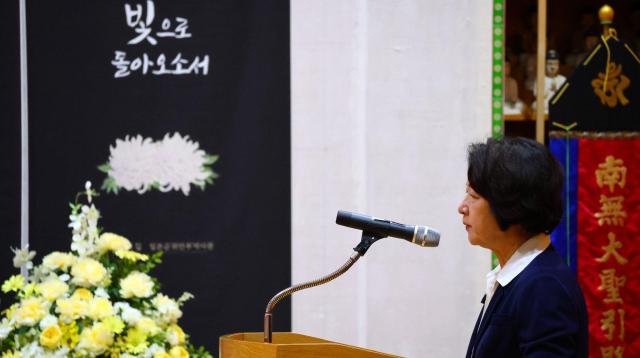
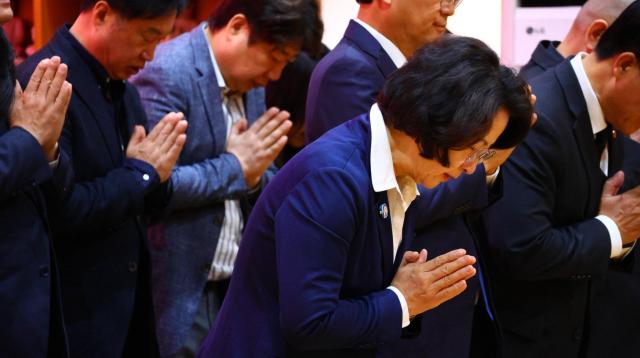
Democratic Party candidate for Gyeonggi governor Choo Mi-ae visited the House of Sharing in Gwangju, Gyeonggi Province, met with Venerable Se-young and attended the sixth of the 49-day memorial rites for the late survivor Kang Il-chul.
On May 8, Choo wrote on her social media that she had met the late survivor several times at past Wednesday demonstrations and at the House of Sharing. She said Kang’s life and testimony helped move issues of war, state violence and human-rights abuses into the public agenda.
Choo noted that Kang did not leave her wounds unspoken but confronted them publicly, and she stressed that the survivor’s courage exposed historical truths and renewed attention to human-rights concerns.
She added that human-rights values must not be confined to commemorations, arguing that solidarity, documentation and collective memory are essential to prevent war and protect citizens from state violence.
Choo pledged, “We will set historical justice right, fully record the grandmothers’ noble lives and remember them forever,” writing that she would begin upholding human rights and the value of life from Gyeonggi Province, where the House of Sharing is located.
She also recalled that, while serving as her party’s leader, she was asked by an official of Japan’s Liberal Democratic Party to remove the Statue of Peace, and that Japanese reporters questioned her about the statue at an overseas press briefing.
At the time, Choo said she replied that the statue is not an eyesore but a symbol of peace for humanity, and that any discomfort it provokes should prompt reflection and remorse over human-rights violations.
Meanwhile, the late Kang Il-chul’s 49-day memorial rites began with the ojae ceremony on May 1 at Suwonsa Temple in Suwon, continued with the yukjae on May 8 at the House of Sharing, and the final makjae is scheduled for May 15 at Jogyesa Temple in Seoul. Kang passed away on March 28, and the number of surviving victims of the Japanese military’s “comfort women” system has fallen to five.











Most Commented